
AI Governance Alignment: The New Frontier in Tech Investing
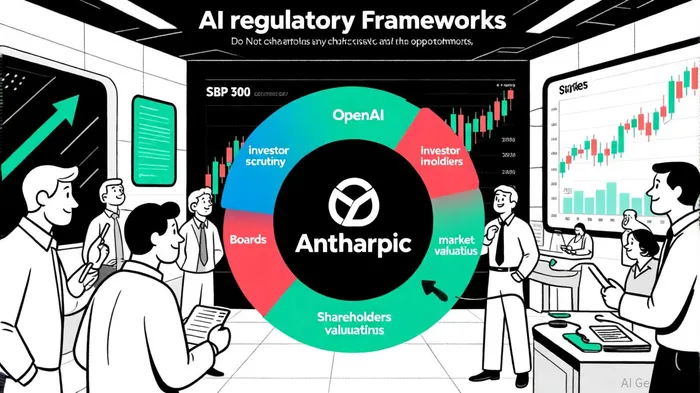
The AI revolution is no longer a speculative future—it is here, reshaping industries, governance models, and investment strategies. As of 2025, the regulatory and market landscapes for artificial intelligence have undergone seismic shifts, driven by divergent federal policies, state-level experimentation, and investor demands for accountability. For tech investors, the alignment of corporate governance with AI regulatory frameworks has become a critical determinant of risk and reward.
The Shifting Regulatory Landscape: Federal Rollbacks and State-Level Innovation
The U.S. federal regulatory approach to AI has pivoted dramatically under the Trump administration. Executive Order 14179, titled Removing Barriers to American Leadership in Artificial Intelligence, revoked the Biden-era safeguards of 2023, prioritizing innovation over oversight[1]. This shift has led to a fragmented regulatory environment, where federal agencies now focus on accelerating AI adoption through policies like M-25-21 and M-25-22, which streamline procurement and reduce bureaucratic hurdles[2]. However, this federal retreat has not stilled the regulatory tide. States like New York, California, and Texas have enacted their own AI laws, emphasizing consumer protection, bias mitigation, and transparency[3].
Meanwhile, global frameworks such as the EU AI Act and Singapore's AI Verify have created a patchwork of compliance demands. The EU Act's risk-based approach, which mandates transparency and human oversight for high-risk systems, has forced multinational corporations to adopt modular AI architectures to navigate cross-border regulations[4]. In contrast, innovation-first jurisdictions like China and South Korea offer government-backed incentives for AI infrastructure, attracting capital but with the caveat that strict rules may emerge post-adoption[5].
Investor Scrutiny: From Shareholder Proposals to Boardroom Accountability
Investors are no longer passive observers of AI's rise—they are active participants in shaping its governance. Shareholder proposals related to AI oversight have surged, with over 84% of S&P 500 companies disclosing some form of AI board oversight in 2025, up from 31% in 2024[6]. This trend reflects a broader demand for transparency, particularly in high-risk sectors like finance and healthcare. For instance, the AFL-CIO's proposal at Apple, which sought greater AI transparency, garnered support from proxy advisors like Glass Lewis and ISS, despite securing only 37.5% of the vote[7].
Board-level expertise in AI is now a competitive differentiator. The Information Technology sector leads in this regard, with 51% of S&P 500 companies in the sector reporting AI-savvy directors[8]. Investors like LGIM and Norges Bank have explicitly tied their investment criteria to the presence of AI governance frameworks, emphasizing the need for board committees dedicated to risk assessment and ethical oversight[9]. This scrutiny is not merely theoretical: companies with robust governance structures are increasingly rewarded with higher valuations and reduced reputational risk.
Market Valuation Trends: Governance as a Strategic Asset
The most striking evidence of governance alignment's impact on valuation lies in the meteoric rise of AI-focused firms. OpenAI, valued at $300 billion in 2025, and Anthropic, at $60 billion, exemplify how governance-ready companies are capturing investor imagination[10]. These firms have embedded ethical AI principles into their operational DNA, aligning with frameworks like the NIST AI Risk Management Framework (RMF) and ISO 42001[11]. Their success underscores a market preference for companies that proactively address regulatory and ethical challenges, rather than reacting to crises.
Conversely, firms lagging in governance readiness face heightened scrutiny. For example, OpenAI and Anthropic have drawn criticism for potential “amoral drift,” where profit-driven pressures could erode initial ethical commitments[12]. This dynamic highlights the fragility of governance alignment in the face of investor expectations and talent competition.
Challenges and the Path Forward
Despite progress, challenges persist. The lack of standardized global frameworks forces companies to adopt a “compliance mosaic,” increasing operational complexity. Additionally, the shortage of AI governance professionals—23.5% of surveyed companies report talent gaps—threatens to slow adoption[13]. For investors, the key lies in prioritizing firms that demonstrate adaptability, such as those leveraging automated governance tools or cross-border compliance strategies[14].
Conclusion
AI governance alignment is no longer a niche concern—it is a linchpin of modern tech investing. As regulatory landscapes evolve and investor expectations sharpen, companies that embed governance into their strategic cores will outperform peers. For investors, the lesson is clear: governance is not just a compliance checkbox; it is a competitive and financial imperative.







Comentarios
Aún no hay comentarios