
AI and the Future of Work: Investing in the Human-Machine Symbiosis
The intersection of artificial intelligence (AI) and workforce transformation is reshaping global economies, creating both unprecedented opportunities and complex challenges. As AI-driven productivity tools proliferate, their strategic alignment with workforce reskilling initiatives is becoming a critical determinant of long-term investment success. This article examines the evolving dynamics of AI adoption, the imperative for reskilling, and the investment strategies that bridge the gap between technological advancement and human capital development.
AI-Driven Productivity: A Double-Edged Sword
AI's potential to enhance productivity is undeniable. According to a Wharton report, generative AI could boost global productivity by 1.5% by 2035, with cumulative gains reaching 3.7% by 2075. These projections underscore AI's role as a catalyst for economic growth, particularly in mid- to high-earning occupations where automation could replace up to 50% of tasks. However, this progress comes at a cost. In the UK, for instance, tech companies have slashed graduate roles by 46% from 2023 to 2024, with further cuts of 53% anticipated by 2026. Such trends have left 56% of 2025 university seniors pessimistic about their career prospects, highlighting the urgent need for systemic reskilling.
The Reskilling Imperative: Bridging the Skills Gap
The rapid obsolescence of traditional skills necessitates a paradigm shift in workforce development. A McKinsey survey reveals that 44% of employed Americans are open to changing occupations, while 42% actively seek upskilling opportunities. This demand is particularly pronounced among younger workers and underrepresented groups, who are more likely to embrace AI-specific certifications over traditional degrees. Governments and institutions are responding with innovative solutions: Singapore's MyCareersFuture platform uses AI-powered job-matching algorithms, while modular, skills-based education programs are gaining traction globally. 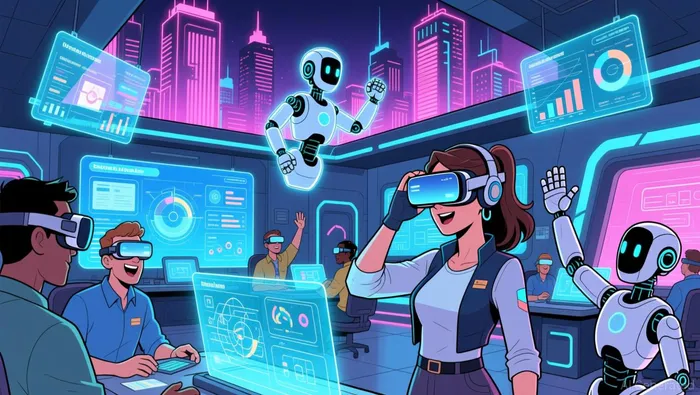
Yet, the pace of reskilling lags behind technological adoption. A 2024 BCG study found that 89% of companies recognize the need for improved AI skills, but only 6% have implemented meaningful upskilling efforts. This misalignment risks exacerbating labor market inequalities, as AI's productivity gains may not be evenly distributed without complementary investments in training and organizational adaptation according to Citi research.
Strategic Investment Opportunities: Aligning AI and Reskilling
For investors, the key lies in identifying opportunities that harmonize AI-driven productivity with workforce reskilling. PwC's 2025 Global AI Jobs Barometer highlights a 56% wage premium for workers with AI skills, up from 25% the previous year. This surge in economic value underscores the profitability of AI literacy, particularly in sectors like healthcare, finance, and logistics, where AI adoption is accelerating.
The AI market itself is a compelling investment arena. Valued at $207.9 billion in 2023, it is projected to reach $407 billion by 2027, driven by a 36.2% compound annual growth rate. However, ROI remains elusive for many organizations. Deloitte's 2025 survey of 1,854 executives found that most AI projects yield satisfactory returns only after two to four years-far longer than the typical seven- to twelve-month payback period for other tech investments. Success hinges on measurable metrics, such as automating repetitive tasks to reduce labor costs or enhancing decision-making speed, as seen in AI-powered customer service tools that improve efficiency by 30%.
Case Studies: Lessons from the Frontlines
Several companies exemplify the strategic integration of AI and reskilling. QuantaTech Innovations and NurtureNest Wellness, for instance, leveraged AI-driven training platforms to boost employee engagement by 35% and cut training time by 25%. IBM's Institute for Business Value estimates that 40% of its workforce will require reskilling within three years, prompting a focus on generative AI and natural language processing. These case studies illustrate that AI's transformative potential is unlocked only when paired with targeted upskilling.
The Path Forward: Balancing Innovation and Inclusion
Investors must prioritize initiatives that address both technological and human dimensions. This includes funding modular education platforms, partnering with governments for data-driven workforce planning, and supporting companies that embed AI literacy into their corporate strategies. As AI adoption accelerates, the ability to measure ROI through performance-based KPIs-such as error reduction, customer satisfaction, and workflow efficiency-will become paramount according to research from DataSociety.
The future of work is not a zero-sum game between humans and machines but a symbiotic relationship. By aligning AI-driven productivity with reskilling, investors can foster inclusive growth, ensuring that technological progress translates into shared prosperity.





Comentarios
Aún no hay comentarios