
AI is the New Fuel: How Artificial Intelligence is Supercharging the Clean Energy Revolution
The energy sector is undergoing a seismic shift, and artificial intelligence is the spark plug. From optimizing solar farms to reengineering power grids, AI is not just a tool-it's a catalyst for a cleaner, smarter, and more resilient energy future. For investors, this is a golden opportunity to capitalize on a revolution that's already here.
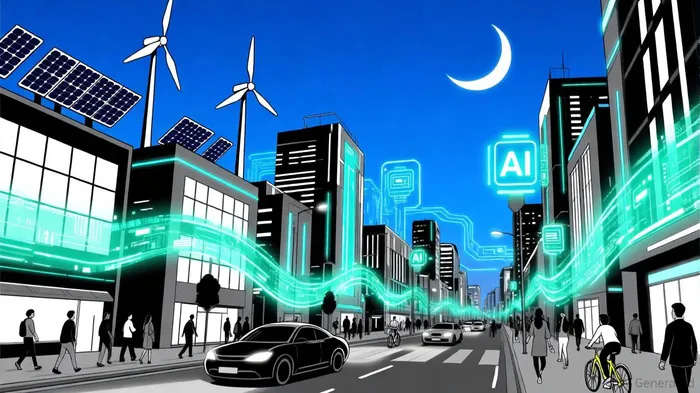
AI in Renewable Generation: Efficiency Gains That Can't Be Ignored
Solar and wind energy have long struggled with intermittency and inefficiency, but AI is turning the tide. Google's collaboration with DeepMind, for instance, has boosted solar energy efficiency by 20% through advanced forecasting and panel orientation adjustments, according to a Yale Forum report. Similarly, Vestas, a global wind turbine leader, uses AI-driven predictive maintenance to analyze sensor data, extending turbine lifespans and reducing downtime by up to 30%, according to an Acropolium guide. These aren't just incremental improvements-they're game-changers for renewable scalability.
Generative AI models like GANs and VAEs are also making waves. In solar irradiance forecasting, GAN-based systems have cut root mean square error (RMSE) by 15–20%, while VAE-driven dispatch models improve energy efficiency by 9–12%, according to a ScienceDirect study. For investors, this means renewable assets are becoming more predictable and profitable-key metrics for long-term value.
Grid Transformation: From Fragile to Fierce
The grid is the backbone of energy systems, and AI is giving it a much-needed reboot. In Australia, AI integration into the National Electricity Market has enhanced grid stability, while Ukraine's AI-driven forecasting models achieve 98% accuracy in predicting electricity demand and generation, according to an Energy Talk brief. These systems don't just prevent blackouts-they enable dynamic demand-side management, allowing grids to adapt in real time to fluctuations from renewable sources.
Decentralized energy systems are another frontier. AI-powered platforms now manage hybrid solutions like vehicle-to-grid (V2G) systems, where electric vehicles act as mobile batteries, feeding power back into the grid during peak demand, as described in a Technology Review article. This isn't just innovation-it's a paradigm shift.
Infrastructure Innovations: From Heat Pumps to Digital Twins
At the household level, AI is optimizing heat pumps in real time, slashing energy use by over 20% and reducing boiler starts, according to the Energy Talk brief. Meanwhile, the Baltic region is leveraging digital twin technologies to model and optimize district heating systems, accelerating the transition from fossil fuels, as noted in the Energy Talk brief. These applications prove that AI isn't just for megaprojects-it's reshaping energy at every scale.
However, the surge in AI infrastructure itself poses challenges. Data centers, which could consume 12% of U.S. electricity by 2028, are driving demand for sustainable solutions like small modular reactors and dispatchable solar, according to a Virtasant analysis. Tech giants like Microsoft are already investing in these technologies, signaling a self-sustaining cycle of AI and clean energy innovation, as highlighted in the Energy Talk brief.
Challenges and Opportunities: Navigating the Hurdles
No revolution is without friction. Data quality, interoperability, and ethical concerns like algorithm transparency remain hurdles, according to the Technology Review article. Yet these challenges are also opportunities. Companies excelling in AI governance-like those developing privacy-preserving optimization tools for grids-are positioning themselves as leaders in a rules-based future, as noted in the ScienceDirect study.
For investors, the key is to focus on firms that balance AI's potential with sustainability. The Department of Energy's AI initiatives, which aim to modernize grids and improve building efficiency, are highlighted in the ScienceDirect study, underscoring the role of policy in accelerating adoption. Pair that with corporate R&D in generative AI for renewables (also discussed in the ScienceDirect study), and the landscape is ripe for high-conviction bets.
The Bottom Line: Where to Put Your Money
The message is clear: AI-driven energy innovation is no longer speculative-it's a $trillion-dollar reality. Prioritize companies at the intersection of AI and clean energy, such as:
- DeepMind/Google for solar and wind forecasting.
- Vestas for AI-optimized wind turbines.
- Microsoft for sustainable data center solutions.
- Pearl Street for AI-driven grid automation (discussed in the Technology Review article).
As an investor, you can't afford to sit this one out. The future of energy is being coded in algorithms-and the best is yet to come.







Comentarios
Aún no hay comentarios