
AI's Dual Edge in Personal Finance: Balancing Innovation with Reliability and Regulatory Risks
Regulatory Challenges: Navigating a Complex Landscape
AI's deployment in finance is attracting intense regulatory scrutiny. The UK's Financial Conduct Authority (FCA) has launched initiatives like the "Supercharged Sandbox" to test AI applications while addressing risks such as algorithmic bias and consumer harm, according to a Regulation Tomorrow analysis. Similarly, the Financial Stability Board (FSB) warns in an FSB report that AI could amplify systemic vulnerabilities, including model risk and third-party dependencies, particularly in credit scoring and algorithmic trading.
A key regulatory hurdle is ensuring compliance with anti-discrimination laws. The Equal Credit Opportunity Act (ECOA) requires financial institutions to audit AI models for biased outcomes, such as disparate loan approvals based on race or geography, as explained in an InnReg overview. Firms that fail to meet these standards face enforcement actions, as highlighted by the FCA's emphasis on human oversight in automated decision-making. For investors, this means regulatory costs and reputational risks could offset AI's efficiency gains unless governance frameworks evolve in tandem with technology.
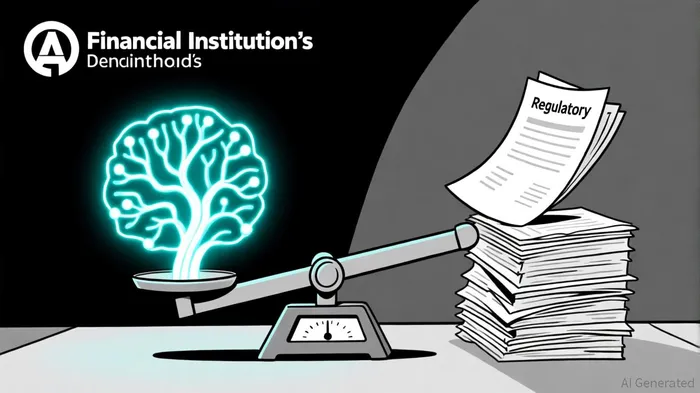
Reliability Risks: When AI Fails to Deliver
Beyond regulation, AI's reliability in personal finance remains unproven in critical areas. A 2025 LegacyKeeper report revealed that AI financial planning tools often create more work for advisors, with 30–40% of their time spent manually correcting AI-generated outputs. Advisors also face compliance pitfalls, as AI systems occasionally produce content with prohibited terms like "guarantee," risking legal penalties, the LegacyKeeper report notes.
Data quality issues further undermine AI's promise. A Forbes summary of MIT research found that 95% of enterprise AI pilots fail to deliver measurable financial impact, often due to poor training data, according to a Forbes summary. In personal finance, where decisions hinge on precise, auditable outcomes, such failures erode client trust and operational efficiency. For example, AI hallucinations-confidently generated but factually incorrect advice-have forced firms to invest heavily in manual verification processes, as the LegacyKeeper report documents.
Mitigating Risks: A Path Forward
To harness AI's potential while managing risks, institutions are adopting strategies like sovereign AI solutions, which prioritize data sovereignty and compliance, as described in an Aveni blog post. These systems, designed specifically for finance, ensure data remains within regulatory boundaries and incorporate transparency measures to meet FCA and FSB standards. Additionally, firms are conducting algorithmic impact assessments to identify biases and maintain rigorous documentation of model development, consistent with the Regulation Tomorrow analysis.
Investors should also consider the role of third-party risks. The FCA holds firms accountable for outcomes generated by external AI providers, meaning due diligence on vendors is non-negotiable, as the Regulation Tomorrow analysis outlines. Companies like C3.ai, which face mixed market expectations amid AI adoption challenges, exemplify the volatility of this sector, according to a MarketBeat alert.
Conclusion
AI's transformative potential in personal finance is undeniable, but its success hinges on addressing reliability and regulatory risks. For investors, the key lies in supporting firms that prioritize ethical AI, robust governance, and transparency. As the FSB and FCA continue to shape the regulatory landscape, the institutions that adapt swiftly will likely outperform peers in this high-stakes arena.







Comentarios
Aún no hay comentarios