
AI-Driven Underwriting and the Digital Mortgage Revolution: Balancing Margin Expansion with Regulatory Vigilance
The digital mortgage industry is undergoing a seismic shift, driven by artificial intelligence (AI) in underwriting. As lenders race to adopt AI-powered tools, the implications for margin expansion are profound—but so are the risks. The question for investors is whether the efficiency gains and revenue potential outweigh the regulatory and ethical challenges.
Efficiency Gains and Margin Expansion
AI is reshaping mortgage underwriting by automating document handling, income verification, and risk modeling. According to a report by SutherlandGlobal, lenders using AI-driven systems have reduced loan cycle times by up to 50%, enabling faster approvals and reducing operational costs[1]. For example, Rocket Mortgage's AI systems cut closing times by 25%, allowing teams to serve 54% more clients annually[4]. Similarly, Better.com's autonomous underwriting delivers instant decisions and 24/7 support, enhancing borrower satisfaction[4].
These efficiencies translate directly into margin expansion. By minimizing manual errors and accelerating workflows, AI reduces post-close defects and operational stress[3]. A case in point: GreenState Credit Union reported a 26% increase in loan approval rates and $132 million in additional annual revenue after integrating AI tools[1]. The global AI-powered mortgage underwriting market, valued at $2.14 billion in 2024, is projected to grow as demand for Non-QM loans rises[2].
Personalization and Customer-Centric Innovation
AI also enables hyper-personalization, a critical differentiator in a competitive market. Machine learning algorithms analyze borrower profiles to tailor loan products, while natural language processing (NLP) streamlines communication[2]. Self-service platforms now offer real-time updates and cross-platform integration, aligning with evolving customer expectations[1]. Fannie Mae predicts that 55% of lenders will expand AI adoption in 2025, signaling a broader shift toward data-driven, borrower-centric models[2].
Regulatory and Ethical Risks
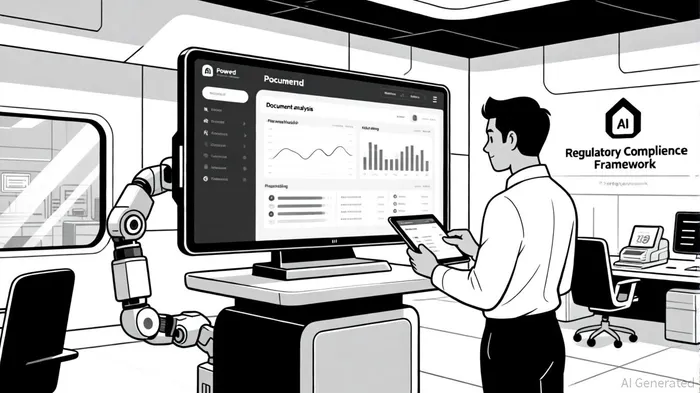
However, the rapid adoption of AI raises red flags. Algorithmic bias remains a persistent concern. While AI can reduce human error, it risks perpetuating systemic inequities if training data reflects historical biases[4]. A recent Real Estate News analysis highlighted the lack of regulatory oversight, particularly with the Consumer Financial Protection Bureau (CFPB) operating at reduced capacity[2]. This creates a gap in monitoring algorithmic decision-making, leaving lenders vulnerable to legal and reputational risks.
Moreover, transparency is a double-edged sword. AI tools must augment—not replace—human judgment, requiring lenders to conduct rigorous bias testing and clearly communicate data usage to borrowers[4]. The challenge lies in balancing automation with accountability, a task complicated by the opacity of some machine learning models.
The Path Forward for Investors
For investors, the digital mortgage sector presents a compelling but nuanced opportunity. The efficiency gains and revenue potential are undeniable, but success hinges on how lenders navigate regulatory scrutiny. Those that prioritize ethical AI deployment—through explainable algorithms, human oversight, and proactive compliance—will likely outperform peers. Conversely, firms that cut corners on transparency or risk management could face costly setbacks.
Conclusion
AI-driven underwriting is not just a technological upgrade—it's a paradigm shift. While it promises tighter margins and a more efficient industry, the risks of algorithmic bias and regulatory gaps cannot be ignored. For investors, the key is to back companies that treat AI as a tool for empowerment, not a shortcut to profit. In this new era of digital mortgages, the winners will be those who marry innovation with integrity.







Comentarios
Aún no hay comentarios