
AI-Driven Service Transformation: How TechSee and ServiceNow Are Redefining Enterprise Efficiency and ROI
The intersection of artificial intelligence and enterprise service delivery is undergoing a seismic shift, driven by strategic partnerships like the one between TechSee and ServiceNow. Their collaboration has positioned visual agentic AI as a cornerstone for redefining customer and field service operations, offering a compelling case for investors to consider as the next wave of AI-enabled innovation gains momentum.
The Strategic Catalyst: Visual Agentic AI in Action
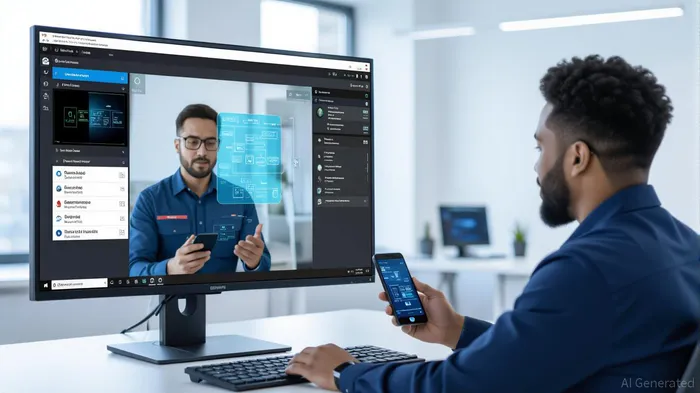
At the heart of this transformation is Sophie AI, TechSee's flagship platform, now natively integrated into the ServiceNow Now Platform. This integration eliminates the need for app downloads, code changes, or external tools, enabling enterprises to embed real-time visual diagnostics, guided automation, and AI-powered visual assistance directly into their workflows. The result? Smarter, faster, and scalable issue resolution across industries such as telecom, manufacturing, utilities, and consumer electronics.
For example, VodafoneZiggo leveraged this technology to cut tech dispatches by 12%, while improving first-call resolution (FCR) and Net Promoter Score (NPS). Similarly, a top water company reduced its engineer dispatch rate by 30% by streamlining problem resolution through customer-facing digital channels. These outcomes underscore the tangible cost savings and operational efficiency unlocked by visual agentic AI.
Financial and Scalability Advantages: A Data-Driven Case for Investors
The financial benefits of this integration are not just anecdotal. ServiceNow's Q2 2025 earnings revealed subscription revenue of $3.11 billion, a 22.5% year-over-year increase, with current remaining performance obligations (cRPO) surging 24.5% to $10.92 billion. These figures reflect strong demand for AI-driven solutions that reduce manual labor and automate workflows.
The NBA's adoption of ServiceNowNOW-- Workplace Service Delivery (WSD) serves as a standout example. By replacing legacy systems with ServiceNow, the league achieved a 51% ROI within two years, recovering its investment while boosting productivity by 10% across its facilities leadership team. Meanwhile, Worldpay saw an 111% ROI after deploying ServiceNow Performance Analytics, generating $125,840 in annual benefits by streamlining data accessibility and analyst productivity.
These metrics highlight how AI-powered platforms like ServiceNow are not just optimizing costs but also driving revenue growth through operational agility. For investors, the scalability of these solutions—requiring no app downloads or infrastructure overhauls—makes them particularly attractive in a market where rapid deployment and adaptability are critical.
Market Positioning and Future Potential
ServiceNow's strategic acquisitions and partnerships further solidify its leadership. The recent acquisition of data.world enhances AI agent understanding through advanced data governance, while collaborations with AWS, NVIDIA, and Cisco expand secure, scalable AI adoption. These moves align with a broader industry trend: enterprises prioritizing AI solutions that deliver measurable ROI through reduced downtime, improved customer satisfaction, and streamlined workflows.
Analysts have taken notice. ServiceNow was named a Leader in the Forrester Wave for low-code platforms and the IDC MarketScape for business automation. Such recognition reinforces its role as a catalyst for AI-driven transformation, particularly as enterprises seek to modernize service operations in an increasingly competitive landscape.
Investment Implications
For investors, the integration of visual agentic AI into enterprise service workflows represents a high-conviction opportunity. The key drivers—cost savings, scalability, and operational efficiency—are not only aligned with current market demands but also positioned to accelerate as AI adoption matures.
- Short-Term: ServiceNow's robust financials and growing RPO indicate strong near-term revenue visibility.
- Long-Term: The expansion of visual AI into self-service, field service, and support operations could unlock new revenue streams, particularly as enterprises in high-impact industries (e.g., telecom, utilities) adopt these solutions.
However, risks remain. Macroeconomic headwinds, such as currency fluctuations and sector-specific challenges (e.g., U.S. federal sector delays), could temporarily dampen growth. Yet, ServiceNow's diversified customer base and focus on agentic AI—aimed at achieving zero downtime and zero outages—position it to navigate these hurdles.
Conclusion: Positioning for the Next Wave
The partnership between TechSee and ServiceNow exemplifies how AI is reshaping enterprise service delivery. By combining visual automation with ServiceNow's platform, they've created a solution that not only reduces costs but also scales with the complexity of modern business. For investors, this represents a strategic inflection point: a chance to back a proven model of AI-driven efficiency that is already delivering measurable value.
As the AI revolution continues, enterprises that fail to adopt these innovations risk falling behind. For those who act now, the rewards—both financial and operational—are within reach.







Comentarios
Aún no hay comentarios