
AI-Driven Medical Imaging Expansion in the U.S.: Strategic Partnerships and Regional Market Penetration
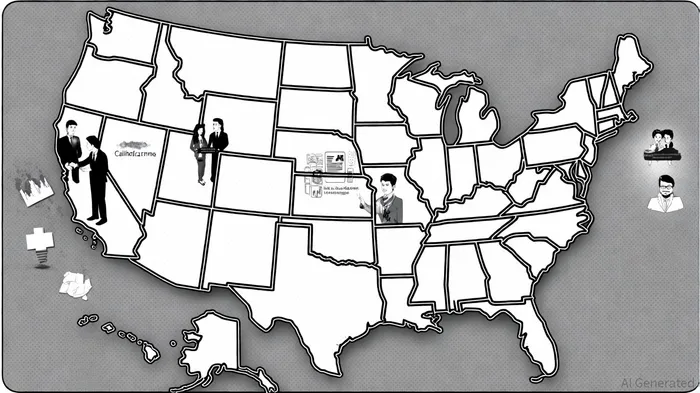
The U.S. AI-driven medical imaging market is undergoing a transformative phase, marked by rapid innovation, strategic collaborations, and expanding regional footprints. With a market size estimated at $524.42 million in 2024 and projected to grow at a 33.24% CAGR through 2030, according to a Grand View report, the sector is reshaping diagnostic workflows, reducing radiologist workloads, and enhancing patient outcomes. This growth is fueled by cross-industry partnerships and a strategic push to penetrate new geographic markets beyond traditional hubs like California.
Strategic Partnerships: The Engine of Innovation
Collaborations between technology leaders and healthcare providers are accelerating the development and deployment of AI tools. A prime example is Philips and NVIDIA's partnership to enhance MRI technology using AI. By developing a foundational model, the duo aims to improve image quality, reduce scan times, and streamline diagnostic workflows, as noted in the Grand View report. Similarly, GE HealthCare's seven-year Care Alliance with Sutter Health is expanding AI-powered imaging solutions across California, with a focus on PET/CT, SPECT/CT, and ultrasound technologies, as reported by Radiology Business. This $1 billion agreement underscores the financial and operational scale of such partnerships, which are critical for scaling AI adoption.
Cross-industry alliances are also addressing workflow challenges. Intelerad and RADPAIR joined forces in May 2025 to integrate generative AI into radiology reporting, automating tasks like report drafting and prioritization, according to the Grand View report. Meanwhile, Radiology Partners and RADPAIR are co-developing AI-driven tools to tackle radiologist shortages and optimize diagnostic accuracy, as described in a GlobeNewswire report. These partnerships highlight a shift toward AI as a collaborative enabler rather than a standalone tool.
Regional Market Penetration: Beyond California
While California remains a focal point for AI imaging innovation, expansion is gaining momentum in other regions. Massachusetts, for instance, has emerged as a hub for AI-driven clinical trials. In 2025, QMENTA and Alzamend Neuro partnered to deploy AI-powered imaging for a trial of AL001 at Massachusetts General Hospital, demonstrating the state's role in advancing neuroimaging applications, according to the UCSD Center for Health Innovation.
The Midwest is also seeing growth, driven by partnerships like GE HealthCare's collaborations with regional health systems to standardize AI-enabled imaging protocols. These efforts are supported by federal initiatives such as the NIH's Bridge2AI program, which has allocated $130 million to accelerate AI integration in biomedical research, as noted in the Grand View report. Additionally, portable imaging solutions like Butterfly Network's iQ3 device are expanding access in rural areas, where traditional infrastructure is limited, according to a Medicai blog.
The North American AI-assisted medical imaging market is projected to reach $13.2 billion by 2032, with the U.S. leading due to favorable reimbursement policies and regulatory clarity, according to a North America market report. This growth is further bolstered by cross-border vendor influence, as U.S. companies provide cloud-based AI solutions compliant with both HIPAA and Canadian privacy laws, bridging regional gaps.
Challenges and Opportunities
Despite the momentum, challenges persist. Data privacy concerns and high implementation costs remain barriers, particularly for smaller healthcare providers, as highlighted in a Knowledge Sourcing report. Reimbursement for AI applications in radiology is still evolving, though recent CMS updates signal progress in recognizing AI-assisted diagnostics as medically necessary, according to UCSD Center for Health Innovation coverage.
Investors should also consider the regulatory landscape. The FDA's draft framework for AI/ML-based software modifications allows algorithm upgrades without re-filing, fostering continuous innovation. This regulatory agility positions the U.S. as a leader in AI medical imaging, with startups like Carta Healthcare securing $25 million in Series B funding to advance AI tools, as noted in the Grand View report.
Future Outlook
The U.S. AI medical imaging market is poised to reach $6,765 million by 2033, driven by advancements in deep learning, natural language processing, and portable imaging technologies, according to a DPI Research forecast. Strategic partnerships will remain central to this growth, with OEMs integrating AI into 20% of new CT and 15% of new MR systems, per the North America market report.
For investors, the key opportunities lie in collaborative ecosystems and regional expansion. Companies that can scale AI solutions across diverse healthcare settings-rural, urban, and academic-will capture significant market share. Additionally, firms leveraging government-backed initiatives like Bridge2AI or the GSA's Applied AI Healthcare Challenge are well-positioned to drive innovation.





Comentarios
Aún no hay comentarios