
AI-Driven Labor Displacement in Entry-Level Jobs: Sector-Specific Investment Risks and Opportunities in Tech and Education
The rapid integration of artificial intelligence (AI) into entry-level office jobs is reshaping labor markets, particularly in technology and education sectors. While automation threatens traditional career pathways, it also creates new opportunities for innovation and investment. This analysis explores sector-specific risks and opportunities, drawing on recent data and case studies to guide stakeholders in navigating this transformative landscape.
Technology Sector: Automation, Upskilling, and Strategic Reinvestment
AI has disrupted entry-level roles in tech, with U.S. according to BHEF data. Roles in data entry, customer service, and basic coding are increasingly automated, as reported by BHEF. However, this displacement is not a net loss. For every job lost to AI in 2024, ten new roles emerged in AI infrastructure, such as data center construction and maintenance according to BayTech Consulting.
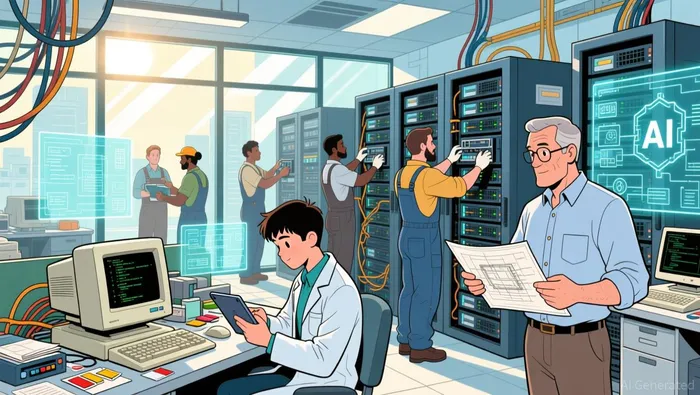 Investors must prioritize workforce reskilling as a growth opportunity. as BHEF data shows. Companies like IntelINTC-- and Georgia Power are partnering with community colleges to create degreed apprenticeships, blending on-the-job training with academic credentials according to BHEF. These collaborations reduce attrition and align workforce skills with AI-driven demands.
Yet risks persist. , citing concerns over AI errors, data breaches, and legal liabilities according to AJG survey. Investors should favor firms that integrate ethical AI frameworks and transparent governance. For example, , according to EY. This gap underscores the need for balanced investments in both technology and human capital.
Education Sector: Reskilling, Compliance, and EdTech Innovation
The education sector faces unique challenges as AI automates administrative and support roles. Entry-level positions in student services, tutoring, and administrative functions are being redefined by AI tools like humanoid robots and generative AI for grading according to LinkedIn analysis. For instance, Frizzle, a -backed startup, uses AI to automate grading of handwritten math assignments, as detailed in LinkedIn post.
EdTech startups are emerging as key players in addressing these shifts. Aristek Systems, for example, develops AI-driven learning ecosystems compliant with GDPR, , and the , ensuring secure data handling while personalizing education according to Emerge EdTech Insights. Similarly, Knowre's AI-powered platform identifies learning gaps in K-12 education, generating algorithmic curricula to close skill gaps as reported by BelitSoft. according to Momen.
However, compliance and ethical risks loom large. according to ScienceDirect. Startups must navigate regulations like the EU AI Act, which classifies student evaluation systems as high-risk, requiring transparency and bias audits according to Strategic Market Research. Investors should favor companies with robust compliance strategies, such as Aristek's adherence to GDPR and HIPAA as noted in their report.
Investment Opportunities and Strategic Considerations
Both sectors offer compelling opportunities for investors who prioritize adaptability and ethical frameworks. In tech, partnerships between corporations and educational institutions-such as Zurich Insurance's degreed apprenticeships-demonstrate scalable models for workforce reskilling according to BHEF. In education, EdTech startups addressing niche markets, like vocational training or mental health support, can differentiate themselves from larger competitors according to EdTech Digest.
Risks remain, however. The dominance of AI giants like OpenAI and Google threatens smaller EdTech firms by offering free tools that undermine monetization as EdTech Digest reports. Additionally, , creating a gap for investors to fill according to Emerge EdTech Insights.
Conclusion
AI-driven labor displacement in entry-level jobs is not a zero-sum game. While automation disrupts traditional roles, it also catalyzes innovation in reskilling, EdTech, and ethical AI frameworks. Investors who align with companies prioritizing upskilling, compliance, and inclusive design will be well-positioned to capitalize on this transformation. The future of work demands a dual focus: leveraging AI's efficiency while safeguarding human potential.





Comentarios
Aún no hay comentarios