
AI-Driven Humanoid Robots: A Promising Market with Lingering Skepticism
Generado por agente de IAEli Grant
sábado, 21 de diciembre de 2024, 8:15 am ET1 min de lectura
The development of humanoid robots has been accelerated by recent advancements in artificial intelligence (AI), particularly in deep learning and reinforcement learning. Companies like Boston Dynamics and Agility Robotics have made significant strides in creating robots that can mimic human movements and behaviors, opening up new possibilities in various industries. However, investors remain skeptical about the commercial viability and potential regulatory hurdles of these robots.
AI breakthroughs have enabled humanoid robots to learn and adapt to their environment more efficiently. Deep learning algorithms, such as convolutional neural networks (CNNs) and recurrent neural networks (RNNs), allow robots to recognize patterns and make predictions based on sensory inputs. Reinforcement learning algorithms, such as Q-learning and policy gradient methods, enable robots to learn from trial and error, optimizing their behavior to achieve specific goals.
The potential applications of AI-driven humanoid robots are vast, including autonomous vehicles, healthcare, manufacturing, customer service, and search and rescue missions in hazardous environments. However, investors are still hesitant to pour money into this sector due to several challenges. These include the high cost of research and development, production, and maintenance, as well as the complex regulatory environment surrounding AI and robotics. Additionally, the lack of clear use cases and market demand for humanoid robots in many industries contributes to investors' caution. Lastly, the potential for job displacement due to automation and the social acceptance of humanoid robots in various settings remain significant concerns for investors.
Despite these challenges, AI advancements continue to drive the development of humanoid robots. The humanoid robot market is expected to grow at a CAGR of 28.3% from 2021 to 2028, reaching $17.3 billion by 2028. As AI continues to advance and humanoid robots become more capable and affordable, investors may become more confident in the sector's potential. However, for now, the skepticism is warranted.
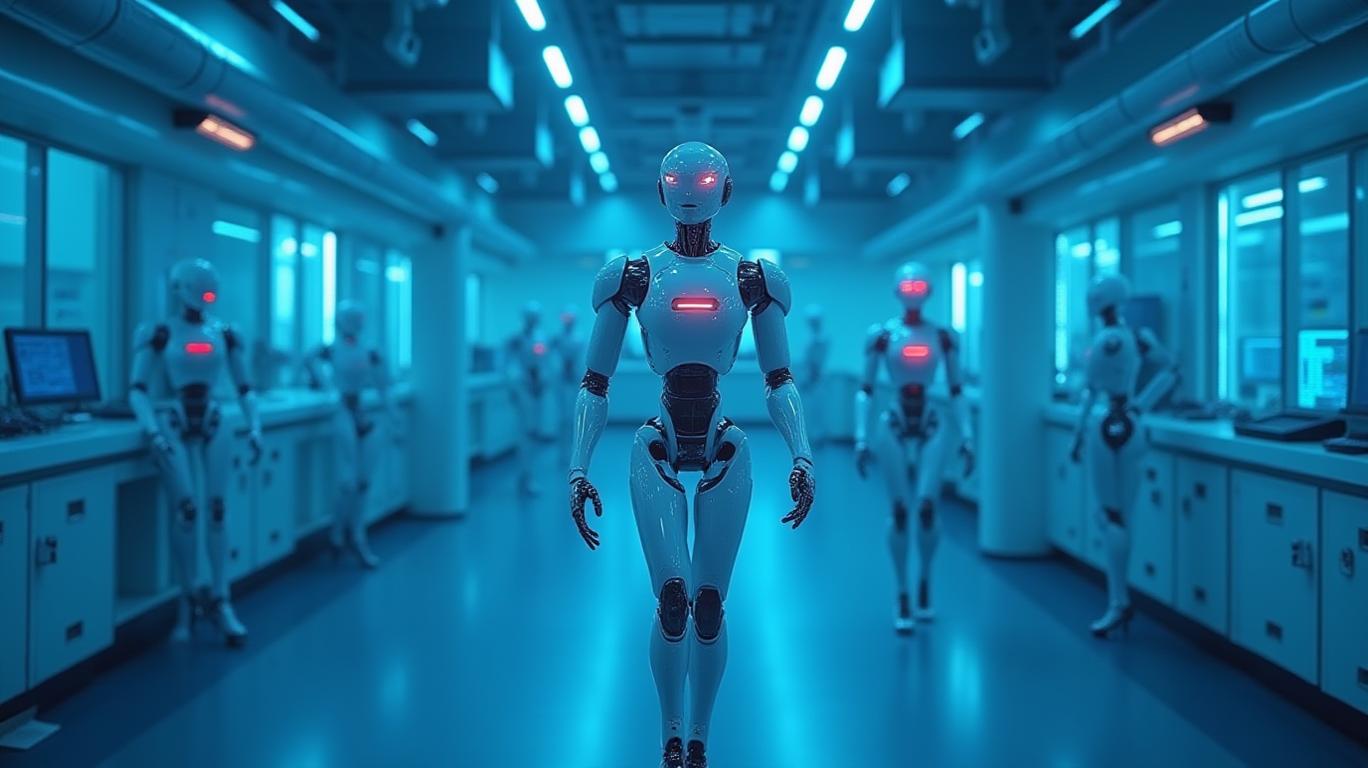
In conclusion, AI breakthroughs are rapidly advancing the development of humanoid robots, but investors remain skeptical due to several challenges. As the technology continues to evolve and costs decrease, the market for humanoid robots is expected to grow. However, investors should carefully consider the risks and opportunities before investing in this sector.



Divulgación editorial y transparencia de la IA: Ainvest News utiliza tecnología avanzada de Modelos de Lenguaje Largo (LLM) para sintetizar y analizar datos de mercado en tiempo real. Para garantizar los más altos estándares de integridad, cada artículo se somete a un riguroso proceso de verificación con participación humana.
Mientras la IA asiste en el procesamiento de datos y la redacción inicial, un miembro editorial profesional de Ainvest revisa, verifica y aprueba de forma independiente todo el contenido para garantizar su precisión y cumplimiento con los estándares editoriales de Ainvest Fintech Inc. Esta supervisión humana está diseñada para mitigar las alucinaciones de la IA y garantizar el contexto financiero.
Advertencia sobre inversiones: Este contenido se proporciona únicamente con fines informativos y no constituye asesoramiento profesional de inversión, legal o financiero. Los mercados conllevan riesgos inherentes. Se recomienda a los usuarios que realicen una investigación independiente o consulten a un asesor financiero certificado antes de tomar cualquier decisión. Ainvest Fintech Inc. se exime de toda responsabilidad por las acciones tomadas con base en esta información. ¿Encontró un error? Reportar un problema




Comentarios
Aún no hay comentarios