
The AI-Driven Gaming Renaissance: Why Josh Brown's Bullish Call on Electronic Arts Signals a New Era for Entertainment
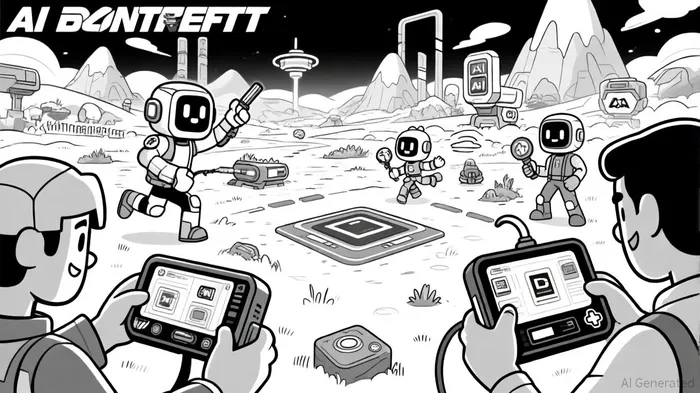
In the ever-shifting landscape of entertainment, few industries are as ripe for disruption as gaming. Josh Brown, CEO of Ritholtz Wealth Management, has made a bold bet on Electronic ArtsEA-- (EA), calling it his “best stock idea” as the company navigates the AI-driven renaissance reshaping the sector[1]. His optimism is not unfounded. EA's strategic pivot toward artificial intelligence and machine learning positions it at the intersection of technological innovation and consumer demand, with implications that extend far beyond the stock market.
The AI Imperative: From Pathfinding to Player-Created Worlds
EA's embrace of AI is no longer speculative—it is operational. At the heart of its transformation is the use of machine learning to enhance pathfinding algorithms, enabling non-player characters (NPCs) to adapt to player strategies in real time[3]. This is not merely a technical upgrade; it is a redefinition of interactivity. By leveraging AI, EAEA-- is creating games that feel less scripted and more alive, a critical differentiator in an industry where player retention drives revenue.
But the company's ambitions stretch further. EA is experimenting with AI-powered user-generated content (UGX), allowing players to craft new game elements using natural language prompts[3]. Imagine a world where a player types “create a medieval castle with a dragon attack sequence,” and the game generates a fully functional, monetizable asset. This democratization of content creation not only deepens community engagement but also opens new revenue streams through microtransactions and in-game advertising.
Industry-Wide Momentum and EA's Competitive Edge
The AI gaming market is surging. By 2034, it is projected to grow from $1.5 billion in 2024 to $9.8 billion, driven by advancements in procedural content generation and adaptive storytelling[2]. EA is not alone in this race—startups like Dizzaract are challenging incumbents with AI-native games and distribution models[2]. Yet EA's scale and brand equity give it a unique advantage. Its franchises, including Madden NFL and EA Sports FC, already command massive audiences. With upcoming titles like Battlefield 6, the company is poised to integrate AI-driven features into its most lucrative properties, creating a flywheel effect.
Analyst ratings reflect this potential. As of September 2025, 28 Wall Street analysts rate EA as a “Moderate Buy,” with an average price target of $167.12—3.27% below its current price of $172.76[2]. While the stock's price-to-earnings ratio of 42.96 suggests some overvaluation, its 19.05% dividend payout ratio and recent upgrades from analysts underscore its appeal to income-focused investors[2].
Risks and Realities: Can EA Keep Up?
No investment thesis is complete without acknowledging risks. EA's reliance on AI-driven innovation carries execution risk—can it scale these technologies without compromising quality? The company's high P/E ratio also raises questions about whether its current valuation reflects realistic growth expectations. Additionally, insider selling in recent months has sparked concerns about management confidence[2].
Yet these challenges pale against the broader trend. AI is not a passing fad in gaming; it is a foundational shift. As one industry insider noted, “The next generation of games will be defined by their ability to learn and evolve with players, not just entertain them.”[3] EA's CEO, Andrew Wilson, has made it clear: AI is not a peripheral tool but a core component of the company's future[3].
Conclusion: A Stock for the Long Game
Josh Brown's bullish call on EA is more than a stock tip—it is a bet on the future of entertainment. By harnessing AI to redefine game development, player engagement, and monetization, EA is positioning itself to lead the next phase of the gaming renaissance. For investors, the question is not whether AI will transform gaming, but whether EA can maintain its edge in a rapidly evolving landscape.





Comentarios
Aún no hay comentarios