
AI-Driven Digital Visibility: The New Frontier in Healthcare Marketing
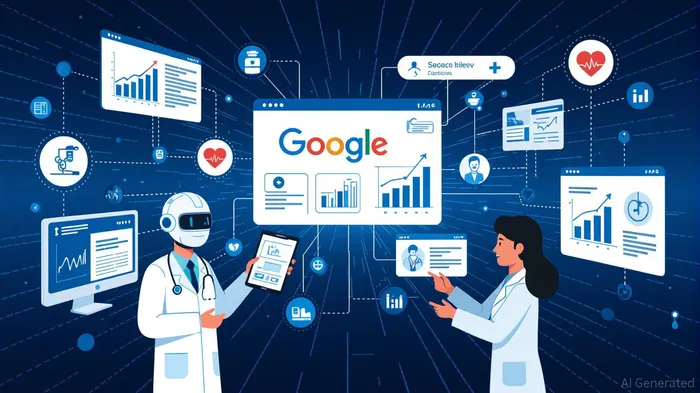
The healthcare industry is undergoing a seismic shift as artificial intelligence (AI) redefines digital visibility and patient acquisition. With the global AI market valued at $757.58 billion in 2025 and projected to reach $3.68 trillion by 2034 at a 19.2% compound annual growth rate (CAGR) [1], niche healthcare sectors are now prioritizing AI-driven SEO tools to dominate search ecosystems. This transformation is not merely speculative—it is already yielding measurable returns for early adopters.
The AI SEO Revolution in Healthcare
AI is reshaping how patients and providers interact online. According to a report by Definitive Healthcare, 61% of American adults used generative AI tools in the first half of 2025, with 19% engaging daily [2]. This surge has accelerated the rise of zero-click searches, where AI-powered overviews (e.g., Google’s AI Overviews) deliver direct answers to queries, reducing the need for users to visit external websites [1]. For healthcare marketers, this means traditional SEO strategies are no longer sufficient.
To adapt, healthcare organizations are optimizing content for AI systems using EEAT principles (Expertise, Experience, Authoritativeness, Trustworthiness). Content must now be structured with schema markup, conversational language, and verifiable author credentials to align with AI’s demand for precision and trust [3]. For example, a dental practice in New York’s West Village leveraged AI-driven insights to refine geo-targeted keywords and enhance its Google My Business profile, securing top rankings in the Google Local Pack and boosting appointment bookings by 300% [3].
Market Growth and Strategic Opportunities
The AI-based SEO tools market has already surged to $19.35 billion in 2025, up from $16.73 billion in 2024, with a projected CAGR of 14.95% through 2030 [4]. In the U.S., the market is valued at $5.91 billion in 2025 and expected to grow at 16.7% CAGR, reaching $14.93 billion by 2033 [3]. This growth is driven by healthcare’s unique need for real-time, trustworthy information—a niche where AI excels.
Niche sectors such as cosmetic dentistry, medical supplies, and telehealth are particularly well-positioned to capitalize on AI SEO. A Dallas-based cosmetic dentistry practice, for instance, used AI-powered SEO analysis to dominate high-intent keywords like “teeth whitening near me,” resulting in a 400% increase in patient inquiries [3]. Similarly, a medical supplies company improved organic search rankings by 75% through keyword optimization and AI-driven content marketing [3].
Challenges and the Path Forward
While AI SEO offers immense potential, it also presents challenges. A study by SEO.com notes that AI-driven search results can reduce organic traffic by 15–25% for informational websites [4]. To counter this, healthcare marketers must create in-depth, structured content that satisfies both human readers and AI algorithms. This includes:
- Schema markup to enhance search visibility.
- Author credentials to establish trust.
- Peer-reviewed citations to reinforce authority [3].
Investors should also prioritize platforms that integrate AI with patient engagement tools, such as chatbots and virtual assistants. These tools not only improve SEO but also provide 24/7 support, enhancing patient satisfaction and retention [5].
The Case for Immediate Investment
The urgency for action is underscored by recent performance metrics. In Q2 2025, the healthcare industry saw an 8.3% year-over-year increase in total views and a 4.3% rise in clicks [4]. Thrive Internet Marketing, a healthcare-focused agency, reported a staggering 2,219% increase in traffic from AI platforms between Q1 and Q2 2025, driven by AI-driven SEO strategies [1]. Such results highlight the compounding returns of early adoption.
For investors, the focus should be on niche healthcare sectors where AI SEO can create asymmetric advantages. These include:
1. Specialty clinics (e.g., dermatology, orthopedics) with high-intent local searches.
2. Telehealth platforms competing for visibility in AI-driven health queries.
3. Medical device companies needing to cut through regulatory and technical content noise.
Conclusion
AI-driven digital visibility is no longer a futuristic concept—it is a present-day imperative for healthcare marketers. With the AI SEO tools market expanding at a rapid pace and niche sectors demonstrating tangible ROI, the time for strategic investment is now. By prioritizing AI SEO tools that align with EEAT principles and patient behavior, investors can position themselves at the forefront of a $3.68 trillion AI market [1]. The winners in this space will be those who act decisively, leveraging AI not just for visibility but for sustainable, trust-driven growth.
Source:
[1] AI Market Size (2025–2034): Growth, Forecast & Trends [https://www.demandsage.com/ai-market-size/]
[2] AI reshapes online search behavior and marketing strategies [https://www.definitivehc.com/blog/ai-search-strategies-for-healthcare-marketers]
[3] Medical SEO Case Studies [https://seovendor.co/medical-seo-case-studies/]
[4] AI-based SEO Tools Market - Global Forecast 2025-2030 [https://www.researchandmarkets.com/reports/6014993/ai-based-seo-tools-market-global-forecast?srsltid=AfmBOoq9NoqEm5xd1u_Yz0FSeuqbEHXuQD9q6QD-kDpkaelTzRsnpUz7]
[5] Digital Healthcare Market Trends to Watch in 2025 [https://www.aesthetixmedia.com/post/break-through-the-noise-with-smart-aesthetics-software]







Comentarios
Aún no hay comentarios