
AI-Driven Digital Twins: A Pivotal Investment in Climate-Resilient Infrastructure
The escalating threat of climate change has turned infrastructure resilience into a global priority. As extreme weather events strain aging bridges, roads, and utilities, governments and private entities face a critical choice: invest in outdated maintenance practices or embrace transformative technologies like AI-driven digital twins. The University of Florida's (UF) pioneering work in AI-based digital twin systems for bridge monitoring exemplifies a scalable solution that could redefine infrastructure management—and offers compelling opportunities for investors.
The Case for Digital Twins in Climate Adaptation
Infrastructure failures due to climate stress are costly and deadly. The 2018 FIU pedestrian bridge collapse in Miami, which claimed six lives and cost over $60 million in direct damages, underscores the urgency of proactive solutions. UF's digital twin framework addresses this by creating virtual replicas of bridges, continuously fed by real-time sensor data and historical records. These systems predict structural degradation, simulate climate impacts, and guide predictive maintenance—all while reducing manual inspections by up to 30%.
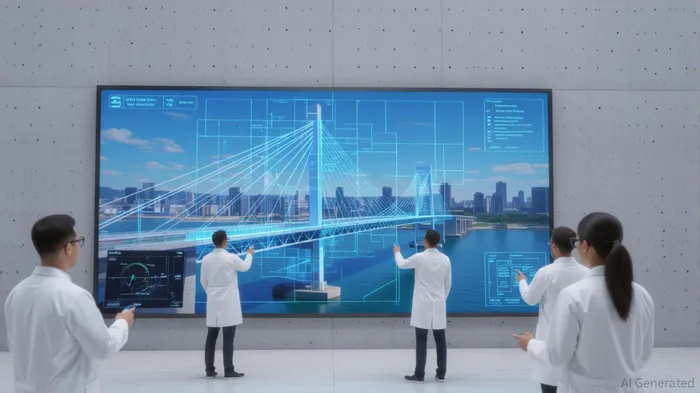
In Jacksonville, Florida's pilot project, the technology has already demonstrated its value. By modeling flood risks and urban growth scenarios, city planners can prioritize climate-resilient infrastructure investments, such as reinforced drainage systems or elevated roadways. This proactive approach not only avoids catastrophic failures but also reduces long-term maintenance costs by addressing issues before they escalate.
Quantifying ROI: Cost Savings and Risk Mitigation
The economic case for digital twins is robust. Traditional infrastructure maintenance relies on reactive repairs, which are 2–3 times costlier than proactive fixes. UF's system slashes these expenses by:
- Reducing manual inspections: Eliminating hazardous, labor-intensive checks lowers operational costs and improves worker safety.
- Preventing catastrophic failures: Predictive analytics avert disasters like bridge collapses, sparing communities the financial and human toll.
- Extending asset lifespans: Timely repairs extend bridge usability by decades, deferring costly replacements.
Consider the broader implications: 7.5% of U.S. bridges are structurally deficient, costing governments billions annually. Scaling UF's model nationwide could save billions while safeguarding public safety. For investors, this aligns with the Biden administration's $1.2 trillion infrastructure law, which prioritizes projects using advanced monitoring technologies.
Scalability and Market Potential
UF's framework is not limited to bridges. Its digital twin platform, supported by the HiPerGator supercomputer and NVIDIA's Omniverse, can replicate entire cities, simulating everything from flood impacts to traffic patterns. This versatility positions the technology as a cornerstone of climate-resilient urban planning.
Global demand is surging. McKinsey estimates that digital twins could boost public infrastructure capital efficiency by 20–30%, with applications in energy grids, transit systems, and healthcare. For instance, UF's virtual ICU models reduce patient stress and streamline medical workflows, demonstrating the tech's cross-sector appeal.
Investment Opportunities in Climate Adaptation Tech
Investors should focus on three avenues:
1. Tech Enablers: Companies like NVIDIANVDA-- (NVDA), whose AI platforms power digital twins, stand to benefit as governments and firms adopt these solutions.
2. Infrastructure Firms: Firms integrating digital twins into construction (e.g., Bechtel, AECOM) could see valuation uplifts as projects secure funding through climate resilience mandates.
3. ETFs: Sector ETFs like the iShares Smart Infrastructure ETF (SMRT) offer diversified exposure to companies advancing resilient infrastructure.
Risk Considerations: While the long-term ROI is clear, initial implementation costs—sensors, data storageDTST--, and training—may deter smaller municipalities. However, federal grants (e.g., the $1.75M Florida allocated to UF's project) and private-public partnerships can mitigate upfront risks.
Conclusion: A Strategic Bet on Resilience
AI-driven digital twins are not just tools—they are a paradigm shift in infrastructure management. UF's work exemplifies how technology can turn climate vulnerability into opportunity, offering measurable cost savings, enhanced safety, and scalability across sectors. For investors, backing this revolution positions them at the forefront of a $2.5 trillion global infrastructure market. As extreme weather intensifies, bets on climate resilience are no longer optional—they are essential.
Recommendation: Allocate 5–10% of thematic portfolios to AI-infrastructure stocks or ETFs. Monitor federal grants and public-private partnerships to identify early-stage winners in this space. The road to resilient infrastructure is paved with digital twins—and it's time to invest in the journey.





Comentarios
Aún no hay comentarios