
AI-Driven Diagnostics in Nephrology: Regulatory Milestones Accelerate Market Adoption
AI-Driven Diagnostics in Nephrology: Regulatory Milestones Accelerate Market Adoption
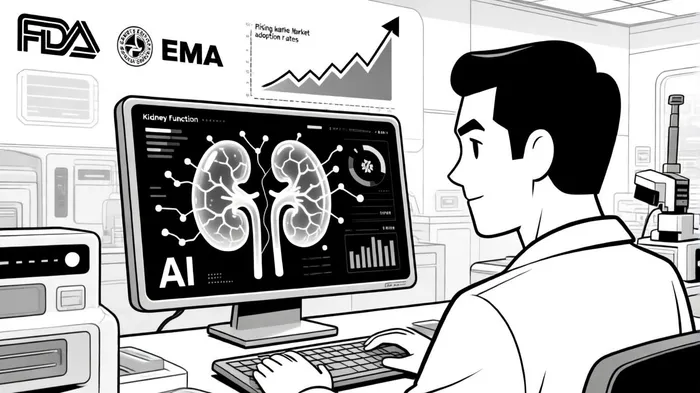
The convergence of artificial intelligence (AI) and nephrology is reshaping diagnostic paradigms, driven by regulatory milestones that validate the safety and efficacy of AI tools. As global prevalence of chronic kidney disease (CKD) and acute kidney injury (AKI) rises, investors are increasingly eyeing AI-driven nephrology diagnostics as a high-growth sector. Recent approvals by the U.S. Food and Drug Administration (FDA) and the European Medicines Agency (EMA guidance) signal a pivotal shift in market adoption, underpinned by regulatory frameworks that prioritize innovation while ensuring patient safety.
FDA Approvals: A Catalyst for U.S. Market Growth
The FDA has emerged as a key enabler of AI adoption in nephrology. A Medical Futurist analysis reported that in 2024 the agency authorized 235 AI-based medical devices, a record high, with nephrology-specific tools like KidneyIntelX gaining traction. This AI-powered diagnostic system, which received the FDA's "Breakthrough Device" designation in 2025, leverages machine learning to analyze blood-based biomarkers and electronic health records (EHRs) for early detection of kidney disease in high-risk populations, such as patients with Type 2 diabetes, according to Becker's Hospital Review. The Breakthrough Device program expedites access to transformative technologies, reducing review timelines and fostering rapid integration into clinical workflows, as Becker's subsequently noted.
Beyond KidneyIntelX, the FDA's growing portfolio of AI nephrology tools includes predictive analytics platforms for CKD progression and dialysis readiness. These tools are streamlining care by enabling proactive interventions, reducing hospitalizations, and lowering healthcare costs. For instance, AI models analyzing retinal imaging data have demonstrated cost-effective, non-invasive methods for CKD detection, as shown in a Kidney Medicine study, aligning with the FDA's focus on accessible diagnostic solutions.
EMA's Regulatory Innovations: Validating AI in European Markets
While the FDA leads in approvals, the European Medicines Agency is setting a precedent for AI's role in regulatory science. In March 2025, the EMA's Committee for Human Medicinal Products (CHMP) made history by accepting clinical trial evidence generated by the AIM-NASH AI tool, which analyzes liver biopsies for metabolic dysfunction-associated steatohepatitis (MASH). This marked the first time the EMA recognized AI-generated data as scientifically valid, a milestone that could extend to nephrology diagnostics.
The EMA's 2023–2028 Multi-Annual AI Workplan further underscores its commitment to integrating AI into medicine regulation, as explored in a Kidney News article. This strategy emphasizes risk-based frameworks, transparency, and collaboration with developers, ensuring AI tools meet rigorous standards for data integrity and generalizability. For nephrology, the EMA's recent qualification of the Kidney Klinrisk Algorithm-a CE-marked tool for CKD risk stratification-highlights its focus on personalized medicine; see the Roche press release. This algorithm, developed by Roche and KlinRisk, Inc., uses machine learning to process routine lab data, aligning with clinical guidelines to optimize CKD management.
Market Adoption: From Regulatory Greenlights to Clinical Impact
Regulatory approvals are translating into tangible market growth. By 2025, the global AI nephrology predictive platform market is projected to expand, driven by advancements in predictive analytics, machine learning, and generative AI. Key applications include:
- AKI Prediction: Deep learning models analyzing EHRs and lab trends have shown superior accuracy in predicting postoperative AKI compared to traditional methods, as reported in an Indian Journal of Nephrology article.
- Dialysis Optimization: AI-powered scheduling tools are enhancing operational efficiency in dialysis centers, while chatbots reduce clinician workloads through 24/7 patient triage (coverage by Kidney News has highlighted these trends).
- Transplant Monitoring: Tools like iBox and Predigraft, approved by the EMA in 2021, are improving graft outcomes through real-time risk assessment (described in Kidney Medicine).
However, challenges persist. Data privacy concerns, interoperability issues, and resistance to adoption among clinicians remain barriers. Additionally, many FDA-approved AI tools lack sex- or age-specific validation studies, raising questions about generalizability (the Medical Futurist analysis noted these gaps). Addressing these issues will be critical for sustained growth.
Investment Outlook: Navigating Opportunities and Risks
The regulatory tailwinds for AI nephrology diagnostics present compelling investment opportunities. Startups and established players alike are capitalizing on partnerships with regulatory bodies to fast-track approvals. For example, Renalytix's PRIME-CKD initiative, backed by a $10 million Horizon Europe grant, aims to develop personalized CKD therapies using AI-driven biomarkers (detailed in Roche's press materials). Such collaborations align with the EMA's emphasis on innovation while mitigating financial risks for investors.
Yet, caution is warranted. The market's reliance on high-quality, diverse datasets means companies must prioritize data governance and ethical AI practices. Investors should also monitor regulatory tools and databases-such as the EMA's Scientific Explorer and the FDA's AI/ML-enabled device database-for real-time insights into regulatory trends and post-market performance.
Conclusion
Regulatory milestones by the FDA and EMA are accelerating the adoption of AI-driven nephrology diagnostics, transforming kidney care from reactive to predictive. While challenges like data integration and ethical concerns persist, the sector's growth trajectory is undeniable. For investors, the key lies in supporting companies that balance innovation with regulatory compliance, ensuring AI tools deliver both clinical value and commercial viability.







Comentarios
Aún no hay comentarios