
The AI-Driven Chip Shortage: A Strategic Opportunity in Semiconductor-Resilient Tech Stocks
The global semiconductor industry is undergoing a seismic shift driven by the insatiable demand for AI infrastructure. As data centers race to deploy high-bandwidth memory (HBM) for generative AI workloads, traditional DRAM markets are collapsing under a perfect storm of supply constraints and redirected production priorities. This crisis is reshaping the tech landscape, creating stark winners and losers in the semiconductor-dependent ecosystem. For investors, the key lies in identifying companies that are either capitalizing on the AI-driven reallocation of resources or mitigating the fallout from the DRAM shortage.
The Winners: HBM Producers and AI-First Supply Chains
The most obvious beneficiaries of the current crisis are the manufacturers pivoting to HBM production. Samsung, SK Hynix, and MicronMU-- have reallocated wafer capacity away from consumer-grade DRAM to meet the surging demand for HBM, which is critical for AI training and inference according to market analysis. SK Hynix, in particular, has emerged as a dominant player, capturing ~60% of the HBM market in 2025. This shift has translated into record profits for these firms, with SK Hynix reporting unprecedented Q3 2025 earnings.
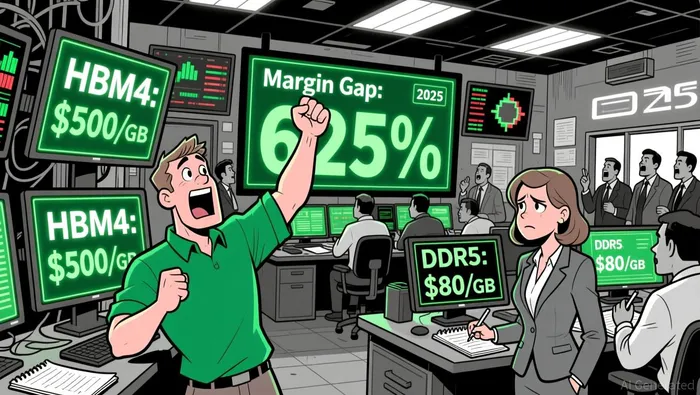
The financial rationale is clear: HBM commands significantly higher margins than traditional DRAM. For instance, contract prices for 16Gb DDR5 chips surged from $6.84 to $27.20 in Q4 2025, while HBM4, the next-generation standard for AI, is expected to command even steeper premiums. This dynamic has created a self-reinforcing cycle-higher AI demand → increased HBM production → further DRAM shortages → higher prices for remaining DRAM.
Beyond pure-play memory manufacturers, companies with AI-first supply chains are also thriving. Apple and Samsung, for example, have leveraged long-term supply agreements to secure DRAM for their high-end devices, allowing them to maintain product quality while competitors scramble according to IDC analysis. Similarly, Microsoft's Copilot+ PCs, which require 16GB of RAM, are insulated from the worst of the shortage due to their partnerships with leading memory producers according to IDC analysis.
The Losers: Consumer Electronics and Automotive Sectors
The DRAM shortage is wreaking havoc on sectors reliant on traditional memory. In the smartphone market, low-end OEMs like TCL, Realme, and Xiaomi are particularly vulnerable. With memory costs accounting for 15-20% of mid-range device bills of materials, these firms face a binary choice: raise prices and risk losing market share or cut specs and alienate consumers according to IDC analysis. The result? A projected 2.9-5.2% contraction in the global smartphone market in 2026 according to IDC analysis.
The PC market is in an even more precarious position. As Microsoft's Windows 10 end-of-life refresh cycle overlaps with the AI PC marketing push, OEMs like Dell, HP, and Lenovo are hiking prices by 15-20% to offset soaring memory costs according to Tom's Hardware. IDC forecasts a 9% decline in PC shipments under a pessimistic scenario, with smaller vendors and DIY builders bearing the brunt of the disruption according to Tom's Hardware. The irony? AI PCs, which require 16GB+ RAM, are precisely the devices being starved of components due to the reallocation of production to HBM according to IDC analysis.
Automotive manufacturers are also feeling the pinch. DRAM is critical for advanced driver-assistance systems (ADAS) and infotainment units, but memory producers are prioritizing AI data centers over automotive applications according to SP Global. Premium automakers, which rely on high-density DRAM for autonomous driving features, are especially exposed. This imbalance could delay the adoption of next-gen automotive tech and force automakers to redesign systems to use newer, more expensive DRAM standards like LPDDR5 according to SP Global.
Strategic Opportunities: Resilience Through Diversification
While the DRAM shortage is a tailwind for HBM producers, it also highlights the importance of supply chain resilience. Companies adopting proactive strategies-such as geographic diversification, domestic production incentives, and buffer inventory management-are better positioned to weather the crisis according to OMDIA analysis. For example, U.S. firms are leveraging 100% tariffs on imported chips to incentivize domestic manufacturing according to OMDIA analysis, while others are investing in real-time market intelligence to anticipate shortages according to RandTech.
Investors should also watch for firms pivoting to alternative technologies. Micron, for instance, has discontinued consumer-grade product lines like Crucial to focus on AI and enterprise clients according to Z2Data. This shift, while painful in the short term, aligns with the long-term trajectory of the industry. Conversely, companies that fail to adapt-such as those reliant on DDR4 or LPDDR4-risk obsolescence as demand for these older standards wanes according to SP Global.
The Bottom Line: A Tale of Two Markets
The AI-driven chip shortage is a classic case of creative destruction. On one side, HBM producers and AI-first firms are reaping record profits and market share. On the other, traditional sectors like consumer electronics and automotive are grappling with inflationary pressures and supply constraints. For investors, the path forward is clear: overweight semiconductor-resilient stocks with exposure to AI infrastructure and underweight those exposed to commoditized DRAM markets.
As the industry braces for a prolonged shortage-new memory manufacturing capacity won't be available until 2027 according to Reuters-the winners and losers will only become more defined. The key takeaway? The future belongs to those who can navigate the AI-driven supply chain revolution.







Comentarios
Aún no hay comentarios