
AI and Digital Innovation in Australian Freight: A 5% Cost-Cut Opportunity and Strategic Imperative
AI Adoption: A Catalyst for Efficiency and Cost Reduction
According to a report by the IMARC Group, the Australian third-party logistics (3PL) market reached USD 24.03 billion in 2024 and is expected to surge to USD 44.32 billion by 2033, growing at a compound annual rate of 7.04%. This exponential growth is underpinned by AI's role in streamlining transportation planning, inventory management, and demand forecasting. Real-time data analytics, for instance, enable logistics providers to automate route optimization, reduce delays, and enhance supply chain visibility. A 2025 study highlights that AI-powered systems have already cut empty miles in long-haul freight by up to 30%, directly lowering fuel consumption and operational costs.
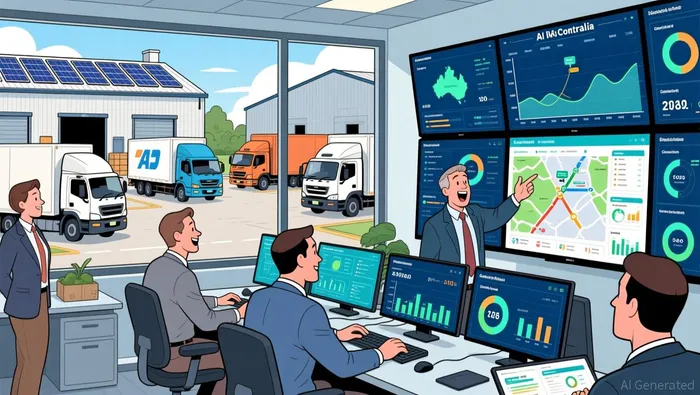
The urgency for investors to act is underscored by a Yahoo Finance report, which notes that 81% of supply chain leaders anticipate a 5% reduction in freight costs by 2030 through AI and digital innovation. This projection is not speculative but grounded in current implementations. For example, Chemist Warehouse's partnership with Augmodo to deploy SmartBadges™ has improved live inventory accuracy, reducing overstocking and understocking issues. Similarly, Adiona Tech's FlexOps platform in New South Wales demonstrates how AI-driven fleet management can enhance time efficiency and profitability while cutting emissions.
Sustainability Integration: Aligning Profitability with Environmental Goals
AI's impact extends beyond cost efficiency to sustainability-a growing priority for global investors. A 2025 research study reveals that integrating electric vehicles (EVs) with AI-enabled logistics systems can reduce CO2 emissions by up to 40% in last-mile operations, while also achieving 10–25% higher energy efficiency. Intelligent route planning and predictive fleet utilization are critical to these outcomes, minimizing fuel waste and optimizing energy use. For investors, this dual benefit of cost reduction and environmental compliance aligns with the rising demand for ESG (Environmental, Social, and Governance)-aligned portfolios.
The Australian government's push for greener logistics further amplifies this trend. Policies incentivizing low-emission transport and smart infrastructure are creating a regulatory tailwind for AI-driven logistics platforms. Companies that integrate sustainability into their core operations-such as those leveraging AI for predictive maintenance or carbon footprint tracking-are likely to dominate the market in the next decade.
Strategic Imperatives for Investors
For long-term infrastructure and technology-enabled logistics investments, the key lies in identifying platforms that combine AI, real-time analytics, and sustainability. The IMARC Group's data underscores that AI adoption is no longer a competitive advantage but a necessity for market readiness. Investors who delay entry risk being outpaced by early adopters who have already demonstrated scalable cost reductions and operational agility.
The Yahoo Finance report adds urgency, noting that real-time integration between transportation management systems and broader supply-chain components is critical for cost control. This integration requires significant capital investment, presenting opportunities for venture capital and private equity firms to fund platforms that bridge these gaps. Additionally, the rise of smart warehousing-exemplified by Chemist Warehouse's inventory solutions-highlights the potential for AI to unlock value in traditionally rigid logistics ecosystems.
Conclusion: Capturing the AI-Driven Logistics Wave
The Australian freight industry's embrace of AI and digital innovation is a testament to the sector's readiness for transformation. With a projected 5% cost reduction on the horizon and sustainability goals becoming non-negotiable, investors must prioritize platforms that leverage AI for efficiency, scalability, and environmental impact. The IMARC Group and Yahoo Finance data collectively paint a clear picture: the window to capitalize on this wave is narrowing, and the most resilient logistics companies will be those that integrate AI into their core operations today.
For investors, the message is unequivocal-aligning with AI-driven logistics platforms is not merely a strategic choice but a necessity to future-proof portfolios in an industry undergoing rapid, irreversible change.







Comentarios
Aún no hay comentarios