
AI Chips vs. Meme Coins: Where to Allocate Capital in Asia's 2026 Tech-Driven Bull Run?
Asia's 2026 tech-driven bull run is shaping up as a pivotal moment for investors, with two dominant narratives vying for attention: the structural demand for AI infrastructure and the speculative frenzy around memeMEME-- coins like PEPEPEPE--. While retail enthusiasm for crypto tokens has surged, the semiconductor sector-particularly high-bandwidth memory (HBM) and advanced packaging technologies-offers a more durable and capital-efficient opportunity. This analysis examines the interplay of sectoral momentum, regulatory tailwinds, and supply constraints to argue that AI chips (NVIDIA, TSMC) outperform meme coins in the long term.
Structural Bottlenecks in AI Infrastructure: HBM Scarcity and TSMC's Capacity Constraints
The semiconductor industry is grappling with a perfect storm of demand and supply-side limitations. High-bandwidth memory (HBM), a critical component for AI accelerators, is in a state of chronic scarcity. According to a report by , HBM3 and HBM3E are fully sold out through 2026, with SK Hynix and MicronMU-- unable to scale production fast enough to meet exponential demand. Nearly all new HBM supply is being allocated to hyperscalers and AI server builders, who have secured multi-year contracts for HBM3E and the next-gen HBM4.
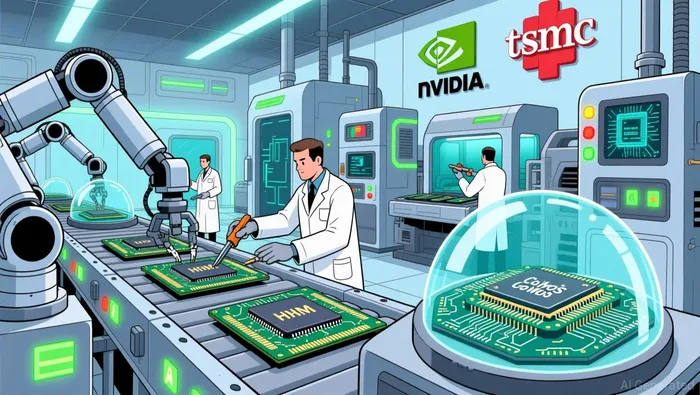
This shortage directly impacts NVIDIANVDA-- and TSMCTSM--. NVIDIA's H200 AI chip, in high demand in China, faces a supply gap of over 1.3 million units in 2026, with current inventory at 700,000 units. To address this, NVIDIA is negotiating with TSMC to ramp up 4nm node and CoWoS packaging capacity. However, TSMC's CoWoS capacity is already fully booked through 2026, creating a bottleneck that stifles the production of functional AI chips. The result is a dual challenge: AI infrastructure demand is outpacing supply, and advanced packaging technologies are the linchpin of this bottleneck.
U.S.-China Export Policy Shifts: Policy Risk vs. Strategic Opportunity
The U.S. has signaled a partial easing of export controls on advanced AI chips to China, allowing the sale of NVIDIA's H200 under a licensing framework that includes a 25% fee to the U.S. Treasury according to policy analysis. This policy shift, part of the Trump administration's broader strategy to maintain U.S. AI dominance while managing geopolitical tensions, introduces policy risk but also opens new markets for NVIDIA as reported in industry analysis. However, China is simultaneously advancing its domestic AI chip industry, prioritizing self-reliance for state-backed projects. This duality creates a complex landscape for NVIDIA, which must balance serving the Chinese market with maintaining global production viability according to financial reports.
For investors, the key takeaway is that AI chipmakers are navigating a regulatory gray zone. While U.S. policy shifts reduce immediate barriers, they also introduce uncertainty. In contrast, meme coins like PEPE lack any such regulatory clarity. Hong Kong's 2026 cryptocurrency regulations, which mandate licensing for crypto dealers and custodians, impose strict compliance costs and investor protection measures. These rules, while fostering institutional participation, also heighten operational risks for speculative assets like PEPE, which are prone to volatility and fraud as noted in industry analysis.
Regulatory Tailwinds for AI Infrastructure: Hong Kong's Strategic Positioning
Hong Kong's regulatory environment starkly contrasts with the crypto sector's ambiguity. The city has invested HK$1 billion in the Hong Kong AI Research and Development Institute (AIRDI) and expanded its AI Supercomputing Centre to meet growing demand. These initiatives are part of a broader strategy to position Hong Kong as a global AI hub, supported by voluntary ethical guidelines and sector-specific regulations (e.g., healthcare AI devices)according to industry reports.
Meanwhile, Hong Kong's crypto regulations prioritize stability over innovation. The Securities and Futures Commission's (SFC) "A-S-P-I-Re" roadmap emphasizes investor protection and systemic risk mitigation as outlined in official documents. Meme coins, though not explicitly targeted, would face the same compliance burdens as other cryptocurrencies. This regulatory asymmetry-favoring AI infrastructure over speculative crypto assets-creates a durable advantage for semiconductor firms.
The Case for AI Chips: Durable Demand vs. Meme Coin Volatility
The structural demand for AI infrastructure is underpinned by long-term trends. HBM shortages and advanced packaging bottlenecks are not temporary but reflect the exponential growth of AI workloads. NVIDIA and TSMC are positioned to benefit from these dynamics, despite near-term supply constraints. Conversely, meme coins like PEPE lack fundamental value drivers and are vulnerable to regulatory crackdowns and market sentiment shifts.
For example, Hong Kong's mandatory licensing for crypto custodians requires asset segregation and private key management, increasing operational costs. These measures, while fostering transparency, also deter speculative trading. In contrast, AI infrastructure receives direct government support, including funding for R&D and cross-sector collaboration as reported in official statements.
Conclusion: Allocate Capital to the Future of Computation
Asia's 2026 tech bull run presents a clear choice for investors. AI infrastructure, driven by HBM scarcity, U.S.-China policy shifts, and Hong Kong's regulatory tailwinds, offers a durable and capital-efficient opportunity. Meme coins, while capturing retail attention, remain exposed to volatility and regulatory uncertainty. As the semiconductor industry navigates structural bottlenecks, NVIDIA and TSMC are poised to outperform speculative crypto assets in the long term.





Comentarios
Aún no hay comentarios