
Is AI A Bubble? Yes... And No
The AI sector in 2025 is a paradox: a golden goose for some, a ticking time bomb for others. Global investment has skyrocketed to $280 billion, a 40% leap from 2024, driven by Big Tech's $10 billion bet on OpenAI and Amazon's $4 billion infusion into Anthropic [1]. Yet, as the Richmond Fed warns, early-stage AI startups are trading at "frothy" valuations, with some companies valued in the billions despite minimal revenue-a recipe for disaster reminiscent of the dot-com crash [2]. So, is AI a bubble? The answer, as always, is both yes and no.
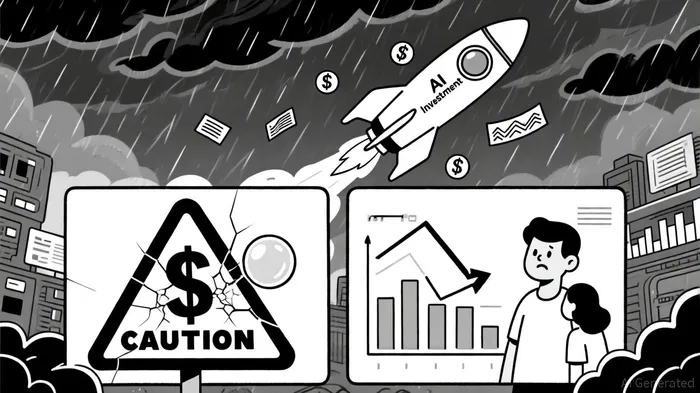
The Bubble Case: Greed, Fear, and the Ghost of 1999
Let's start with the bad news. The AI frenzy has created a speculative frenzy. Unprofitable tech firms in the AI space outperformed profitable ones in Q3 2025, with a 29% average return versus 8% for their profitable peers [3]. This mirrors the telecom boom of the 1990s, where overbuilding and unsustainable valuations led to collapse. Today, AI infrastructure spending by tech giants is projected to hit $5.2 trillion by 2030, while AI-generated revenue remains a mere $60 billion in 2025 [4]. The gap? A $4.6 trillion overhang of unproven value.
Then there's the "AI washing" problem. Non-AI companies are rebranding to piggyback on the hype, inflating valuations without substance. The Nasdaq's stumble from record highs in October 2025 reflects growing unease [5]. As Bloomberg puts it, "The market is pricing AI as a miracle, not a tool" [6].
The No Case: Why This Time Is Different (Maybe)
But here's the twist: AI isn't just another fad. Unlike the dot-com era, this time there's real utility. Enterprise software firms like SAP and TSMC are seeing 25-30% annual revenue growth as AI integration moves from theory to practice [7]. TSMC, for instance, is undervalued by 47.6% despite leading advanced chip production [8]. Similarly, UnitedHealth Group (UNH) trades at a 75.3% discount, even as AI transforms healthcare analytics [9].
The shift to "inferencing" applications-AI tools that enhance workflows, not just train models-is creating durable value. Qualcomm's AI-powered Snapdragon chips and Autodesk's AI-driven design software are prime examples of companies bridging the gap between hype and profitability [10].
Contrarian Playbook: Buy the Whistleblowers, Not the Hype
For contrarians, the key is to separate the wheat from the chaff. Focus on sectors where fundamentals outpace the noise:
- Infrastructure Providers: TSMC and HPE are undervalued despite their critical roles in AI hardware and IT solutions [11].
- Health Tech: UnitedHealth and Health Tech firms remain elevated but justified by tangible clinical outcomes [12].
- Industrial AI: Energy and manufacturing automation, currently out of favor due to ESG skepticism, offer long-term tailwinds as AI optimizes supply chains [13].
The Cramer Verdict: Dollar-Cost Average Into the Disruption
This isn't a call to panic-sell AI stocks, but neither is it a free ride. Investors should adopt a "hedge and hope" strategy:
- Diversify: Use AI ETFs to spread risk while maintaining exposure.
- Dollar-Cost Average: Buy dips in undervalued AI-native companies like Palantir (PLTR) or Qualcomm (QCOM).
- Avoid the Fads: Steer clear of speculative "AI+" plays without proven use cases.
As the market recalibrates, the survivors will be those who focus on revenue, not just hype. The AI bubble? It's here, but so are the opportunities-for those willing to look beyond the noise.





Comentarios
Aún no hay comentarios