
The AI-Bio Convergence and the Emergence of Physical AI in Drug Discovery: Why Investors Should Position for the 'Dealmaking Superbowl' in 2026
The pharmaceutical industry is on the cusp of a seismic shift driven by the AI-bio convergence, with 2026 poised to become a landmark year for investors. As artificial intelligence (AI) transitions from a speculative tool to a foundational pillar of drug discovery, the market is witnessing a surge in innovation, consolidation, and strategic repositioning. This "Dealmaking Superbowl" offers a unique opportunity for investors to capitalize on a sector where AI is not just accelerating timelines but redefining the economics of drug development.
The AI-Driven Drug Discovery Revolution
The global AI-driven drug discovery market, valued at USD 2.35 billion in 2025, is projected to grow at a 24.8% CAGR, reaching USD 13.77 billion by 2033 according to Grand View Research. This exponential growth is fueled by AI's ability to streamline processes that traditionally took over a decade and cost billions. For instance, AI-designed drugs now achieve 80-90% success rates in Phase I trials, far outpacing the 40-65% rates of conventional methods as reported by LifeBit. Platforms like NVIDIA's Gefion AI and BenevolentAI's generative models are reducing drug development timelines to 3-6 years while cutting costs by up to 70% LifeBit analysis shows.
The integration of AI into drug discovery is particularly transformative in oncology, where predictive modeling identifies novel targets and enables personalized therapies Precedence Research notes. For example, AI-native biotech firms like Insilico Medicine and Generate:Biomedicines have advanced 75 AI-designed molecules into clinical trials by 2024 ScienceDirect reports, with some entering Phase II/III trials in 2026 Pharma Journal indicates. These advancements are not theoretical; they are operational systems embedded in R&D pipelines, delivering measurable outcomes.
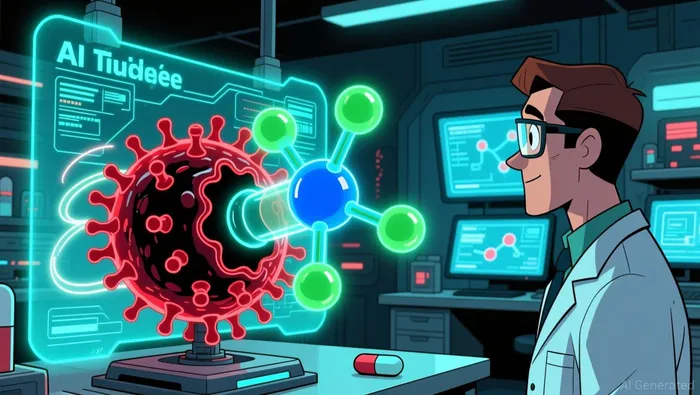
Physical AI: From Virtual Models to Real-World Impact
A critical component of this revolution is Physical AI, which bridges computational design and biological validation. Unlike traditional AI, which focuses on predictive modeling, Physical AI integrates multi-omics data, genetic profiles, and real-world patient outcomes to design de novo molecules with optimized ADMET (absorption, distribution, metabolism, excretion, and toxicity) properties The Economist reports.
Case studies highlight its efficacy. In 2025, ChatGPT (GPT-4o) demonstrated its ability to optimize low-affinity EGFR inhibitors and design non-covalent MCL1 inhibitors with high docking scores Nature study shows. By 2026, platforms like ProFound Therapeutics and Generate:Biomedicines are translating computational designs into clinically meaningful candidates, with some entering Phase III trials Pharma Journal indicates. This shift from "virtual cells" to "virtual patients" is reshaping clinical testing, enabling smaller, more efficient trials and accelerating time-to-market PharmaVoice analysis.
The 2026 Dealmaking Superbowl: Strategic M&A and Portfolio Rebalancing
The convergence of AI and biotech is driving a Mega-Merger Renaissance in 2026, with global healthcare deal flow projected to reach $3.9 trillion Market Data shows. This surge is fueled by three key factors:
1. Patent cliffs: Pharma giants are acquiring late-stage assets to offset revenue losses from expiring patents.
2. IRA-driven pricing pressures: Companies are pivoting to complex biologics and AI-driven platforms to justify premium pricing.
3. AI consolidation: Larger firms are acquiring AI-native startups with proprietary datasets and validated pipelines.
Notable examples include Novo Nordisk's acquisition of Akero Therapeutics in late 2025, signaling a shift from injectables to oral obesity treatments Market Data reports, and Gilead's launch of lenacapavir, a twice-yearly HIV PrEP therapy Market Data notes. These deals reflect a broader trend: pharma companies are no longer "betting on one big idea" but adopting diversified, milestone-based strategies to hedge against risk Pharma Journal indicates.
Why 2026 Is the Pivotal Year for Investors
For investors, the "Dealmaking Superbowl" presents three strategic opportunities:
1. AI-native biotechs: Firms with validated pipelines (e.g., Insilico, BenevolentAI) are prime acquisition targets as pharma companies seek to integrate AI into R&D.
2. Platform-centric M&A: Deals focused on AI-driven biomarkers, predictive modeling, and agentic systems (e.g., OpenFold3 collaborations) are gaining traction Bio-IT World reports.
3. Therapeutic specialization: High-growth areas like obesity, HIV, and neurodegenerative diseases are attracting premium valuations, with M&A premiums returning to 50-100% Market Data shows.
Moreover, regulatory frameworks are evolving to support AI integration. The FDA and EMA are prioritizing explainability, privacy, and auditability in AI applications, ensuring that these tools meet rigorous standards for pharmacovigilance and clinical decision-making PharmaVoice analysis. This regulatory clarity is reducing uncertainty and accelerating adoption.
Conclusion: Positioning for the Future of Pharma
The AI-bio convergence is not a passing trend but a structural transformation of the pharmaceutical industry. By 2026, AI will be as essential to drug discovery as DNA sequencing is to genomics. Investors who position themselves in AI-native platforms, strategic M&A opportunities, and high-impact therapeutic areas will be well-placed to capitalize on this $13.77 billion market and the $3.9 trillion deal flow expected in 2026. The "Dealmaking Superbowl" is not just a metaphor-it's a reality where innovation, capital, and regulatory alignment are converging to redefine healthcare.





Comentarios
Aún no hay comentarios