
US Agricultural Sector Resilience Amid Trump-Era Trade Policies: Investment Opportunities in Agribusiness and Farm Supply Chains
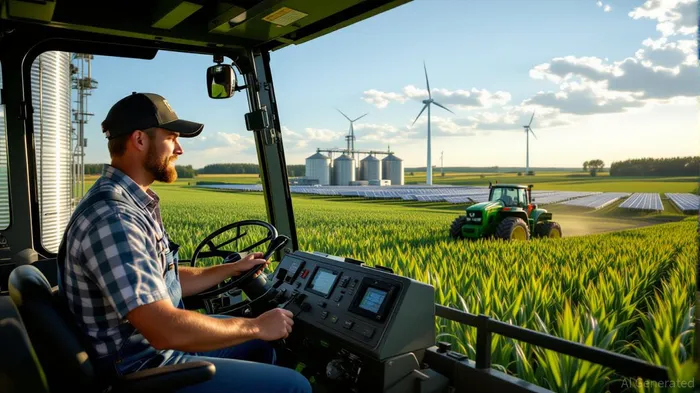
The US agricultural sector has demonstrated a complex interplay of resilience and vulnerability under Trump-era trade policies, creating both challenges and opportunities for investors. While tariffs, deregulation, and trade renegotiations have disrupted traditional markets, they have also spurred innovation in agribusiness and supply chain dynamics. This analysis explores the sector's current landscape, highlighting key investment opportunities amid evolving policy and market conditions.
Positive Drivers: Confidence, Investment, and Trade Expansion
According to a report by Newstarget, 70% of American farmers support Trump's trade policies, citing a “fairer playing field” for domestic agriculture[1]. This sentiment is reflected in the Farm Capital Investment Index, which reached its highest level since May 2021, signaling renewed optimism in capital expenditures[1]. Similarly, the Farm Financial Performance Index has remained above 100 for four consecutive months, indicating expectations of stable or improved financial outcomes[1].
Trade expansion efforts, such as the recent U.S.-UK agreement, have opened new export avenues for commodities like soybeans and pork[1]. Secretary of Agriculture Brooke Rollins has emphasized prioritizing export markets to address the agricultural trade deficit[5], a strategy that could benefit agribusinesses with diversified global reach. Additionally, supply chain innovations—such as regenerative agriculture practices and automated logistics systems—have enhanced efficiency and sustainability[2]. Companies like J.R. Simplot and Alltech are leveraging technology to improve productivity while reducing environmental footprints[2], positioning them as attractive investment targets.
Challenges: Trade Uncertainty, Input Costs, and Policy Risks
Despite these positives, the sector faces significant headwinds. Retaliatory tariffs from China, Canada, and the EU have disrupted key export markets, with China imposing 10–15% additional tariffs on U.S. agricultural products like corn and pork[2]. This has forced farmers to seek alternative buyers, often at lower prices, reducing profit margins[2]. Input costs have also surged due to tariffs on fertilizers, machinery, and potash—a critical resource for which 80% of U.S. supply comes from Canada[4].
Policy shifts further complicate the outlook. Trump's proposed 2025 farm policies, including deregulation and reduced subsidies, have sparked debate. While large agribusinesses may benefit from relaxed regulations, small and medium-sized farms face heightened financial risks[3]. The AgAmerica 2025 report underscores this divide, noting a 55% increase in family farm bankruptcies in 2024 and projected declines in net farm income due to lower commodity prices[1].
Investment Opportunities: Agribusiness, Supply Chain Tech, and Diversification
Investors seeking opportunities in this dynamic environment should focus on three areas:
Agribusiness Giants and Sustainable Innovators
Large agribusinesses with economies of scale, such as J.R. Simplot and Wilbur-Ellis, are well-positioned to capitalize on deregulation and trade expansion[2]. Additionally, companies investing in sustainable practices—like Alltech's animal nutrition solutions or Cavallo Ventures' productivity-enhancing technologies—align with long-term trends in climate-conscious agriculture[2].Supply Chain Resilience Technologies
Innovations in automation, traceability, and logistics are critical for mitigating trade uncertainties. Modern grain elevators equipped with real-time market routing tools[2] and automated systems like XIO's insect protein production[2] exemplify how technology can reduce costs and enhance efficiency.Diversified Market Strategies
Agribusinesses that diversify export destinations—shifting from China to Southeast Asia, the Middle East, or sub-Saharan Africa[2]—can reduce exposure to trade conflicts. Similarly, vertical integration and off-farm income streams (e.g., agritourism or renewable energy) offer stability amid volatile commodity markets[1].
Conclusion: Balancing Risks and Rewards
The U.S. agricultural sector's resilience under Trump-era policies hinges on its ability to adapt to trade uncertainties and policy shifts. While tariffs and deregulation have created short-term volatility, they also drive innovation and market diversification. Investors who prioritize companies with strong supply chain technologies, sustainable practices, and diversified revenue streams are likely to navigate these challenges successfully.







Comentarios
Aún no hay comentarios