
Agricultural Commodity Price Volatility: Strategic Opportunities in a Climate-Driven and Geopolitical Era
The global agricultural commodity market has become a battleground for forces far beyond traditional supply and demand. Climate change, geopolitical tensions, and shifting trade policies have converged to create a landscape of unprecedented volatility. Yet, within this chaos lie strategic opportunities for investors who can identify agribusinesses and supply chain innovators positioned to thrive amid uncertainty.
Climate Change: The New Baseline for Agricultural Risk
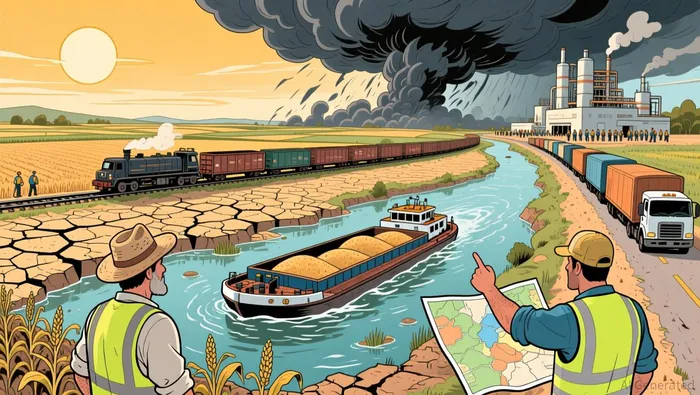
Climate-driven disruptions have become a defining feature of agricultural markets. Prolonged droughts in key producing regions like Russia, Argentina, and the U.S. Midwest have slashed wheat, corn, and soybean output, while La Niña patterns in 2025 have further complicated rainfall and temperature dynamics in South America and Southeast Asia. The World Bank reported a nearly 7% decline in its agricultural price index in 2025, driven by weaker demand and climate-related production shocks.
For tree crops like cocoa and coffee, the stakes are even higher. These commodities are geographically concentrated and require long-term investment cycles, making them particularly vulnerable to shifting climate patterns according to market analysis. Meanwhile, logistical bottlenecks-such as low river levels on the Rhine and Danube-have compounded transport costs, disrupting trade flows and amplifying price swings.
Geopolitical Tensions: A Dominant Force in Agricultural Trade
Geopolitical factors have increasingly overshadowed traditional market fundamentals. The U.S.-China trade war, for instance, has escalated into a broader economic contest, with China imposing steep tariffs on U.S. agricultural exports like soybeans and beef. This has redirected trade flows to Brazil and Argentina, which now dominate soybean exports to China according to CSIS analysis.
Simultaneously, Russia's export quotas on wheat and Black Sea trade disruptions have created artificial scarcity, while fertilizer price surges-driven by geopolitical restrictions and input costs-have strained global farmers. These dynamics highlight how governments are leveraging subsidies and trade policies to secure agricultural dominance, reshaping global supply chains in real time according to clean tech research.
Resilient Agribusinesses: Innovation as a Competitive Edge
Amid this volatility, certain firms are leveraging innovation to outperform. Certis Belchim has emerged as a leader in sustainable agriculture, reducing pesticide use by over 75% in regions like Spain through biostimulants and biocontrol agents. Similarly, Saint-Gobain Cultilene is revolutionizing greenhouse farming with advanced cultivation systems that optimize resource efficiency, ensuring high yields with minimal environmental impact according to industry analysis.
Startups like ECOshifter and refinq are addressing climate risks through AI-driven tools. ECOshifter's SaaS platform maps local climate risks and simulates adaptation strategies, while refinq's geospatial AI evaluates hazards like flooding and temperature shifts, enabling scenario-based planning aligned with global sustainability standards according to innovation reports.
In precision agriculture, John Deere's See & Spray AI technology has reduced herbicide use by up to 90%, and Taranis uses aerial imagery to detect crop stress early. Meanwhile, Indigo Agriculture is promoting regenerative practices that enhance soil health and biodiversity, supported by carbon credit verification according to climate innovation sources.
Supply Chain Resilience: Diversification and Digitalization
Supply chain innovations are equally critical. BCG and Quantis emphasize diversified sourcing and optimized logistics to counteract geopolitical and climate risks. For example, AI and predictive analytics are being deployed to develop climate-resilient crop varieties and streamline logistics amid disruptions according to supply chain research.
Nutrien, a major fertilizer producer, has capitalized on elevated demand and prices driven by geopolitical tensions, despite affordability challenges in some regions according to market analysis. Similarly, INARI is using AI-guided gene editing to create drought-tolerant and nitrogen-efficient crops, addressing both yield and resource efficiency according to clean tech research.
Conclusion: A Call for Strategic Investment
The agricultural sector's future hinges on adaptability. Investors who target firms integrating climate adaptation, geopolitical agility, and supply chain innovation will be well-positioned to navigate volatility. Certis Belchim, John Deere, and Nutrien exemplify how technological and strategic foresight can transform risk into reward. As climate and geopolitical pressures intensify, these resilient players are not just surviving-they are redefining the rules of the game.







Comentarios
Aún no hay comentarios