
U.S. Agricultural Commodities: Weather-Driven Opportunities in Soybean and Corn Futures
The U.S. agricultural commodity markets are undergoing a pivotal shift in 2025, driven by favorable weather conditions and robust crop forecasts that are reshaping soybean and corn price dynamics. As the USDA's August 2025 World Agricultural Supply and Demand Estimates (WASDE) report highlights, record-breaking yields and improved production outlooks are creating a complex interplay between supply fundamentals and short-term trading opportunities in grain futures. Investors and traders must navigate this evolving landscape with a nuanced understanding of weather patterns, inventory trends, and market sentiment.
Favorable Weather and Record Yields
The USDA's latest projections reveal that U.S. corn production for the 2024/2025 marketing year is forecast at 15.147 billion bushels, a 47 million bushel increase from July estimates. This surge is attributed to a record yield of 188.1 bushels per acre, despite a 700,000-acre reduction in harvested acreage. Key corn-producing states like Iowa and Illinois are expected to outperform last year's yields, while Ohio faces challenges. For soybeans, production is projected at 4.589 billion bushels, up 154 million bushels from July, driven by a 53.2 bushel per acre yield and expanded harvested acreage.
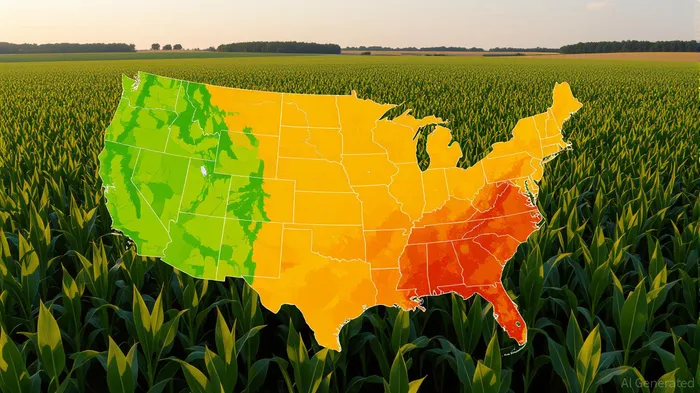
Weather conditions, however, remain a double-edged sword. While the Corn Belt has enjoyed favorable growing conditions so far, late-summer forecasts suggest a shift: an upper-level ridge of high pressure could bring hotter, drier conditions to the Western Corn Belt, increasing stress on soybeans during critical development stages. Conversely, the Eastern Corn Belt may see more variable rainfall, offering partial relief. In the South, frost risks for sensitive crops and soil drainage challenges in Paraná and Rio Grande do Sul could complicate winter crop planting.
Market Reactions: Bearish Soybeans, Support for Corn
The August WASDE report has triggered divergent market reactions. Soybean prices have fallen sharply due to a 125 million bushel increase in ending stocks to 560 million bushels, signaling oversupply and weakening demand. This bearish sentiment is compounded by strong competition from South American exporters and Brazil's record soybean production. In contrast, corn prices have found support from reduced harvested acreage and strong export demand, with ending stocks projected at 2.1 billion bushels—a 24 million bushel decline from July.
Short-Term Trading Opportunities in Grain Futures
For traders, the current environment presents a mix of risk and reward. Here are key opportunities to consider:
Soybean Short Positions: The surge in soybean ending stocks and weak export demand make short-term bearish trades attractive. November 2025 soybean futures have already fallen below the 100-day moving average at $10.25 per bushel, with further declines likely if South American competition intensifies. A stop-loss near $10.50 could protect against unexpected weather-driven volatility.
Corn Carry Trade: Corn's resilience, supported by reduced acreage and strong ethanol demand, offers a carry trade opportunity. December 2025 corn futures at $4.18 per bushel trade at a 19-cent premium to September 2025 contracts ($3.99), reflecting seasonal demand for the new crop. Traders can capitalize on this contango structure by rolling long positions forward.
Weather Hedging: August weather patterns will be critical for both crops. Timely rains in the Western Corn Belt could alleviate stress on soybeans, while prolonged dryness may justify a shift to corn longs. Real-time monitoring of NOAA's precipitation and temperature forecasts will be essential for dynamic hedging strategies.
Geopolitical and Policy Tailwinds
Beyond weather, investors should watch for geopolitical catalysts. The U.S.-Canada trade agreement finalized on August 1, 2025, could strengthen the Canadian dollar, indirectly impacting Ontario grain prices and export competitiveness. Additionally, the U.S. EPA's proposed Renewable Fuel Standard (RFS) expansion for 2026–2027 is expected to boost soybean oil demand, providing a floor for soybean prices despite oversupply concerns.
Conclusion: A Window for Tactical Positioning
The U.S. agricultural commodity markets are at an inflection point. While soybeans face near-term bearish pressures, corn's fundamentals offer a counterbalance. Traders who combine technical analysis of futures contracts with granular weather and policy insights can exploit these divergent trends. As the USDA's August WASDE report underscores, the key to success lies in agility—positioning for short-term volatility while hedging against weather-driven uncertainties.
For investors, the next six weeks will be critical. Monitor the USDA's August 2025 Acreage Report and real-time weather models to refine your strategy. In a market where every bushel counts, precision and timing are paramount.







Comentarios
Aún no hay comentarios