
Agricultural Bank of China's 60 Billion Yuan Bond Sale and Its Implications for China's Banking Sector
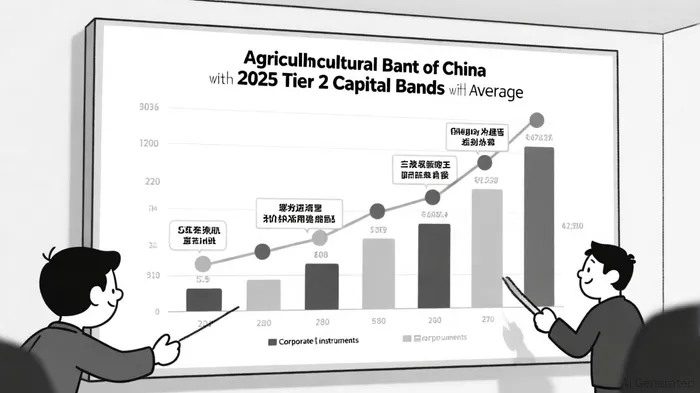
The recent 60 billion yuan issuance of Tier 2 Capital Bonds by the Agricultural Bank of China (ABC) underscores a strategic recalibration of liquidity management and fiscal policy alignment in China's banking sector. This move, executed through the Bond Connect program[3], reflects both the bank's need to bolster its capital reserves and its role in advancing national priorities such as rural revitalization and green finance[1]. For investors, the transaction highlights the growing appeal of state-backed debt instruments in a low-yield environment, while raising questions about the broader implications for China's financial stability and capital allocation.
Liquidity Strategy: Strengthening Capital Reserves Amid Regulatory Tightening
ABC's issuance of two tranches—35 billion yuan in 10-year bonds at 1.92% and 25 billion yuan in 15-year bonds at 2.12%[2]—is a calculated response to evolving regulatory requirements. Tier 2 capital, which forms part of a bank's supplementary capital under Basel III, is critical for absorbing losses without triggering insolvency. By securing long-term, low-cost funding, ABC is not only fortifying its capital adequacy ratio but also signaling confidence in its ability to navigate potential economic headwinds.
The low coupon rates, particularly the 1.92% for the 10-year tranche, suggest that ABC is leveraging historically favorable market conditions. This aligns with broader trends in China's bond market, where central bank interventions and accommodative monetary policy have suppressed yields[4]. For context, the average yield on China's 10-year government bonds in Q3 2025 hovered near 2.3%, while corporate bonds of similar maturity traded at 3.1%. ABC's ability to issue at such a discount underscores its implicit government backing and the trust investors place in its creditworthiness.
Fiscal Policy Alignment: Rural Revitalization and Green Finance as Strategic Pillars
Beyond liquidity, the bond sale is a vehicle for advancing China's fiscal priorities. ABC has long positioned itself as a key player in rural revitalization, a cornerstone of the government's 14th Five-Year Plan. In 2023, the bank issued 20 billion yuan in Sannong (agriculture, rural areas, and farmers) special bonds, a record for the sector[2]. These instruments directly fund projects such as rural infrastructure, food security initiatives, and agricultural modernization—areas where private capital often hesitates to invest.
The 2025 issuance further cements ABC's role in green finance, another national priority. The bank aims to significantly expand its green loan portfolio, supporting renewable energy, carbon capture, and sustainable agriculture[3]. By allocating Tier 2 capital to these initiatives, ABC is not only complying with regulatory capital requirements but also aligning its balance sheet with China's carbon neutrality goals. This dual focus on rural and environmental sustainability positions ABC as a bridge between fiscal policy and private-sector investment, a role that is likely to grow in importance as China transitions to a high-quality growth model.
Investment Opportunities: The Allure of State-Backed Debt Instruments
For investors, ABC's bond sale highlights the unique advantages of state-backed debt instruments in a low-yield environment. The 1.92% coupon on the 10-year tranche, while modest, is competitive relative to corporate bonds and offers a stable return with minimal credit risk. This is particularly attractive for institutional investors such as pension funds and insurance companies, which prioritize capital preservation over high yields.
Moreover, the use of the Bond Connect program—a conduit for international investors to access China's onshore bond market—signals ABC's intent to diversify its funding base[3]. This could enhance the liquidity of its debt instruments, as foreign buyers often bring longer-term horizons and lower volatility compared to domestic counterparts. However, investors must remain cautious about macroeconomic risks, including potential inflationary pressures from rural and green infrastructure spending, which could erode real returns over time.
Conclusion: A Model for the Future of China's Banking Sector
ABC's 60 billion yuan bond sale exemplifies the evolving role of state-owned banks in China's financial system. By combining prudent liquidity management with strategic alignment to national priorities, ABC is setting a precedent for how banks can navigate regulatory, economic, and environmental challenges. For investors, the transaction underscores the value of state-backed instruments in a risk-averse market, while offering a glimpse into the future of China's capital allocation strategies. As the country continues to prioritize rural and green development, similar initiatives from other state-owned banks may follow, further reshaping the landscape of China's banking sector.







Comentarios
Aún no hay comentarios