
Agree Realty's Credit Rating Upgrade and Fortress Balance Sheet: A Defensive Play in a Volatile Macro Environment
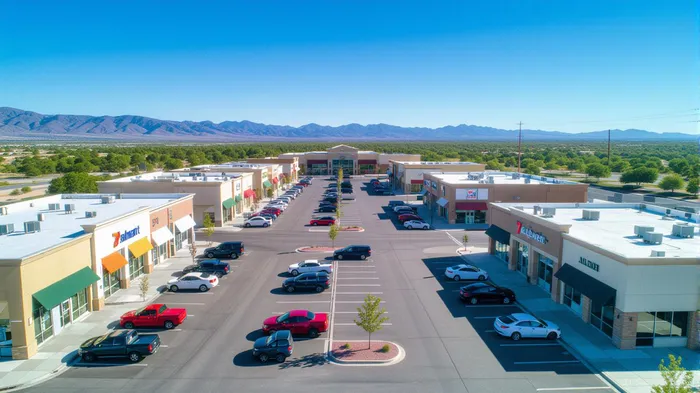
The recent upgrade of Agree Realty CorporationADC-- (ADC) to a BBB+ credit rating by S&P Global Ratings—its highest in years—has positioned the retail real estate investment trust (REIT) as a standout defensive play in a macroeconomic climate rife with uncertainty. With interest rates lingering at elevated levels, inflationary pressures persisting, and global markets navigating a “wall of loan maturities,” ADC's disciplined capital allocation and fortress balance sheet offer a compelling case for investors seeking resilience.
A Credit Rating Upgrade as a Vote of Confidence
Agree Realty's BBB+ rating, upgraded from BBB in 2024, reflects S&P's recognition of the company's robust financial stewardship. The upgrade was driven by ADC's pro forma net debt to recurring EBITDA ratio of 3.3x (after accounting for $919.9 million in forward equity proceeds) and a fixed charge coverage ratio of 4.4x. These metrics underscore a balance sheet that is not only conservative but also flexible enough to withstand near-term volatility. For context, the industry average for net debt to EBITDA among retail REITs typically hovers above 6x, making ADC's position exceptional.
The company's liquidity is equally impressive. As of December 31, 2024, ADC held over $2.0 billion in total liquidity, including $1.1 billion in availability under its expanded $1.25 billion senior unsecured revolving credit facility. This liquidity, combined with a debt-to-enterprise value ratio of 26.6%, positions ADC to fund growth without overleveraging—a critical advantage as refinancing risks loom large across the commercial real estate sector.
Disciplined Capital Allocation: A Historical Strength
ADC's ability to navigate the 2020-2024 downturn with minimal damage is a testament to its disciplined capital allocation. During the period, the company invested $951 million in 282 retail net-lease properties, achieving a weighted-average capitalization rate of 7.5%. These investments, concentrated in necessity-based retail tenants such as grocery stores and auto parts retailers, are leased for 13.4-year terms on average—providing stable, inflation-protected cash flows.
The company also raised $1.1 billion in forward equity via its ATM program and an overnight offering, while issuing $450 million in senior unsecured notes at a 5.65% coupon. This proactive capital-raising strategy not only fortified its balance sheet but also enabled ADC to maintain a 73% payout ratio for dividends, ensuring sustainability for shareholders. Even as peers struggled with refinancing stress, ADC's Core FFO per share grew 3.7% in 2024, outpacing industry averages.
Defensive Positioning in a Shifting Macro Environment
The broader commercial real estate sector faces headwinds in 2025, including a projected $500 billion in U.S. loan maturities and rising refinancing costs. Yet, ADC's focus on recession-resistant tenants and long-term leases insulates it from near-term volatility. For example, its recent re-leasing of former Big Lots locations to Aldi at a 50% net effective rent increase highlights its ability to adapt to shifting consumer demands while maintaining occupancy rates (99.2% as of Q1 2025).
Moreover, ADC's exposure to industrial and logistics sectors—such as CarMaxKMX-- and AutoZoneAZO-- locations—aligns with macro trends favoring supply chain resilience. Deloitte's 2025 Commercial Real Estate Outlook notes that industrial and multifamily sectors are expected to outperform, driven by domestic manufacturing and e-commerce growth. ADC's strategic development projects, including 25 Developer Funding Platform (DFP) ventures in 2024, further diversify its revenue streams.
A Peer Comparison That Favors ADC
Agree Realty's performance outpaces its peers on key metrics. While the average retail REIT posted a 13.19% 3-month revenue growth as of March 2025, ADC's net margin of 26.62% and ROA of 0.52% (both above industry averages) highlight its operational efficiency. Its conservative debt-to-equity ratio of 0.55 also contrasts sharply with the industry's average of 0.8x, reducing refinancing risks. Analysts have taken notice: eight of the past quarter's 12-month price targets for ADC average $81.06, a 3.26% increase from previous estimates, reflecting growing confidence in its defensive profile.
Investment Implications
For investors, ADC's credit rating upgrade and balance sheet strength signal a company well-positioned to thrive in a high-rate environment. Its disciplined capital allocation, focus on necessity retail, and strategic diversification into logistics make it a rare defensive play in a sector otherwise burdened by refinancing risks. While the Federal Reserve's projected rate cuts in 2025 may ease borrowing costs, ADC's existing liquidity and conservative leverage mean it doesn't rely on rate normalization to sustain growth.
In a macroeconomic climate where volatility is the norm, Agree Realty's fortress balance sheet and tenant diversity offer a compelling risk-rebalance. For those seeking stability and income, ADC's 2.4% dividend yield—backed by a sustainable payout ratio—further enhances its appeal. As the real estate sector braces for a potential inflection point in 2025, ADC stands out as a company that has mastered the art of defensive investing.





Comentarios
Aún no hay comentarios