
Agilent Technologies' Q2 2025: Life Sciences and Diagnostics Power Through Headwinds
Agilent Technologies (A) has delivered a resilient Q2 2025 performance, defying macroeconomic headwinds by leveraging its dominance in high-growth life sciences and diagnostics markets. With revenue of $1.681 billion and adjusted EPS of $1.31, the company's core operations are firing on all cylinders—especially in segments critical to the future of healthcare innovation. Let's dissect why this is a buying opportunity for long-term investors.
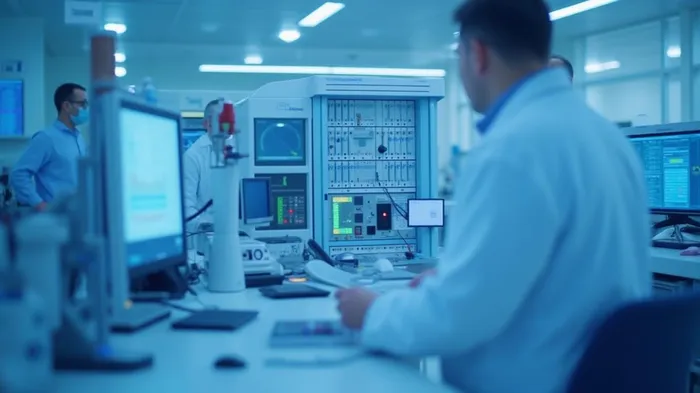
The Life Sciences Engine: Pharma CapEx and PFAS Solutions
Agilent's Life Science and Diagnostics Markets Group (LS&DMG) generated $647 million in revenue, a 1% rise year-over-year. While modest, this growth masks a deeper story: the segment is capturing secular trends in pharmaceutical R&D spending and clinical diagnostics. Pharma companies are ramping up capital expenditures to meet demand for novel therapies, and Agilent's analytical instruments—like its Infinity III mass spectrometers—are indispensable tools for drug discovery.
The real star here is PFAS solutions, which contributed 75 basis points to overall revenue growth. PFAS (per- and polyfluoroalkyl substances) contamination is a global regulatory priority, and Agilent's advanced testing platforms are the gold standard for detecting these “forever chemicals” in water, food, and consumer goods. With Europe leading the regulatory crackdown, this segment's growth is far from tapped out.
China's Stimulus Win: A $35M Catalyst
Agilent's Q2 results were bolstered by a 50% win rate on China's post-pandemic stimulus tenders, translating to $35 million in Q1 2025 revenue. This is just the tip of the iceberg. China's $1.5 trillion infrastructure plan prioritizes healthcare upgrades, and Agilent's lab equipment is a cornerstone of modern clinical labs. As Beijing accelerates spending on public health infrastructure, the company is positioned to dominate this market—especially with its localized manufacturing and R&D partnerships.
CrossLab's Momentum: A Hidden Growth Lever
While LS&DMG grabs headlines, Agilent's Agilent CrossLab Group—a segment focused on lab productivity tools—surged 3% to $696 million. This division's success stems from its digital ecosystem, which integrates software with hardware to optimize lab workflows. Collaborations like its partnership with ABB Robotics to automate lab processes are lowering costs for customers and driving recurring revenue.
Navigating Headwinds: Currency and Academia Softness
Agilent isn't immune to macro challenges. Currency fluctuations shaved $0.09 off full-year EPS, and academia/government markets dipped 7% due to NIH budget uncertainty. However, these are temporary hurdles. The company has already hedged against currency risks, and academia's softness is offset by stronger pharma and diagnostics demand.
The Bottom Line: Buy the Dip, Own the Future
Agilent's full-year guidance of $5.54–$5.61 EPS reflects cautious optimism, but the underlying story is one of strategic resilience. With $90 million in share buybacks and a 1.0 net leverage ratio, management is prioritizing shareholder returns without sacrificing growth.
Investors should view current dips as a buying opportunity. Agilent is the lab equipment leader in a world where healthcare innovation is a $5 trillion global imperative. The PFAS boom, China's stimulus, and pharma's R&D race aren't fads—they're structural tailwinds.
Act now: Agilent's valuation is reasonable at 22x forward EPS, and its Q2 results confirm that it's out-executing peers. This isn't just a Q2 story—it's a decade-long play on the labs that will cure diseases, monitor ecosystems, and redefine healthcare.
The data is clear: Agilent is roaring ahead. Don't miss the train.







Comentarios
Aún no hay comentarios