
The Age of Agility: Key Themes Shaping Europe in 2026
Europe stands at the crossroads of technological reinvention and environmental urgency, with 2026 poised to accelerate trends that have defined the past decade. Strategic investments in agile technology and sustainability-driven infrastructure are no longer optional but imperative for nations seeking to balance economic competitiveness with climate goals. As global markets pivot toward decarbonization and digital-first models, Europe's ability to harmonize innovation with regulatory rigor will determine its role in the next era of global leadership.
The Cleantech Imperative: Scaling for €5 Trillion by 2035
The cleantech sector has emerged as a cornerstone of Europe's economic and environmental strategy. According to a report by McKinsey, global capital expenditure on cleantech could reach €5 trillion annually by 2035, with e-mobility accounting for nearly half of this spending. European companies are already positioning themselves to capture a significant share of this value, particularly in clean energy and power systems. However, the path to dominance is fraught with challenges, including fierce competition from China and the U.S. in manufacturing and supply chains.
The European Union has responded with targeted initiatives such as the Clean Industrial Deal, which aims to bolster cleantech development and manufacturing according to McKinsey analysis. This strategy is complemented by the re-launch of the Cleantech Friendship Group in March 2025, a political signal of sustained commitment to the sector. Despite a dip in Q1 2025 cleantech venture and growth investment to €1.8 billion, early-stage activity remains resilient, underscoring the sector's long-term appeal.
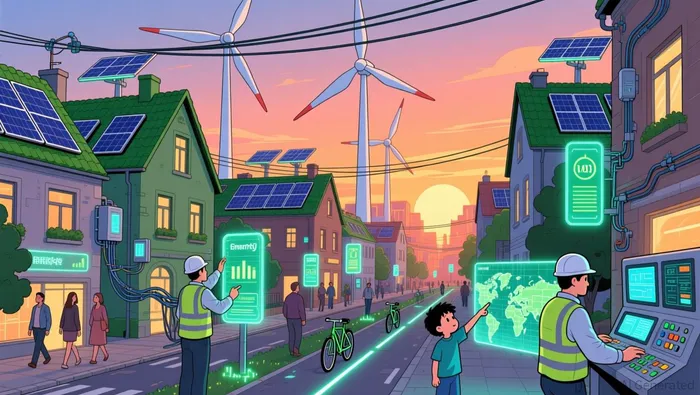
Concrete examples of this momentum include Aegis Energy's €118 million investment in UK clean energy hubs and Enpal's €110 million funding for residential renewable energy solutions as detailed in recent reports. These projects highlight a shift toward decentralized, consumer-centric energy models, aligning with the EU's broader net-zero ambitions.
Agile Tech: From UGVs to Quantum Computing
Parallel to cleantech, Europe is embracing agile technology to address evolving security and logistical demands. The unmanned ground vehicle (UGV) market, for instance, is projected to grow to USD 14.8 billion by 2033, driven by defense modernization and the adoption of autonomous systems in agriculture and logistics. This growth is fueled by Europe's emphasis on regional supply chains and IoT-enabled tracking systems, which are redefining the logistics sector's approach to speed and sustainability according to industry analysis.
Beyond UGVs, the EMEA region is witnessing a broader tech transformation. Quantum computing and generative AI (GenAI) are emerging as critical tools for industries ranging from pharmaceuticals to finance. As noted in IDC's analysis, digital-first business models are now central to competitiveness, with GenAI-driven automation and data analytics enabling real-time decision-making. For example, the EU's 2025 Global Gateway flagship projects include 25 climate and energy-focused initiatives, leveraging digital tools to enhance agricultural resilience and expand renewable energy infrastructure.
Strategic Infrastructure: The EU's Long-Term Vision
The European Commission's September 2025 strategy on research and technology infrastructures underscores a commitment to long-term sustainability and technological sovereignty as outlined in official documents. This strategy emphasizes better coordination of funding, access to cutting-edge facilities, and international collaboration-key enablers for scaling cleantech and agile tech innovations.
The EU's LIFE Programme exemplifies this approach, with €86 million allocated to multi-year projects in Denmark, Estonia, and Poland to reduce CO₂ emissions and restore ecosystems according to Innovation News Network. Similarly, the Green Transition Fund and Horizon Europe are channeling resources into circular economy models and renewable energy projects, ensuring alignment with the continent's 2050 climate-neutrality goals as reported by EU funding sources.
Challenges and Opportunities
While Europe's strategic investments are robust, challenges persist. Global supply chain dynamics, particularly in critical minerals and semiconductor manufacturing, remain vulnerable to geopolitical shifts. Additionally, the pace of innovation in agile tech must accelerate to match the agility of competitors in Asia and North America.
However, the EU's focus on regional hubs and public-private partnerships offers a counterbalance. For instance, GravitHy's €60 million investment in low-carbon iron production demonstrates how private-sector ingenuity can align with public policy to decarbonize heavy industries as reported in industry coverage. Such collaborations are essential for maintaining Europe's competitive edge.
Conclusion: A Blueprint for 2026
As 2026 unfolds, Europe's success will hinge on its ability to integrate agile technology with sustainability-driven infrastructure. The cleantech sector's projected €5 trillion market, coupled with advancements in UGVs and quantum computing, presents a unique opportunity to redefine global value chains. Yet, this requires sustained political will, cross-border collaboration, and a willingness to adapt to rapidly evolving technological landscapes.
For investors, the message is clear: Europe's transition is not merely a regulatory exercise but a strategic repositioning that rewards foresight. The continent's ability to marry agility with sustainability will determine whether it becomes a leader-or a laggard-in the next industrial revolution.







Comentarios
Aún no hay comentarios