
Africa's Youth Employment Crisis: A Golden Opportunity in Tech and Green Jobs
Let's cut to the chase: Africa's youth employment crisis isn't just a moral imperative-it's a $10 trillion investment goldmine waiting to be unlocked. With 60% of Africa's population under 25 and 12 million young people entering the labor market annually, according to a World Bank-WRI assessment, the stakes are sky-high. But here's the kicker: the World Bank and private-sector innovators are already mapping out a path to turn this crisis into a generational win.
The Tech-Enabled Revolution: Building a Digital Workforce
Africa's digital transformation is accelerating faster than you can say "M-Pesa." The World Bank's Digital Economy for Africa (DE4A) initiative has already boosted internet penetration by 115% since 2016, connecting 36% of Sub-Saharan Africa to the web in 2021, as the World Bank reported. This isn't just about TikTok dances-it's about creating a pipeline for tech-enabled jobs.
Take Kenya's Twiga Foods, which uses AI-driven logistics to connect 50,000 farmers with urban markets, according to the Jobtech Alliance. Or Nigeria's Instollar, which trains youth as solar technicians and certifies them via blockchain, as noted by Jobtech Alliance. These aren't niche startups-they're scalable models. The World Bank's $34 billion Africa Human Capital Plan is betting big on digital skills, from coding bootcamps to e-agriculture platforms, in a World Bank analysis.
But here's the rub: infrastructure gaps and policy lags still stifle growth. Investors need to target last-mile connectivity, digital literacy programs, and partnerships with local telecoms. The payoff? A continent where 70% of youth could be digital workers by 2030, according to the World Bank.
Green Jobs: Harvesting the Climate Resilience Boom
While tech is the spark, green jobs are the engine. The World Bank's latest report shows $12 billion has already flowed into nature-based solutions (NBS) in Sub-Saharan Africa, from reforestation to solar microgrids. But this is just the tip of the iceberg.
Morocco's Noor Solar Complex has created 40,000 jobs and slashed energy costs by 30%, Jobtech Alliance reports. South Africa's REIPPPP program has attracted $14 billion in investment, with 80% of contracts going to local firms, according to Jobtech Alliance. And in Lagos, 25,000 youth now earn a living sorting and recycling waste under LAWMA's green initiative, as highlighted by Jobtech Alliance.
The numbers don't lie: green jobs in agriculture alone could generate 200 million new roles by 2030 if we modernize value chains and digitize land rights, the World Bank analysis finds. The World Bank's Green-Gray Infrastructure Accelerator is already helping cities like Kigali and Lusaka blend solar farms with wetland restoration-a blueprint for climate-resilient economies.
The Social Stability Angle: Why This Isn't Just About Profits
Let's get real: high youth unemployment is a ticking time bomb. In Nigeria, youth-led protests over joblessness spiked by 40% in 2024, per the World Bank analysis. In Ethiopia, 60% of young people say they'd migrate illegally if opportunities dry up, according to a Spectator piece. But here's the good news: every 1% reduction in youth unemployment correlates with a 15% drop in protest frequency, the World Bank analysis shows.
Investors who fund green agribusinesses or digital upskilling programs aren't just building portfolios-they're stabilizing nations. The Mastercard Foundation's $1.5 billion Youth Opportunities Fund has already created 200,000 jobs in Ghana and Kenya, Jobtech Alliance notes. Imagine scaling that with private equity and impact bonds.
The Playbook for 2025 and Beyond
- Tech-Enabled Workforce Platforms: Back startups like Baobab+ (green product distribution) or Wecyclers (recycling tech). These models combine mobile money with job creation, as documented by Jobtech Alliance.
- Green Agribusiness: Invest in climate-smart startups using drones for crop monitoring or blockchain for fair-trade coffee. The World Bank's $9 billion annual agribusiness push is a tailwind.
- Policy-Driven Infrastructure: Partner with African Development Bank (AfDB) on solar mini-grids or digital ID systems. These projects have guaranteed off-takers and low political risk, per World Bank-WRI analysis.
The bottom line? Africa's youth aren't a problem-they're a solution. By 2030, this market could generate $2 trillion in annual revenue from tech and green sectors, according to World Bank data. The question isn't whether to invest-it's how fast you can get in.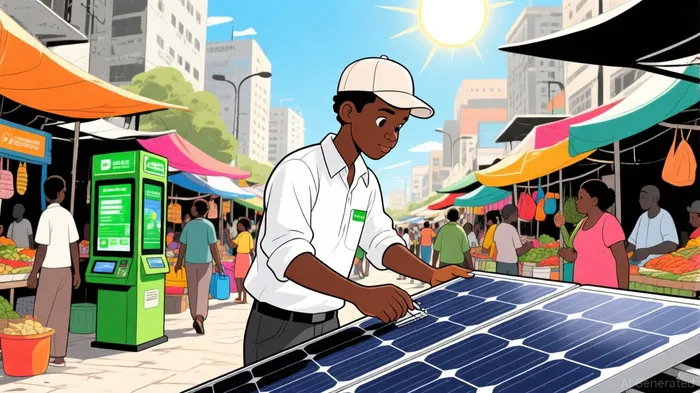







Comentarios
Aún no hay comentarios