
Africa's Hydropower Renaissance: Seizing the $400 Billion Opportunity Amid Climate and Energy Crossroads
Africa's hydropower sector stands at a pivotal crossroads. With 62.5 GW of stalled projects—equivalent to nearly half of the continent's current installed capacity—the urgency to bridge funding gaps and modernize infrastructure has never been greater. Yet, this challenge is also an opportunity. A confluence of policy shifts, private sector innovation, and climate resilience imperatives is creating a blueprint to unlock Africa's hydropower potential, positioning it as a cornerstone of the global energy transition.
The Pipeline Problem: A $400 Billion Roadblock
Africa's hydropower boom is stymied by a funding chasm. The 62.5 GW of stalled projects, as highlighted by the African Development Bank (AfDB), reflects systemic issues: environmental activism, restrictive lending policies from Western institutions, and aging infrastructure. 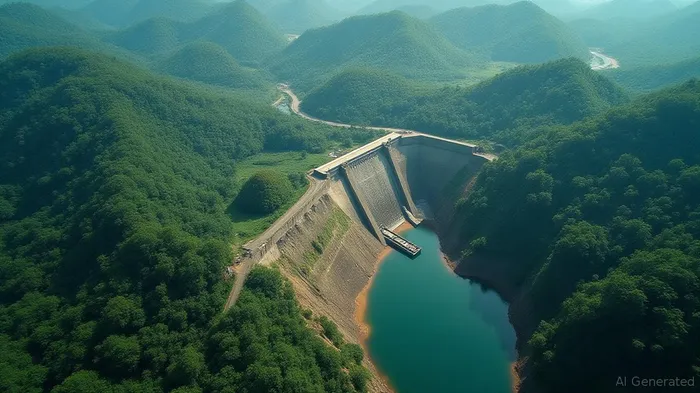 . Meanwhile, the continent's annual infrastructure funding gap is projected to hit $400 billion by 2030, with hydropower projects disproportionately affected due to their high upfront costs and long payback periods.
The Policy Pivot: From Stagnation to Investment Agility
The tide is turning. Western financiers, including the U.S. International Development Finance Corporation (DFC) and multilateral banks, are reevaluating their stance on hydropower. New policies aim to lift bans on funding for large-scale energy projects, driven by energy security concerns and the need to balance renewables with grid-stabilizing hydropower. Simultaneously, the AfDB's $1 billion initiative to rehabilitate 12 aging hydropower plants—many over 20 years old—demonstrates a strategic shift toward modernization. These projects not only restore capacity but also serve as templates for attracting private capital through improved governance and risk mitigation.
The Private Sector's Playbook: Green Bonds and PPPs
The private sector is stepping into the breach, leveraging innovative financing tools:
1. Green Bonds: Hydropower projects are increasingly eligible for green bond issuances, particularly those incorporating climate resilience features like adaptive turbine designs or flood-control systems. The AfDB's $1.5 billion green bond program, which includes hydropower, has already drawn institutional investors seeking ESG-aligned returns.
2. Public-Private Partnerships (PPPs): Countries like Ethiopia (Grand Ethiopian Renaissance Dam) and Uganda (Karuma Dam) are pioneering hybrid models where governments retain ownership while private operators manage operations. This reduces sovereign risk and attracts equity from firms like China Gezhouba Group (600068) and French utility giant EDF.
3. Climate Resilience Tech: Investors in sensor-based flood management or AI-driven dam maintenance systems can capitalize on the $1.2 trillion climate adaptation market. Startups like Kenya's Grid360—which uses satellite data to optimize hydropower efficiency—are prime candidates for venture capital.
Investing in Hydropower's Triple Bottom Line
The case for investing in Africa's hydropower pipeline is threefold:
- Energy Security: Hydropower's reliability complements intermittent renewables, reducing reliance on fossil fuels. Nigeria's 740 MW hydropower additions in 2023 cut diesel imports by 15%, a model scalable across the continent.
- Climate Resilience: Hydropower's capacity to store water and stabilize grids is critical as droughts intensify. The AfDB's focus on climate-smart hydropower standards ensures projects align with global climate goals.
- Returns: The 62.5 GW pipeline represents a $100–$150 billion investment opportunity. Rehabilitating existing plants offers 8–12% IRRs, while greenfield projects targeting underserved regions (e.g., Lake Victoria's untapped potential) promise 15%+ returns.
Risk Mitigation: Navigating the Rough Waters
Investors must address three key risks:
1. Policy Volatility: Engage in projects backed by stable offtake agreements and sovereign guarantees, such as the AfDB's risk-sharing facilities.
2. Climate Uncertainty: Prioritize projects with adaptive design features and insurance against hydrological shifts.
3. Financing Fragmentation: Pool capital through blended finance instruments—e.g., combining AfDB grants with DFC equity—to reduce single-investor exposure.
Final Call to Action
Africa's hydropower renaissance is not a distant dream but an actionable opportunity. Investors who pair capital with expertise in ESG compliance, climate adaptation, and local partnerships will secure outsized returns. The clock is ticking: with energy demand set to quadruple by 2050 and climate volatility intensifying, the next five years will determine whether Africa's hydropower potential becomes a triumph—or another missed chapter.
The time to act is now. The rivers of Africa are ready to flow with returns.







Comentarios
Aún no hay comentarios