
Afghanistan's Geopolitical Resurgence and Its Impact on Defense and Infrastructure Markets
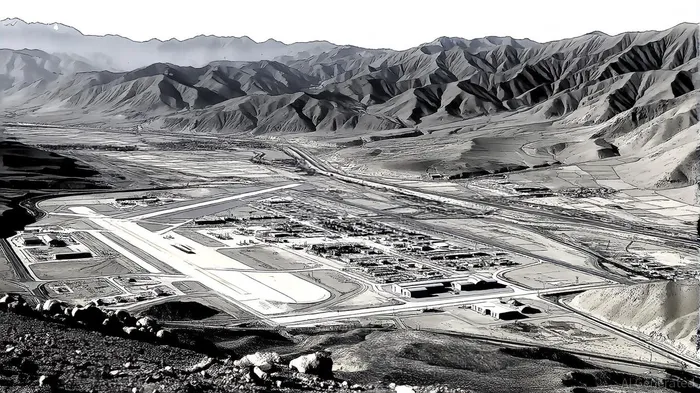
The geopolitical landscape of Afghanistan is undergoing a quiet but significant transformation, driven by renewed U.S. interest in reactivating military assets and recalibrating economic strategies. Under President Donald Trump's 2025 policies, the strategic reactivation of Bagram Air Base has emerged as a focal point, with implications for defense markets, infrastructure investments, and regional power dynamics. This analysis explores the economic and strategic potential of such a move, while addressing the challenges posed by Taliban sovereignty and global competition.
Strategic Rationale for Bagram's Reactivation
President Trump has repeatedly emphasized the strategic value of Bagram Air Base, citing its proximity to China's nuclear facilities in Xinjiang as a critical asset for U.S. national security[1]. According to a report by The New York Times, Trump's administration has quietly pushed to reclaim the base, framing it as a lever to counter Chinese influence in Central Asia[2]. The base's location also offers logistical advantages for monitoring regional developments, including the Belt and Road Initiative (BRI), which has deepened China's economic footprint in Afghanistan[3].
However, the Taliban's firm rejection of U.S. military presence complicates these ambitions. As stated by Al Jazeera, the Taliban has reiterated that Afghanistan will not tolerate foreign occupation, even as it remains open to political and economic engagement[4]. This stance reflects a broader ideological commitment to sovereignty, which could limit U.S. leverage unless diplomatic negotiations yield alternative arrangements.
Economic and Defense Market Implications
The U.S. military's historical investment in Afghanistan—exceeding $2.26 trillion over two decades—has left a mixed legacy[5]. While the Biden administration's 2021 withdrawal resulted in the loss of $7 billion in military equipment to the Taliban[6], Trump's reactivation plans could unlock new defense contracts. A report by Bloomberg highlights that the Trump administration's focus on efficiency and cost-cutting, including an 8% annual reduction in Department of Defense spending, may constrain large-scale infrastructure projects[7]. However, targeted investments in base modernization, surveillance systems, and supply chain security could still attract defense contractors like Lockheed MartinLMT-- and BoeingBA--, which have experience in high-risk environments[8].
The economic impact of reactivation extends beyond defense. By leveraging Afghanistan's mineral resources—estimated to be worth over $1 trillion—the U.S. could incentivize private sector participation in mining and energy sectors[9]. Yet, the absence of a stable governance framework under the Taliban raises concerns about long-term viability.
Infrastructure Investment Opportunities
While Trump's 2025 strategy prioritizes great-power competition over traditional counterinsurgency, infrastructure remains a potential avenue for influence. The Taliban's recent $10 billion energy initiative, led by UAE-based businessman Mirwais Azizi, aims to generate 10,000 megawatts of power through solar and wind projects[10]. This effort, though ambitious, faces challenges including security threats and regulatory gaps. U.S. economic tools, such as the 10% tariff on Afghan imports, could be used to condition support for infrastructure projects that align with strategic interests[11].
However, regional competition from China and Iran complicates U.S. efforts. China's BRI investments in Afghan mining and infrastructure, coupled with Iran's control over trade routes via Chabahar Port, have created a landscape where U.S. influence is increasingly contested[12].
Challenges and Risks
The reactivation of Bagram Air Base is not without risks. Logistical hurdles, including the need for advanced air defenses and troop deployments, make a full-scale return impractical[13]. Additionally, the Taliban's refusal to cede control of abandoned U.S. equipment—viewed as spoils of war—highlights the limits of U.S. leverage[14]. Geopolitical tensions with Pakistan and regional instability further exacerbate these challenges.
Conclusion
Afghanistan's geopolitical resurgence presents both opportunities and risks for defense and infrastructure markets. While Trump's push to reclaim Bagram Air Base underscores the strategic value of the region, success hinges on navigating Taliban sovereignty, regional competition, and fiscal constraints. Investors and policymakers must weigh the potential for high-impact projects against the realities of a volatile environment. For now, Afghanistan remains a variable in a broader geopolitical chess game—one where strategic minimalism and transactional diplomacy may prove more viable than large-scale reengagement.





Comentarios
Aún no hay comentarios