
The Affordability Crisis and Its Implications for Consumer and Producer Markets
Energy: The Tension Between Transition and Affordability
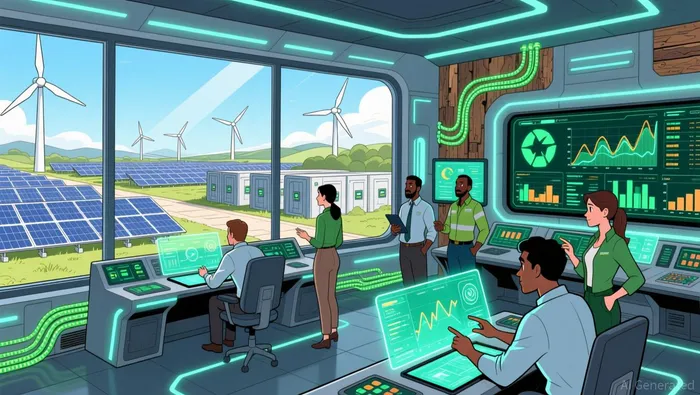
The energy sector remains a battleground for balancing decarbonization goals with economic stability. In Europe, energy retailers are grappling with a perfect storm: electrification mandates, energy-security imperatives, and surging demand for AI data centers. These pressures have pushed wholesale energy markets into volatility, forcing retailers to adopt tools like Energy Margin Intelligence to manage real-time profitability according to industry analysis. Meanwhile, in India, the push for renewable energy has spurred demand for Battery Energy Storage Systems (BESS), with companies like MBAK Energy Solutions Inc. capitalizing on contracts to support grid modernization.
Yet, the long-term outlook is equally fraught. By 2030, renewable energy is projected to account for nearly 50% of global electricity generation, driven by solar PV expansion and electric vehicle adoption. However, achieving the IEA's 1.5°C target will require policies far more aggressive than current trajectories suggest. For investors, the key lies in distinguishing between sectors poised to benefit from the energy transition-such as BESS and grid infrastructure-and those vulnerable to stranded assets, like legacy fossil fuel producers.
Healthcare: Aging Populations and the Cost of Care
The healthcare sector is witnessing a quiet revolution driven by demographic shifts and technological innovation. Senior housing, in particular, has emerged as a critical growth area. Diversified Healthcare Trust (DHC) has been upgraded to Sector Perform by RBC Capital Markets, reflecting optimism about the sector's ability to leverage aging demographics and improved leverage ratios. The transition of 116 senior housing communities from AlerisLife to new operators underscores the sector's potential to capitalize on demand while addressing operational inefficiencies.
However, affordability remains a thorny issue. The shift toward preventive care and telemedicine-projected to grow into a $9 trillion wellness economy by 2028-is promising but requires upfront investment. In India, hospitals like Baba Haridas Salvas have adopted rooftop solar systems to reduce costs and emissions, while Nigeria's Solar for Health Project aims to electrify 40 primary healthcare centers using solar micro-grids according to reports. These initiatives highlight how sustainability and affordability can align, but scaling them will depend on policy coherence and private-sector participation.
Housing: Modular Construction and the Insurance Dilemma
The housing sector is caught between the promise of modular construction and the perils of climate risk. Government incentives for affordable housing have fueled a boom in prefabricated and modular construction, with the global market projected to grow from $52.12 billion in 2024 to $105.96 billion by 2034. Innovations in off-site manufacturing and strategic partnerships are reducing costs, but regulatory complexity and insurance challenges persist.
Climate risk, meanwhile, is reshaping housing economics. In coastal Florida, home prices have adjusted to sea-level rise by incorporating a 6.7% discount into valuations, reflecting a lag in market responses to long-term risks. Insurance premiums have surged by 33% on average since 2020, with high-risk ZIP codes bearing the brunt. For investors, the housing sector offers a paradox: modular construction presents a scalable solution to affordability, but climate-driven insurance costs threaten to undermine its viability.
Long-Term Investment Strategies: Balancing Risks and Opportunities
The path forward for investors lies in hedging against inflation while capitalizing on structural shifts. In energy, this means prioritizing clean infrastructure and energy storage over speculative renewables. In healthcare, it involves backing companies that integrate preventive care with sustainable operations. In housing, the focus should be on modular developers with strong insurance partnerships and climate-resilient designs.
Policy risks, however, cannot be ignored. The energy transition's success hinges on regulatory stability, while healthcare and housing depend on coherent insurance and zoning policies. Investors must also consider the role of development finance institutions in bridging gaps in emerging markets, as highlighted in the World Energy Investment 2025 report.
Conclusion
The affordability crisis is a multifaceted challenge that demands a nuanced approach. While inflation and policy distortions create headwinds, they also drive innovation in sectors like energy, healthcare, and housing. For those willing to navigate the complexities, the rewards are substantial-but only for those who can separate enduring value from transient noise.







Comentarios
Aún no hay comentarios