
Is Affirm (AFRM) a Buy Amid a 10%+ Surge? Analyzing Amazon Partnership, Credit Trends, and Macroeconomic Shifts
Affirm Holdings (AFRM) has surged over 10% in recent trading sessions, fueled by a renewed partnership with AmazonAMZN--, improving credit trends, and macroeconomic tailwinds from a weak jobs report. But is this fintech stock a compelling buy for investors? To answer this, we must dissect the interplay between Affirm's strategic positioning, sector-specific risks, and broader economic dynamics.
The Amazon Partnership: A Strategic Anchor
According to reports, Affirm's five-year extension of its partnership with Amazon, effective February 1, 2026, is a cornerstone of its growth strategy. This agreement allows AffirmAFRM-- to continue offering its installment loan products on Amazon.com and via Amazon Pay, solidifying its presence in the e-commerce financing space. CEO Max Levchin has emphasized that the partnership aligns with Affirm's goals of "expanding scale while maintaining disciplined growth." The deal also includes revised terms tied to new user acquisition milestones, with adjusted warrant exercise prices reflecting performance metrics as per press releases.
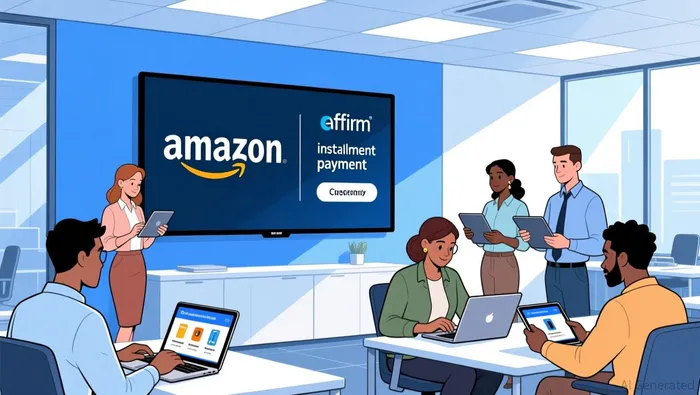 This partnership is particularly significant given Amazon's dominance in e-commerce. By embedding its BNPL (buy-now/pay-later) offerings into Amazon's ecosystem, Affirm gains access to a vast customer base, enhancing its ability to drive transaction volume and user acquisition. For investors, the renewed deal signals Amazon's confidence in Affirm's value proposition, which could translate into sustained revenue growth and market share expansion.
Credit Trends: Steady but Uneasy
Affirm's Q3 2025 results highlighted strong revenue growth and profitability, driven by its 0% APR product offerings and merchant relationships. However, the broader BNPL sector has faced rising credit risk. A report by the Federal Reserve Bank of Richmond notes that 42% of BNPL users made at least one late payment in 2025, up from 39% in 2024. This trend reflects growing consumer overextension, particularly among lower-income borrowers, and raises questions about the sustainability of Affirm's business model.
That said, Affirm's CFO, Rob O'Hare, has stated that the company's credit trends remain "in line with expectations" despite the weak jobs report as reported by financial analysts. The December 2025 jobs data, which showed a 4.6% unemployment rate and slowing wage growth, initially boosted Affirm's stock as investors speculated on lower interest rates and increased demand for flexible payment options according to market analysis. Yet, the same report also underscored economic fragility, with job gains concentrated in sectors like healthcare, raising concerns about long-term consumer spending power.
Macroeconomic Tailwinds and Headwinds
The weak labor market has created a paradoxical environment for Affirm. On one hand, the prospect of lower Federal Reserve interest rates could stimulate borrowing and benefit BNPL providers. On the other, rising default rates and regulatory scrutiny-exemplified by Klarna's recent credit losses-pose systemic risks. Affirm's stock price plunged in November 2025 amid fears of tightening credit conditions and regulatory pressures, illustrating the sector's vulnerability to macroeconomic shifts.
However, the renewed Amazon partnership offers a counterbalance. By leveraging Amazon's scale, Affirm can mitigate some of these risks through diversified revenue streams and enhanced underwriting capabilities. The company's focus on profitability over rapid expansion, as highlighted in its Q3 earnings, also suggests a more sustainable approach to navigating a maturing BNPL market according to financial reports.
Is AFRMAFRM-- a Buy? A Balanced View
Affirm's recent surge reflects optimism about its strategic alliances and macroeconomic tailwinds. The Amazon partnership provides a clear growth catalyst, while its 0% APR products and disciplined approach to profitability position it as a relative outperformer in a challenging sector as reported in earnings analysis. However, investors must remain cautious. Rising default rates, regulatory uncertainty, and the Fed's potential pivot toward tighter monetary policy could erode margins and dampen long-term growth.
For now, Affirm appears to be a speculative buy for those comfortable with sector volatility. Its ability to maintain credit discipline, capitalize on Amazon's ecosystem, and navigate macroeconomic headwinds will determine whether this rally is a sustainable inflection point or a temporary rebound.





Comentarios
Aún no hay comentarios