
Aevo's 69M Token Burn: A Strategic Move to Catalyze Long-Term Value and Investor Confidence?
In the volatile world of cryptocurrency, token burns have emerged as a critical tool for managing supply dynamics and signaling commitment to long-term value. Aevo's recent announcement to permanently remove 69 million AEVOAEVO-- tokens-approximately 7% of its circulating supply-has sparked renewed debate about the platform's ability to stabilize its tokenomics and rebuild investor trust. This analysis explores how Aevo's strategic token reduction, coupled with complementary initiatives, could serve as a catalyst for sustained value appreciation and confidence restoration, while also addressing the challenges that remain.
The Mechanics and Rationale Behind the Burn
Aevo's token burn, executed under its AGP-3 (Annual Governance Plan) framework, aligns with broader industry trends where projects like Minswap and Binance have employed similar strategies to reduce circulating supply and mitigate sell pressure according to MEXC. By permanently removing 69 million tokens, Aevo aims to create a deflationary effect, theoretically increasing the scarcity of AEVO and potentially driving demand. This approach mirrors traditional stock buybacks, where reducing shares outstanding can enhance per-unit value. According to Crypto Watchlist, the move is part of a broader effort to counteract the market imbalance caused by a large supply unlock earlier in 2025, which saw the token plummet from $3.50 to $0.44.
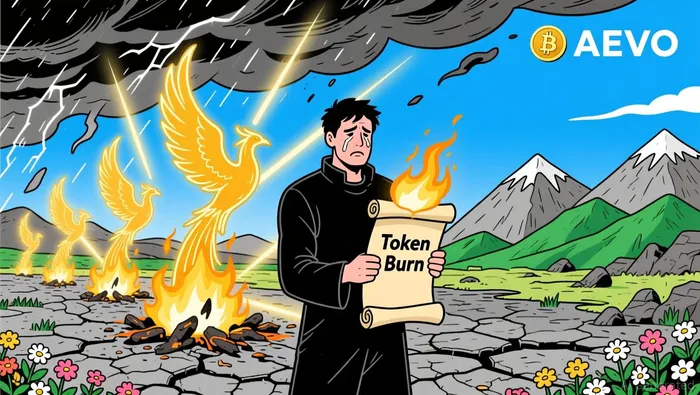
The execution method-permanently burning tokens via a transparent DAO-controlled process-further underscores Aevo's commitment to accountability. Unlike opaque buybacks, this approach ensures that the reduction is irreversible and verifiable, addressing skepticism about token management.
Historical Precedents and Mixed Outcomes
Historical data suggests that token burns can yield positive short-term effects but are not a panacea for deeper structural issues. For instance, Binance's periodic burns have historically correlated with price rallies, though these gains often depend on broader market conditions. In Aevo's case, the December 2025 burn coincided with a 3.02% price increase over 24 hours, a modest but notable rebound amid a 90-day decline of -67% according to CoinMarketCap. However, this optimism was tempered by a $2.3 million security breach in the same month, which eroded trust and highlighted governance vulnerabilities.
The mixed impact underscores a key challenge: while supply reduction can stabilize price in the short term, long-term success hinges on addressing liquidity constraints and operational risks. Aevo's concurrent introduction of monthly buybacks (1 million tokens/month) and staking incentives aims to address these gaps by creating recurring demand and aligning token holder interests as reported by OKX.
Strategic Roadmap and Future Outlook
Looking ahead, Aevo's roadmap includes expanding token burn mechanisms through on-chain buybacks and integrating staking rewards with Treasury liquidity pool distributions by June 2026 according to CoinMarketCap. These measures are designed to enhance transparency and utility, potentially attracting long-term stakers and reducing sell pressure. Predictive models suggest a cautious but optimistic trajectory, with AEVO's price projected to rise gradually through 2026 under a 5% annual growth rate as detailed in OKX analysis.
However, skepticism persists. The token's failure to break above key resistance levels, such as the 30-day SMA ($0.0409), and lingering concerns about liquidity and governance remain critical hurdles according to CoinMarketCap. For the token burn to catalyze lasting value appreciation, Aevo must demonstrate consistent execution of its deflationary strategy while addressing operational risks.
Conclusion: A Step Forward, But Not the Final One
Aevo's 69 million token burn represents a strategic and well-structured attempt to recalibrate its tokenomics and restore investor confidence. By reducing supply, enhancing transparency, and introducing utility-driven incentives, the platform has laid the groundwork for potential long-term value creation. Yet, the mixed post-burn performance highlights the need for complementary efforts to address liquidity, security, and governance challenges. If Aevo can sustain its deflationary momentum while resolving these issues, the token burn could indeed serve as a pivotal step toward a more stable and appreciating asset.
For investors, the key takeaway is clear: while the burn is a positive signal, its long-term success will depend on Aevo's ability to execute its roadmap with discipline and adaptability in a rapidly evolving market.







Comentarios
Aún no hay comentarios