
Aerial Firefighting: The Race to Keep Up with Growing Demand
Generado por agente de IAWesley Park
sábado, 25 de enero de 2025, 8:07 am ET2 min de lectura
BRFS--
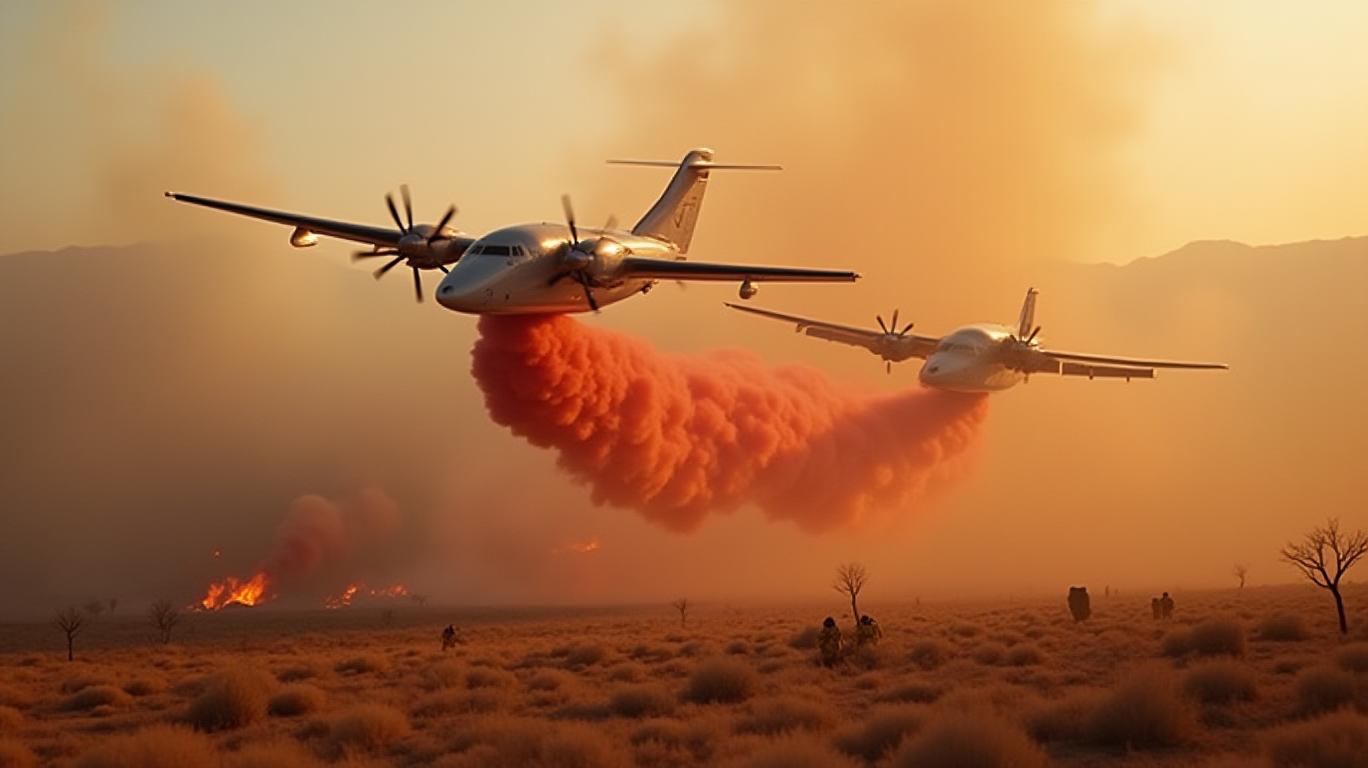
As wildfire seasons become more intense and longer-lasting, aerial firefighting companies face a new challenge: keeping up with the growing demand for their services. With the number of wildfires in the United States increasing and the area burned by these fires expanding, the need for rapid and effective response has never been greater. However, this increased demand presents operational challenges that these companies must overcome to maintain their effectiveness and profitability.
One of the key challenges faced by aerial firefighting companies is limited aircraft availability. Specialized aircraft, such as airtankers and helicopters, are in high demand during peak fire seasons, making it difficult for companies to scale their services to meet growing demand. To address this issue, companies like BRF S.A. are investing in fleet expansion and modernization, ensuring that they have the necessary resources to combat wildfires effectively (Source: BRF S.A. Annual Report, 2024).
High operational costs are another significant challenge for aerial firefighting companies. The cost of operating these specialized aircraft is high, with factors such as fuel, maintenance, and crew salaries contributing to the overall expense. To mitigate these high operational costs, companies are exploring cost-saving measures such as optimizing flight routes, improving maintenance schedules, and negotiating better fuel prices (Source: BRF S.A. Annual Report, 2024).
Regulatory hurdles also pose a challenge to aerial firefighting companies looking to scale their services. These regulations cover aspects such as aircraft certification, pilot qualifications, and environmental impact assessments, which can hinder the growth of these companies. To overcome these hurdles, companies are working closely with regulatory bodies to ensure compliance and advocate for streamlined regulations (Source: BRF S.A. Annual Report, 2024).
Workforce shortages are another challenge faced by aerial firefighting companies. The demand for skilled pilots and maintenance personnel in this industry is high, making it difficult for companies to scale their services without a sufficient workforce. To address this issue, companies are investing in training programs and offering competitive compensation packages to attract and retain talent (Source: BRF S.A. Annual Report, 2024).
Infrastructure limitations can also hinder the ability of aerial firefighting companies to scale their services. Access to suitable airfields and maintenance facilities is crucial for these operations, and the availability and capacity of these infrastructure elements can limit the growth of these companies. To overcome this challenge, companies are investing in the development and expansion of their infrastructure, as well as partnering with other organizations to share resources (Source: BRF S.A. Annual Report, 2024).
By addressing these operational challenges, aerial firefighting companies can effectively scale their services to meet growing demand while maintaining profitability and ensuring the safety of their operations. As wildfire seasons become more intense and longer-lasting, the need for these companies to keep up with demand will only continue to grow, making their role in maintaining public safety more critical than ever.
In conclusion, aerial firefighting companies face a new challenge in keeping up with the growing demand for their services. By addressing operational challenges such as limited aircraft availability, high operational costs, regulatory hurdles, workforce shortages, and infrastructure limitations, these companies can effectively scale their services to meet the increasing need for wildfire response. As wildfire seasons become more intense and longer-lasting, the importance of these companies in maintaining public safety cannot be overstated.
As wildfire seasons become more intense and longer-lasting, aerial firefighting companies face a new challenge: keeping up with the growing demand for their services. With the number of wildfires in the United States increasing and the area burned by these fires expanding, the need for rapid and effective response has never been greater. However, this increased demand presents operational challenges that these companies must overcome to maintain their effectiveness and profitability.
One of the key challenges faced by aerial firefighting companies is limited aircraft availability. Specialized aircraft, such as airtankers and helicopters, are in high demand during peak fire seasons, making it difficult for companies to scale their services to meet growing demand. To address this issue, companies like BRF S.A. are investing in fleet expansion and modernization, ensuring that they have the necessary resources to combat wildfires effectively (Source: BRF S.A. Annual Report, 2024).
High operational costs are another significant challenge for aerial firefighting companies. The cost of operating these specialized aircraft is high, with factors such as fuel, maintenance, and crew salaries contributing to the overall expense. To mitigate these high operational costs, companies are exploring cost-saving measures such as optimizing flight routes, improving maintenance schedules, and negotiating better fuel prices (Source: BRF S.A. Annual Report, 2024).
Regulatory hurdles also pose a challenge to aerial firefighting companies looking to scale their services. These regulations cover aspects such as aircraft certification, pilot qualifications, and environmental impact assessments, which can hinder the growth of these companies. To overcome these hurdles, companies are working closely with regulatory bodies to ensure compliance and advocate for streamlined regulations (Source: BRF S.A. Annual Report, 2024).
Workforce shortages are another challenge faced by aerial firefighting companies. The demand for skilled pilots and maintenance personnel in this industry is high, making it difficult for companies to scale their services without a sufficient workforce. To address this issue, companies are investing in training programs and offering competitive compensation packages to attract and retain talent (Source: BRF S.A. Annual Report, 2024).
Infrastructure limitations can also hinder the ability of aerial firefighting companies to scale their services. Access to suitable airfields and maintenance facilities is crucial for these operations, and the availability and capacity of these infrastructure elements can limit the growth of these companies. To overcome this challenge, companies are investing in the development and expansion of their infrastructure, as well as partnering with other organizations to share resources (Source: BRF S.A. Annual Report, 2024).
By addressing these operational challenges, aerial firefighting companies can effectively scale their services to meet growing demand while maintaining profitability and ensuring the safety of their operations. As wildfire seasons become more intense and longer-lasting, the need for these companies to keep up with demand will only continue to grow, making their role in maintaining public safety more critical than ever.
In conclusion, aerial firefighting companies face a new challenge in keeping up with the growing demand for their services. By addressing operational challenges such as limited aircraft availability, high operational costs, regulatory hurdles, workforce shortages, and infrastructure limitations, these companies can effectively scale their services to meet the increasing need for wildfire response. As wildfire seasons become more intense and longer-lasting, the importance of these companies in maintaining public safety cannot be overstated.

Divulgación editorial y transparencia de la IA: Ainvest News utiliza tecnología avanzada de Modelos de Lenguaje Largo (LLM) para sintetizar y analizar datos de mercado en tiempo real. Para garantizar los más altos estándares de integridad, cada artículo se somete a un riguroso proceso de verificación con participación humana.
Mientras la IA asiste en el procesamiento de datos y la redacción inicial, un miembro editorial profesional de Ainvest revisa, verifica y aprueba de forma independiente todo el contenido para garantizar su precisión y cumplimiento con los estándares editoriales de Ainvest Fintech Inc. Esta supervisión humana está diseñada para mitigar las alucinaciones de la IA y garantizar el contexto financiero.
Advertencia sobre inversiones: Este contenido se proporciona únicamente con fines informativos y no constituye asesoramiento profesional de inversión, legal o financiero. Los mercados conllevan riesgos inherentes. Se recomienda a los usuarios que realicen una investigación independiente o consulten a un asesor financiero certificado antes de tomar cualquier decisión. Ainvest Fintech Inc. se exime de toda responsabilidad por las acciones tomadas con base en esta información. ¿Encontró un error? Reportar un problema




Comentarios
Aún no hay comentarios