
aelf's Strategic Liquidity Allocation and Ecosystem Growth: Cross-Chain Infrastructure as a Catalyst for Long-Term Token Value and DeFi Adoption
In the evolving landscape of decentralized finance (DeFi), cross-chain infrastructure has emerged as a critical enabler of liquidity, interoperability, and user adoption. aelf, a blockchain platform with a focus on AI integration and modular architecture, has positioned itself as a key player in this space. By strategically allocating liquidity and enhancing cross-chain capabilities, aelf aims to drive ecosystem growth and long-term token value. This analysis examines aelf's initiatives, their alignment with broader DeFi trends, and the implications for investors.
Cross-Chain Infrastructure: A Foundation for Interoperability
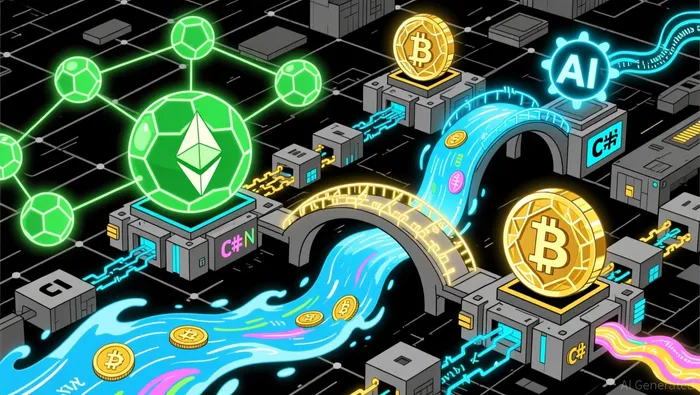
aelf's cross-chain infrastructure has seen significant upgrades in 2025, with the AetherLink network rolling out version 1.7.0 on the Mainnet in March 2025. This update introduced support for the TON Oracle contract and enhanced cross-chain interactions between the TON chain and the AELF chain, while also enabling querying of cross-chain task metadata on the AELF chain. Additionally, the deployment of the Oracle contract for EVM-compatible chains expanded aelf's interoperability, bridging gaps between diverse blockchain ecosystems according to market analysis. These developments align with the broader DeFi trend of 2025, where cross-chain bridging is expected to facilitate seamless asset transfers and expand trading opportunities.
aelf's eBridge protocol has further solidified its cross-chain strategy. In a notable move, the platform allocated 3 million ELF tokens to eBridge to enhance EthereumETH-- interoperability, aiming to deepen liquidity and reduce slippage for users. This allocation reflects aelf's commitment to fostering cross-chain liquidity, a critical factor in attracting developers and users to its ecosystem.
Strategic Liquidity Allocation and Ecosystem Growth
Liquidity is the lifeblood of DeFi, and aelf's strategic allocation of tokens to cross-chain protocols has directly contributed to ecosystem growth. By January 2025, aelf had tripled its total asset inflow, with Total Value Locked (TVL) rising from $17 million to $22.8 million. This growth underscores the confidence of participants in aelf's infrastructure, despite the broader DeFi market experiencing a contraction in TVL during November 2025 according to market research.
The platform's modular blockchain architecture and C#-based smart contracts also play a pivotal role in attracting developers. Unlike traditional Layer 1s, aelf's modular design allows for flexible upgrades and the adoption of diverse consensus mechanisms, such as PoS or DPoS according to the official roadmap. This adaptability positions aelf to compete with established chains like SolanaSOL-- and Ethereum, which face scalability and developer retention challenges.
Token Value Drivers and Market Sentiment
The ELF token's value is closely tied to aelf's cross-chain initiatives and ecosystem utility. As of November 16, 2025, ELF trades at $0.1279, with a market cap of $102.68 million and a circulating supply of 802.8 million tokens. While the token has seen a 3.30% weekly increase, it has declined 66.61% over the past year. This volatility is exacerbated by macroeconomic factors, including the U.S. government shutdown and a general cooling in on-chain activity according to market insights.
However, aelf's technological advancements, such as ZK-Rollups for scalability and the 35,000 TPS transaction capacity, are viewed as long-term value drivers according to platform updates. Analysts project a conservative price range of $0.09929 to $0.1273 for 2025, with optimistic targets reaching $0.14 to $0.16 if market momentum strengthens according to market analysis. The current Fear and Greed Index at 10 indicates extreme fear, suggesting potential buying opportunities for contrarian investors according to market analysis.
Challenges and Risks
Despite its strategic advantages, aelf faces challenges. The high concentration of ELF holdings-78.26% controlled by the top address-raises concerns about centralization and potential manipulation according to market analysis. Additionally, exchange delistings, such as those from Crypto.com and Bitvavo, have posed bearish challenges according to platform updates. Competitors like Solana and Ethereum continue to dominate the Layer 1 space, leveraging their first-mover advantages and established developer communities.
Conclusion
aelf's cross-chain infrastructure and strategic liquidity allocation position it as a compelling player in the DeFi ecosystem. By enhancing interoperability, attracting developers, and fostering liquidity, aelf aims to drive long-term token value and adoption. While macroeconomic and competitive risks persist, the platform's modular architecture and AI-driven innovations offer a unique value proposition. For investors, aelf represents a high-risk, high-reward opportunity in a rapidly evolving market.






Comentarios
Aún no hay comentarios