
Adnoc's Strategic Gambit: Acquiring SEFE's Trading Arm to Accelerate Energy Transition and Geopolitical Diversification
The global energy landscape is undergoing a seismic shift, driven by the dual imperatives of decarbonization and geopolitical realignment. In this context, Abu Dhabi National Oil Company (Adnoc) has emerged as a pivotal player, leveraging its vast hydrocarbon resources and strategic foresight to navigate the transition to a low-carbon future while securing its position as a global energy supplier. Recent developments suggest that Adnoc may be eyeing a bold move: the potential acquisition of the trading arm of Germany's state-owned gas company, SEFE. Such a maneuver, if realized, would align with Adnoc's broader ambitions to diversify its energy portfolio, strengthen its geopolitical footprint, and accelerate the energy transition.
Strategic Energy Transition: LNG as a Bridge Fuel
Adnoc's collaboration with SEFE has already laid the groundwork for a deeper integration. The two entities signed a three-year LNG supply agreement in 2025, under which Adnoc Gas will deliver 0.7 million metric tonnes of LNG to Germany, sourced from its Das Island facility. This deal underscores natural gas's role as a transitional fuel-a lower-carbon alternative to coal and oil that supports industrial value chains during the shift to renewables according to industry analysis. For Adnoc, the partnership with SEFE is not merely a commercial transaction but a strategic investment in Europe's energy security, particularly as the continent seeks to reduce its reliance on Russian gas following the invasion of Ukraine.
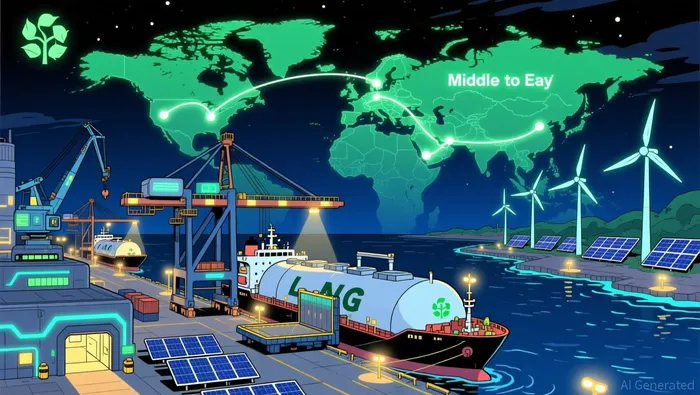 Expanding on this, Adnoc's Ruwais LNG project-a low-carbon facility with a 6 million tonnes-per-year capacity-has already secured a 15-year agreement with SEFE Marketing & Trading Singapore, with deliveries to Germany slated for 2028. This long-term commitment positions Adnoc as a reliable supplier of cleaner energy, aligning with global decarbonization targets while ensuring a steady revenue stream. If Adnoc were to acquire SEFE's trading arm, it would gain direct access to European markets, bypassing intermediaries and enhancing its ability to influence pricing and supply chains.
Geopolitical Diversification: Reducing Regional Risk
Adnoc's global expansion strategy is equally driven by the need to mitigate geopolitical risks. The UAE's traditional energy markets in Asia and Europe are increasingly volatile, with shifting alliances and regulatory pressures. By establishing a physical and operational presence in key hubs such as Singapore, Geneva, and Houston-where it plans to open a new office by 2027-Adnoc is diversifying its geographic exposure. However, acquiring SEFE's trading arm would represent a quantum leap in this strategy.
SEFE, a state-owned entity slated for privatization by 2028, has been actively diversifying its gas supply base, securing deals with producers in Norway, Azerbaijan, and the U.S. Its 15-year agreement with Adnoc for Ruwais LNG is a testament to its role as a bridge between emerging and traditional energy powers. For Adnoc, acquiring SEFE's trading arm would provide an immediate foothold in Europe's fragmented gas market, where demand for diversified supply is acute. This move would also align with the UAE-Germany Energy Security and Industry Accelerator pact of 2022 and the 2024 Joint Declaration with Baden-Württemberg, which emphasize collaboration on sustainable fuels and energy security.
Financial and Operational Synergies
Adnoc's international expansion plan, announced in 2025, underscores its ambition to become a global energy leader. This includes investments in LNG infrastructure, artificial intelligence-driven supply chain optimization, and partnerships across the Mediterranean, North America, and South America.
Adnoc's recent $60 billion in secured U.S. investments for UAE energy projects highlights its focus on North America as a critical growth corridor. A SEFE acquisition would create a dual-axis strategy: leveraging European demand for cleaner energy while deepening ties with U.S. producers. This dual approach would insulate Adnoc from regional shocks, such as Middle East conflicts or Asian demand fluctuations, ensuring a more resilient business model.
Risks and Considerations
While the strategic rationale is compelling, potential risks must be acknowledged. SEFE's planned privatization by 2028 could complicate Adnoc's acquisition timeline, particularly if the German government prioritizes domestic ownership. Additionally, regulatory hurdles in the EU, where antitrust scrutiny of foreign energy investments remains stringent, could delay or deter the deal. However, given the urgency of Europe's energy transition and its need for reliable suppliers, such barriers may be surmountable.
Conclusion
Adnoc's potential acquisition of SEFE's trading arm represents a masterstroke in the evolving energy landscape. By combining Adnoc's production capabilities with SEFE's European market access, the move would accelerate the energy transition, diversify geopolitical exposure, and solidify the UAE's role as a global energy leader. For investors, this scenario presents a compelling case: a strategic alignment of resources, markets, and geopolitical imperatives that could redefine the contours of the post-oil era.







Comentarios
Aún no hay comentarios