
ADNOC's Covestro Deal: A Blueprint for Navigating Regulatory Hurdles in Energy Transition Investments
The €14.7 billion ($17 billion) acquisition of Germany's Covestro AG by Abu Dhabi National Oil Company (ADNOC) has become a focal point for investors and policymakers alike, offering a masterclass in balancing strategic industrial ambition with regulatory pragmatism. As the energy transition accelerates, cross-border deals like this one are increasingly scrutinized for their alignment with global sustainability goals and fair-market principles. ADNOC's proposed remedies to address European Commission (EC) concerns under the Foreign Subsidies Regulation (FSR) underscore the delicate dance between geopolitical interests and market integrity-a dance that could set a precedent for future investments in the energy transition space.
Strategic Rationale: A Downstream Power Play
ADNOC's bid for Covestro is not merely a financial transaction; it is a calculated move to cement its position as a global leader in low-carbon chemicals. Covestro, a pioneer in polycarbonate recycling and circular economy technologies, offers ADNOC access to high-margin markets and cutting-edge capabilities in materials science, according to a PwC analysis. By integrating Covestro's expertise with ADNOC's carbon capture infrastructure in Abu Dhabi, the partnership could accelerate the development of closed-loop production systems, a critical component of decarbonization strategies in energy-intensive industries.
This acquisition aligns with ADNOC's broader vision to transform its $80 billion lower-carbon investment vehicle, XRG, into a top-five global chemicals player, the PwC analysis adds. For investors, the deal represents a high-stakes bet on the future of industrial decarbonization, where traditional energy giants pivot toward downstream innovation to remain relevant in a net-zero world.
Regulatory Risks: The EU's Foreign Subsidies Dilemma
The EC's scrutiny of the deal, however, highlights the growing tension between cross-border investments and regulatory guardrails. Under the FSR, the EC is investigating whether ADNOC's unlimited state guarantee-stemming from its exemption from UAE bankruptcy laws-and a non-market capital increase could distort EU competition, the PwC analysis suggests. These concerns are not unfounded: state-backed subsidies can create unfair advantages, deterring rival bidders or inflating valuations in ways that undermine market fairness, according to a Clayton Segura summary.
The EC's in-depth probe, which paused on September 3, 2025, to request additional information, has raised questions about the deal's viability, the PwC piece notes. ADNOC's XRG arm has criticized the demands as "disproportionate and invasive," arguing that the remedies proposed-such as removing the state guarantee and retaining Covestro's intellectual property in Europe-are sufficient to address distortions, according to the PwC analysis. Yet the EC's cautious approach reflects a broader European skepticism toward foreign state-backed investments, particularly in strategic sectors like energy and chemicals.
Mitigation Strategies: A Template for Compliance
ADNOC's response to regulatory headwinds offers a blueprint for mitigating risks in cross-border energy transition deals. The company has reportedly converted a proposed €1.2 billion capital increase into a shareholder loan at market rates, a move that signals transparency and reduces perceptions of unfair subsidies, according to a Reuters report. Additionally, amendments to ADNOC's articles of association to remove the unlimited state guarantee demonstrate a willingness to adapt to EU norms, Reuters also reports.
These remedies draw parallels to the EC's handling of the PPF Telecom Group case, where similar guarantees were neutralized through structural changes and transparency obligations, the PwC analysis observes. For ADNOC, the key lies in proving that its investment in Covestro is a long-term, market-driven endeavor rather than a state-directed intervention. If successful, the deal could reinforce confidence in Gulf-state investments as credible partners in Europe's green transition.
Implications for Cross-Border Energy Transition Investments
The Covestro deal's outcome will reverberate far beyond ADNOC's balance sheet. For one, it tests the EU's ability to balance its climate ambitions with openness to foreign capital. While the bloc seeks to lead the energy transition, it risks alienating international partners if regulatory hurdles become insurmountable. Conversely, ADNOC's proactive approach to addressing concerns could encourage other state-backed entities to adopt similar compliance frameworks, fostering a more predictable environment for cross-border deals.
Investors should also note the strategic value of intellectual property (IP) retention in such partnerships. ADNOC's pledge to keep Covestro's IP in Europe is a pragmatic concession that addresses EC concerns while preserving the technical edge needed for innovation, Reuters notes. This hybrid model-where geopolitical interests are tempered by market principles-may become the gold standard for future energy transition collaborations.
Conclusion: A High-Stakes Test of Global Cooperation
As the EC prepares to render its decision by December 2, 2025, the Covestro deal serves as a litmus test for the viability of cross-border investments in the energy transition era. For ADNOC, approval would validate its aggressive downstream strategy and position it as a global chemicals powerhouse. For the EU, it would signal a willingness to engage with international partners while upholding regulatory rigor.
Investors should monitor this case closely. If ADNOC navigates these regulatory waters successfully, it could pave the way for a new wave of partnerships that marry the capital and resources of energy-rich nations with the technological prowess of Western firms. In an era where the energy transition is as much about geopolitical alignment as it is about innovation, the Covestro deal may well define the playbook for decades to come.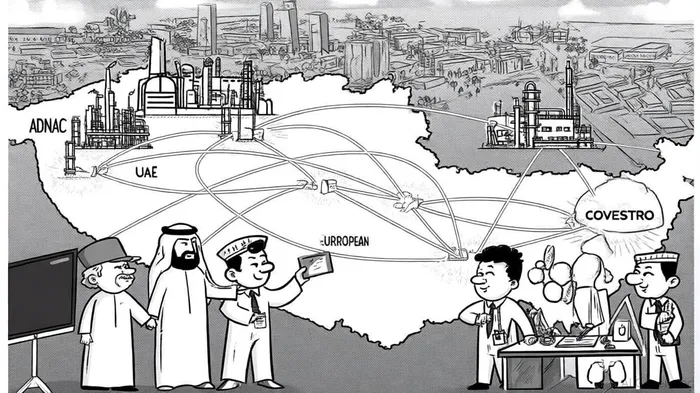







Comentarios
Aún no hay comentarios