
Adnoc's $19 Billion Santos Bid: A High-Stakes Gamble on Energy Security and LNG Dominance
The $18.7 billion bid by the Abu Dhabi National Oil Company (ADNOC) for Australia's Santos has ignited a firestorm of debate over the risks and rewards of foreign state-owned entities controlling critical energy infrastructure. At its core, the deal exposes Australia's energy security dilemmas, the geopolitical stakes of LNGLNG-- market dominance, and the precarious balance between foreign investment and national sovereignty. For investors in global energy assets, this is a test case for how regulatory scrutiny and strategic risks will shape returns in the decade ahead.
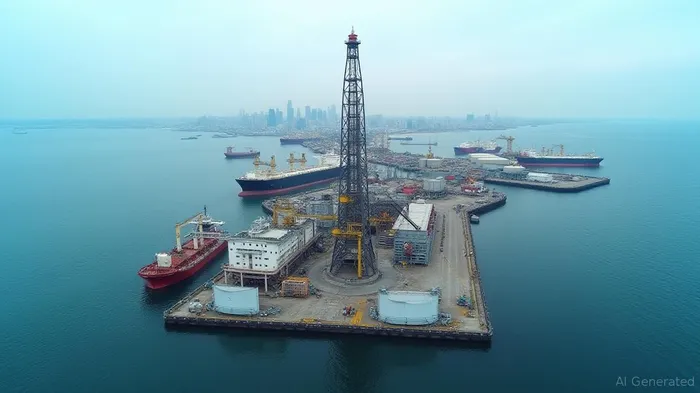
The Regulatory Gauntlet: Energy Security vs. Foreign Capital
The bid's most immediate hurdle is Australia's Foreign Investment Review Board (FIRB), which must weigh whether ADNOC's ownership of Santos aligns with national interests. Santos controls 5% of Australia's east coast gas market and 24% of the west coast, making it a linchpin in domestic supply chains. Regulators fear foreign control could exacerbate projected east coast gas shortages by 2027, as Santos historically prioritized LNG exports over local demand.
The Australian Treasurer, Jim Chalmers, holds ultimate authority, and his decision will hinge on whether ADNOC can guarantee:
1. Domestic gas supply reservations, akin to policies in Western Australia.
2. Accelerated development of projects like Narrabri (which could supply half of NSW's gas needs).
3. Transparency over $1.2 billion in decommissioning liabilities for aging assets like the Cooper Basin fields.
Market skepticism is clear: Santos' shares trade at $7.75, a 13% discount to the $8.89 bid price, reflecting doubts about regulatory clearance.
Strategic Opportunities: LNG Growth and Capital Strength
If approved, the deal would catapult ADNOC into Australia's LNG powerhouse, adding Santos' 5 Mt/yr of equity LNG production to its portfolio. Key projects like PNG LNG and the Beetaloo Basin—which could boost Santos' LNG output to 8 Mt/yr by 2030—would position ADNOC to capitalize on Asia's surging LNG demand.
ADNOC's financial firepower ($100 billion in 2023 revenue) offers Santos the capital to fast-track stalled projects, while its alignment with Australia's energy transition goals—such as funding carbon capture projects—could ease regulatory concerns. The bid also diversifies ADNOC's holdings beyond the Middle East, countering U.S. and Russian LNG competition.
Risks Beyond Australia: Geopolitics and Global Approval
Even if FIRB greenlights the deal, ADNOC must navigate approvals from Papua New Guinea (PNG), where Santos holds a 36% stake in the PNG LNG project, and the U.S. Committee on Foreign Investment (CFIUS) for its Alaskan Pikka asset. PNG has historically resisted foreign dominance of its energy sector, while CFIUS scrutinizes deals involving critical infrastructure.
Domestic political risks loom too: South Australia's new legislation allows it to block the deal unless ADNOC commits to retaining Santos' Adelaide headquarters and jobs—a condition that could delay or dilute the transaction.
Investment Implications: Navigating the Crossroads
For investors, the Santos-ADNOC deal presents a binary outcome:
Risks to Avoid or Hedge Against
- Regulatory Rejection: If the bid fails, Santos' shares could plummet further, as the discount to the bid price suggests. Investors holding Santos should consider shorting the stock or using put options to hedge downside risk.
- Gas Shortages: A rejected deal might delay Narrabri's development, worsening east coast shortages. Investors in Australian utilities or gas consumers (e.g., fertilizer producers) could face higher input costs.
Opportunities to Seize
- Approval Scenario: If regulators sign off, Santos' shares could rebound to the bid price, yielding a 14% upside. Investors could buy the dip, but should monitor progress through to gauge market tailwinds.
- LNG Exposure: The deal strengthens ADNOC's LNG portfolio, making its parent company or related entities (e.g., ADNOC Distribution) a play on Asia's energy demand.
Actionable Portfolio Adjustments
- Underweight Santos: Until regulatory clarity emerges, avoid overexposure.
- Rotate to Competitors: If the bid fails, consider Woodside Energy, which benefits from similar LNG assets without foreign ownership risks.
- Diversify with ETFs: The SPDR S&P Oil & Gas Exploration & Production ETF (XOP) offers diversified exposure to global energy infrastructure, reducing reliance on any single deal.
Conclusion: A Blueprint for Energy Investors
The Santos-ADNOC saga underscores a broader truth: state-owned energy giants are reshaping global markets, but their deals face unprecedented scrutiny. Investors must weigh the strategic upside of scale and capital against geopolitical and regulatory headwinds. For now, patience and diversification are the safest bets—until the world's energy crossroads deliver clarity.
Final Note: Monitor FIRB's decision timeline (expected by early 2026) and Santos' share price relative to the bid for tactical entry/exit signals.





Comentarios
Aún no hay comentarios