
Address Poisoning and the Evolving Risks in Crypto Security
The cryptocurrency ecosystem is at a crossroads. As institutional adoption accelerates and high-value transactions become more common, a shadowy threat-address poisoning-has emerged as a systemic vulnerability. This attack vector exploits a dangerous intersection of human behavior and flawed wallet design, creating a perfect storm for irreversible losses. For investors and developers alike, understanding this risk is no longer optional-it's existential.
The Human Factor: How User Behavior Fuels Exploits
Address poisoning thrives on predictable user habits. Attackers send small-value or zero-value transactions to generate lookalike addresses that mimic legitimate ones in a victim's transaction history. When users copy-paste addresses from their wallets, they're often tricked into sending funds to the wrong recipient. A November 2025 case study illustrates this: a $1.1 million loss occurred after a victim relied on an auto-filled address poisoned by a 0.0015 ETHETH-- dust transaction.
The problem is compounded by the sheer scale of these attacks. Over 270 million poisoning attempts have been recorded on EthereumETH-- and BNBBNB-- Chain since 2023, with losses exceeding $83.8 million USD. High-net-worth individuals are particularly vulnerable. In May 2024, a crypto whale nearly lost $68 million in wrapped BitcoinWBTC-- (WBTC) after falling for a near-identical address. Even government agencies aren't immune: the DEA lost $55,000 in 2023 to a similar scam.
Wallet Design: A Systemic Weakness
The architecture of crypto wallets exacerbates these risks. A 2025 study of 53 Ethereum-based wallets revealed alarming flaws: 17 failed to display transaction histories entirely, while 16 showed fake transfers without warnings. Most wallets rely on third-party providers to filter phishing attempts, but these services vary widely in effectiveness. Only three wallets issued explicit warnings for known poisoned addresses.
This lack of robust validation is a design failure. Ethereum wallets often act as "signature engines", trusting third-party data to construct transactions. For example, when interacting with dApps or RPC providers like Infura, users implicitly trust external inputs for balances, gas prices, and smart contract states-none of which are cryptographically verified. Signature verification flaws alone account for 19% of reported wallet vulnerabilities.
Case Studies: When Systems Fail
The May 2024 $68 million WBTCWBTC-- theft highlights the catastrophic consequences of these weaknesses. The attacker sent a 0.05 ETH test transaction to create a fake ERC-20 token labeled "ETH," tricking the victim into sending real funds to a nearly identical address. While 90% of the funds were eventually recovered through public appeals and a bounty offer, this outcome is rare. Most victims, especially those dealing with nation-state actors, face permanent losses.
In 2025, the problem escalated. Personal wallet compromises accounted for 37% of total stolen value, with 158,000 incidents affecting 80,000 unique victims. DPRK-linked groups exploited these vulnerabilities to launder stolen funds through Chinese-language services, underscoring how design flaws enable cross-border criminal activity.
Solutions: From Protocol Upgrades to User Education
Address poisoning demands a multi-layered response. Protocol-level upgrades, such as Ethereum's EIP-4844, could reduce the cost of on-chain monitoring tools. Real-time detection frameworks, like Hypernative Wallet Protect 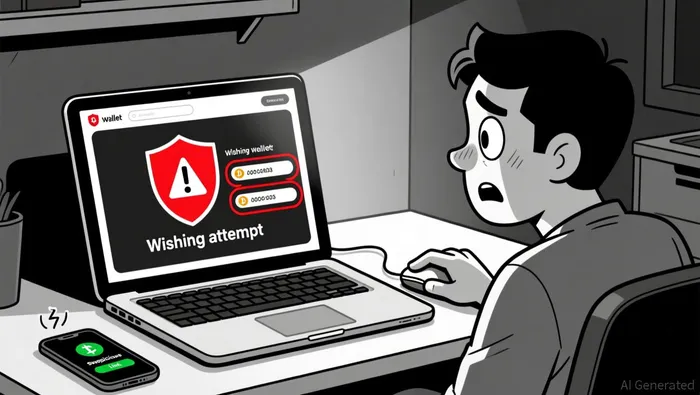 simulate transactions before execution to flag malicious tokens or spam. These tools shift wallets from passive transaction tools to active security layers.
However, technical solutions alone aren't enough. User education is critical. Best practices include manually verifying full addresses, avoiding auto-fill features, and using wallets with explicit phishing warnings. Regulatory frameworks are also evolving: the Office of the Comptroller of the Currency (OCC) now mandates penetration testing and secure custody practices for crypto services.
Conclusion: A Call for Vigilance
Address poisoning is a symptom of a broader issue: the misalignment between crypto's decentralized ethos and the centralized vulnerabilities it inherits. For investors, this means prioritizing wallets with robust validation and real-time monitoring. For developers, it's a reminder that security isn't just about code-it's about designing systems that account for human error.
As the crypto economy grows, so too will the sophistication of its adversaries. The time to act is now-before the next $68 million loss becomes a footnote in a much larger story.






Comentarios
Aún no hay comentarios