
Adaptive Reuse in Urban Real Estate: How Office-to-Residential Conversions Are Reshaping Capital Flows and Unlocking Value in Core Cities
The urban real estate landscape is undergoing a seismic shift as office-to-residential (O2R) conversions emerge as a dominant force in core cities. Driven by post-pandemic work patterns, housing shortages, and policy tailwinds, this trend is not merely a cyclical adjustment but a structural reimagining of urban cores. For institutional investors, the repurposing of underutilized office assets into residential units represents a compelling opportunity to unlock value, diversify portfolios, and align with evolving market demands.
The Drivers of the O2R Boom
The surge in O2R conversions is rooted in three interlocking forces: falling office valuations, acute housing demand, and policy incentives. Office vacancy rates in major U.S. cities have soared to record levels-New York City reported a 22.3% vacancy rate as of August 2025. Simultaneously, housing shortages persist, with core cities struggling to meet demand for affordable and luxury units alike. The economic calculus has shifted dramatically: office asset prices in cities like San Francisco have plummeted by 80% from their 2019 peaks, while residential rents remain resilient. This dislocation has made conversions financially viable, with developers saving up to 30% in costs compared to new construction.
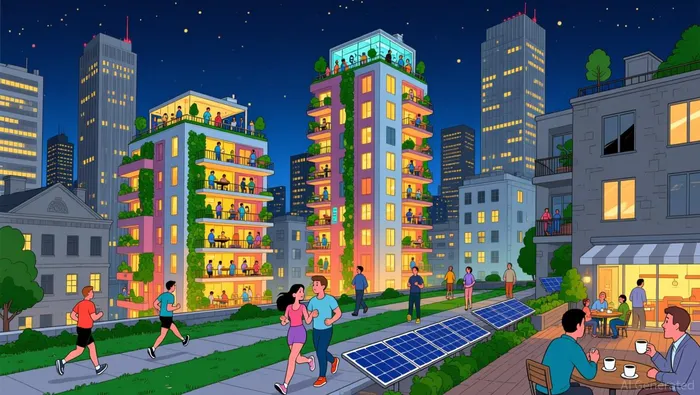
Government support has further accelerated the trend. New York's Office Conversion Accelerator Program, coupled with a 90% tax abatement for projects including affordable units, has spurred a record 4.1 million square feet of conversions in 2025 alone. Similarly, Calgary's 75-per-square-foot grants and California's 400 million allocation for affordable housing conversions underscore the policy momentum.
Capital Flows and Institutional Involvement
The influx of institutional capital into O2R projects has been nothing short of transformative. U.S. office sales surged to $25.9 billion in the first half of 2025, a 42% increase from the same period in 2024, with high-value deals over $100 million rising by 130%. A 1 billion joint venture between Dune Real Estate Partners and TF Cornerstone exemplifies the scale of institutional bets on this trend.
Investors are drawn by the dual promise of value preservation and urban revitalization. By acquiring distressed office assets at discounts, developers can reposition them as residential units commanding higher rents and appreciation. For example, the 25 Water Street redevelopment in Manhattan-now SoMA-includes 1,320 residential units and extensive amenities, illustrating how mixed-use models enhance returns. Institutional players like BlackstoneBX-- and Norges Bank Investment Management are increasingly targeting gateway cities, where high-quality assets align with evolving workplace needs.
Economic Returns and Case Studies
Quantifying the ROI of O2R conversions reveals their strategic appeal. In New York, the conversion of the Flatiron Building into 60 luxury condos and the 8,310 units projected for 2025 highlight the scale of value creation. Chicago's Affordable Requirements Ordinance, mandating 20% affordable units in conversions, aligns with public policy goals while ensuring long-term occupancy. Boston's policy-driven incentives have doubled conversion targets within a year, demonstrating the power of regulatory support.
Financial metrics underscore the viability of these projects. Repurposing existing structures saves 20–30% in costs compared to new construction, while ESG-aligned retrofits and mixed-use elements enhance long-term value. In 2025, 70,700 apartment units are projected nationwide, with 76% of active projects focused on multifamily conversions. These figures suggest a durable shift in capital allocation, with returns concentrated in premium properties and well-located assets.
Challenges and the Path Forward
Despite the momentum, challenges persist. Structural limitations, financing gaps, and regulatory complexity remain hurdles. Cushman & Wakefield warns that the current conversion rate (2.8%–3.5% of office buildings) is insufficient to address urban crises. However, the integration of coworking spaces, retail, and sustainability features is mitigating these risks.
Looking ahead, the success of O2R conversions will depend on scaling execution and adapting to market shifts. As office leasing rebounds in some markets, developers must balance flexibility with long-term residential demand. For institutional investors, the key lies in disciplined capital deployment and strategic alignment with urban revitalization goals.
Conclusion
Office-to-residential conversions are redefining capital flows in core cities, offering a blueprint for value unlocking in an era of urban transformation. By leveraging falling office valuations, policy incentives, and innovative design, investors are not only addressing housing shortages but also reshaping the DNA of urban cores. As this trend matures, it will serve as a critical tool for institutional portfolios seeking resilience, diversification, and alignment with the future of work and living.





Comentarios
Aún no hay comentarios