
Adani Power's 25-Year, 2.4GW Agreement with BSPGCL: A Strategic Pillar for India's Energy Security
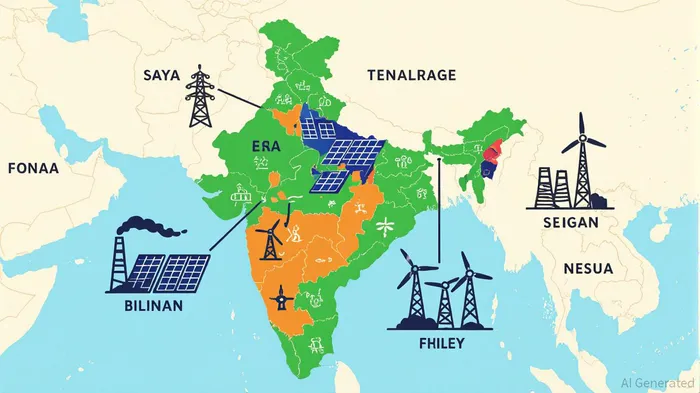
India's energy landscape is undergoing a transformative phase, driven by the dual imperatives of meeting surging demand and reducing carbon emissions. Adani Power Ltd, a flagship entity of the Adani Group, has long positioned itself as a cornerstone of this transition. While specific terms of its 25-year, 2.4GW power supply agreement with Bihar State Power Generation Company Limited (BSPGCL) remain undisclosed, the strategic implications of such a long-term contract align closely with India's broader energy security goals and the Adani Group's expansionary vision.
Strategic Alignment with India's Energy Security Framework
India's energy security strategy hinges on diversifying supply sources, enhancing grid reliability, and integrating renewable energy into the national gridNGG--. Adani Power, already one of the country's largest private thermal power generators[1], has demonstrated a commitment to balancing these priorities. The 25-year agreement with BSPGCL—Bihar's state-owned power utility—signals a long-term partnership to stabilize energy supply in a state historically plagued by power shortages. By locking in a 2.4GW capacity, Adani Power ensures a consistent revenue stream while providing Bihar with a predictable and scalable energy source.
This agreement also complements India's push for decentralized energy solutions. Bihar, with its growing industrial and agricultural sectors, requires robust infrastructure to support economic development. Adani's involvement in such projects reinforces its role as a private-sector partner in India's energy democratization agenda.
Adani Group's Broader Energy Ecosystem
The Adani Group's strategic growth is underpinned by its diversification across thermal, renewable, and infrastructure sectors. For instance, the group's Mundra Solar Park in Gujarat—among the world's largest solar plants—highlights its dual focus on sustainability and scale[1]. While the BSPGCL agreement likely involves thermal power (given Adani Power's core expertise), the company's renewable energy ventures suggest a future where such agreements could evolve to incorporate cleaner energy sources.
Moreover, the Adani Group's investments in ports and logistics infrastructure (e.g., the Mundra Port) enable cost-efficient fuel transportation, further enhancing the economic viability of long-term power agreements. This vertical integration reduces operational risks and strengthens the group's ability to deliver competitive tariffs, a critical factor for utilities like BSPGCL seeking to balance affordability and reliability.
Long-Term Growth and Risk Mitigation
Long-term power purchase agreements (PPAs) like the one with BSPGCL are vital for mitigating the financial and regulatory risks inherent in India's power sector. For Adani Power, a 25-year contract provides certainty in revenue forecasting, enabling reinvestment in capacity expansion and technology upgrades. For BSPGCL, it ensures a stable supply of energy to meet Bihar's developmental targets, including rural electrification and industrialization.
However, the agreement's success will depend on factors such as fuel price volatility, regulatory approvals, and environmental compliance. Adani's track record in navigating these challenges—such as its rapid scaling of renewable projects amid policy shifts—positions it as a resilient player in this space[1].
Conclusion: A Win-Win for India's Energy Future
While the specifics of the 2.4GW agreement remain opaque, its strategic alignment with India's energy security objectives is evident. By leveraging its expertise in thermal power and renewable energy, Adani Power is not only addressing immediate energy deficits but also laying the groundwork for a sustainable, decentralized energy ecosystem. For investors, this agreement underscores the company's role as a key player in India's energy transition—a sector poised for decades of growth.







Comentarios
Aún no hay comentarios