
Acusensus' Expansion in Traffic Management Technology: Strategic Growth Opportunities in Smart Infrastructure Post-Contract Win
The recent $8.7 million WA contract won by Acusensus in Western Australia underscores the company's accelerating momentum in the smart infrastructure sector. This deal, which expands traffic enforcement camera programs on key freeways, is not an isolated success but part of a broader strategy to leverage AI-enabled road safety solutions in both domestic and international markets. For investors, the question is no longer whether Acusensus can secure contracts but how its strategic positioning aligns with global trends in urban mobility and safety.
Domestic Expansion: Beyond Western Australia
While the WA contract has garnered significant attention, Acusensus' growth story extends to other Australian states. The company already operates under a $9.4 million trailer-based enforcement contract in WA and has active deployments in New South Wales, Queensland, South Australia, and the Australian Capital Territory. Notably, its five-year, $44.7 million NSW contract for mobile phone and seatbelt enforcement highlights its ability to secure large-scale, multi-year agreements. These contracts are critical for revenue stability, as they provide recurring income streams and reduce exposure to short-term project volatility.
The competitive tender process that led to the WA expansion also signals growing government confidence in Acusensus' technology. With Australia's urban population projected to rise by 12% over the next decade, according to ABS population projections, demand for scalable traffic management solutions is likely to outpace supply, creating a favorable environment for Acusensus' AI-driven systems.
Global Ambitions: A Strategic Shift to International Markets
Acusensus' international expansion is equally compelling. The company has secured its first long-term road safety enforcement contract in the UK with Devon & Cornwall Police, a milestone that validates its technology in a market with stringent regulatory standards. Meanwhile, a nationwide speed enforcement contract in New Zealand is expected to contribute meaningfully to revenue starting in FY26. These moves diversify Acusensus' geographic risk and tap into markets where road safety enforcement is increasingly digitized.
The U.S. market, though still in early stages, represents a high-growth opportunity. With 40,000 traffic-related fatalities annually, according to NHTSA data, U.S. cities are prioritizing smart infrastructure investments. Acusensus' AI algorithms, which detect violations like speeding and distracted driving with 99.8% accuracy, position it to compete against established players like Siemens and Iteris.
Financial Performance and Growth Catalysts
Acusensus' FY25 revenue of $59.4 million reflects a 42% year-on-year increase, driven by contract wins and scope expansions. This growth is underpinned by high-margin, long-term agreements-such as the WA and NSW contracts-which typically carry gross margins exceeding 60%. The company's guidance for 41% revenue growth in FY26 further reinforces its trajectory, assuming no major regulatory headwinds.
A key risk lies in the capital intensity of deploying enforcement infrastructure. However, Acusensus' modular camera systems and cloud-based analytics reduce upfront costs for clients, making its solutions attractive to cash-constrained governments. Additionally, the inclusion of one-year renewal options in contracts like the WA deal provides flexibility for scaling deployments as demand evolves.
Investment Implications
For investors, Acusensus embodies the intersection of technological innovation and regulatory tailwinds. Its ability to secure contracts in both mature (Australia) and emerging (UK, New Zealand) markets demonstrates adaptability-a critical trait in the smart infrastructure sector. While competition from global tech firms exists, Acusensus' niche focus on road safety enforcement and its proven track record in AI deployment give it a first-mover advantage.
The company's FY26 revenue projection of $83.7 million (based on current contracts and international expansion plans) suggests a compound annual growth rate (CAGR) of 38% from FY24 to FY26. This aligns with broader trends in smart city investments, which are projected to reach $2.5 trillion globally by 2030, according to a McKinsey report.
Conclusion
Acusensus' recent contract wins and international forays position it as a leader in the AI-driven traffic management space. By capitalizing on government demand for data-driven safety solutions and expanding into high-growth markets, the company is well-placed to outperform industry benchmarks. For investors seeking exposure to the smart infrastructure boom, Acusensus offers a compelling blend of innovation, scalability, and regulatory alignment.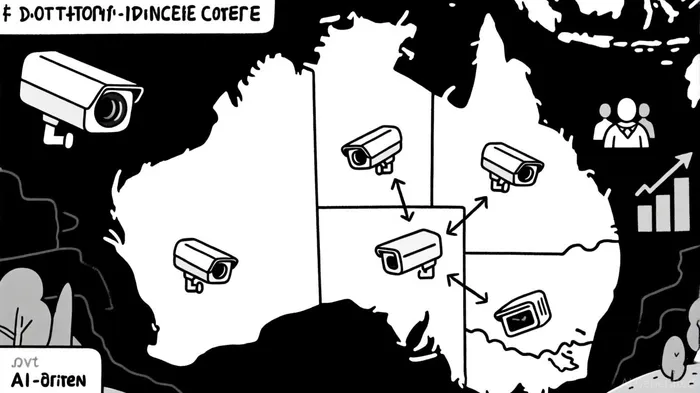







Comentarios
Aún no hay comentarios