
The Accessibility Tech Boom: How Apple and Google Are Redefining Wearable AI for the Blind
The accessibility technology sector is undergoing a seismic shift, driven by the rapid convergence of artificial intelligence (AI), wearable hardware innovation, and an urgent demand for inclusive solutions. At the forefront of this transformation are AI-powered smart glasses designed for the visually impaired, a market poised to grow from $792 million in 2024 to $1.44 billion by 2031, according to a report by Valuates.com. This surge is fueled by breakthroughs in real-time environmental analysis, hands-free interaction, and partnerships between tech giants and eyewear brands. As AppleAAPL-- and GoogleGOOGL-- enter the fray with ambitious projects, investors are presented with a unique opportunity to capitalize on a sector that is not only technologically transformative but also socially impactful.
The Market's Unmet Demand and Technological Leap
The visually impaired community faces significant barriers to independence, with traditional assistive tools like screen readers and braille displays often falling short in dynamic environments. AI-driven smart glasses address this gap by integrating real-time object recognition, scene description, and navigation assistance. Envision AI, for instance, has pioneered glasses that continuously describe surroundings without requiring repeated user prompts, a feature that has been hailed as a game-changer for blind users. Similarly, Agiga's EchoVision smart glasses offer live streaming and Aira integration, enabling users to access visual interpretation services on demand. These innovations are not just incremental improvements-they represent a paradigm shift in how accessibility technology is designed and deployed.
Meta, meanwhile, has leveraged its dominance in the broader smart glasses market to capture a 73% share in 2025, according to Counterpoint Research. Its second-generation Ray-Ban and Oakley models feature a 12-megapixel camera, in-lens displays, and the Neural Band, a sensor that translates muscle movements into commands. This hardware-software synergy underscores the company's commitment to making smart glasses a mainstream computing platform while addressing accessibility needs.
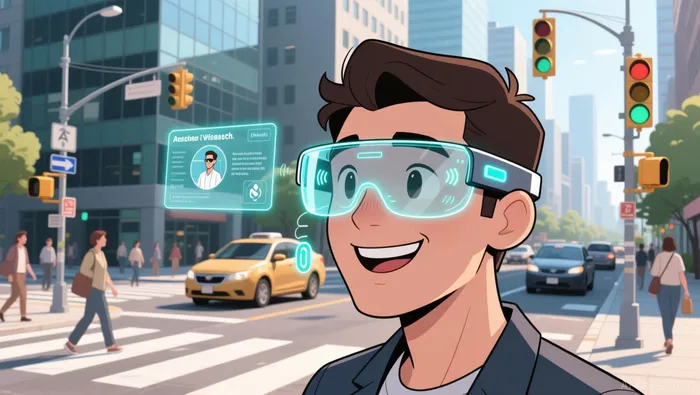
Apple and Google: Strategic Entry and Ecosystem Expansion
Apple's rumored 2025 launch of smart glasses marks a pivotal moment in the sector. The device is expected to integrate Siri for voice commands, real-time language translation, and navigation assistance, all powered by Apple's evolving AI infrastructure. While details remain scarce, the company's emphasis on premium design and seamless ecosystem integration suggests a product tailored for long-term wear and daily utility. This aligns with broader market trends, where aesthetics and functionality are equally critical for adoption.
Google, on the other hand, is taking a platform-driven approach. Its Android XR initiative, paired with Gemini AI, is set to power smart glasses from partners like Warby Parker, Gentle Monster, and Samsung. These glasses will offer real-time translation, live subtitles, and context-aware assistance, with Warby Parker's prescription-friendly designs targeting mass-market appeal. Google's $150 million investment in product development further signals its intent to dominate the accessibility and general consumer segments.
Financial and Strategic Rationale for Investment
The financial landscape of the sector is equally compelling. Meta's $14.3 billion acquisition of a 49% stake in Scale AI in June 2025 highlights the critical role of data infrastructure in training AI models for smart glasses. This move not only secures access to high-quality labeled data but also positions Meta to lead in AI-driven accessibility solutions. Meanwhile, Agiga's EchoVision, though less financially transparent, is part of a market projected to grow at a 29.5% CAGR, reaching $3.3 billion by 2033. Envision AI, despite facing challenges from U.S. tariffs on imported assistive technologies, remains a key innovator with a product suite that includes facial recognition and scene analysis.
Investors should also consider the broader AI smart glasses market, which is expected to expand from $2.8 billion in 2024 to $7.1 billion by 2034, driven by enterprise and consumer demand. Apple and Google's entry will likely accelerate adoption, particularly as their ecosystems attract developers and third-party applications. For instance, Warby Parker's collaboration with Google to launch AI-powered glasses in 2026 could redefine accessibility by making stylish, functional devices accessible to millions.
Conclusion: A Sector at the Inflection Point
The accessibility tech boom is not a fleeting trend but a structural shift in how technology addresses human needs. With AI smart glasses bridging the gap between innovation and inclusivity, the sector offers a dual promise: scalable financial returns and transformative social impact. As Apple and Google redefine wearable AI, early investors stand to benefit from a market that is rapidly maturing, supported by robust growth projections, strategic partnerships, and a clear unmet demand. The time to act is now-before the next wave of innovation renders current solutions obsolete.





Comentarios
Aún no hay comentarios