
Abu Dhabi's XRG Withdraws from Santos Takeover: A Geopolitical Risk Lens on Energy Investment Strategies
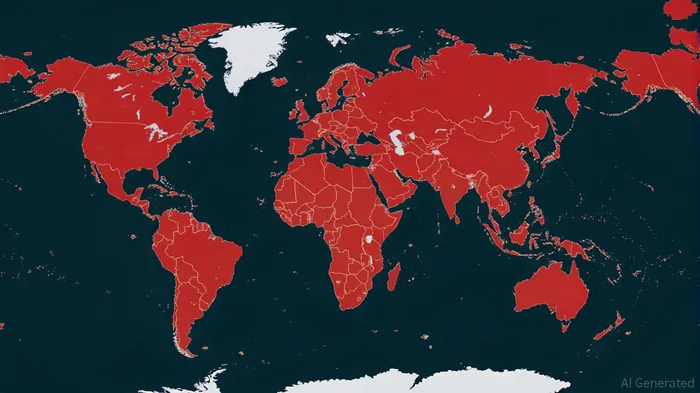
The recent withdrawal of Abu Dhabi's XRG from its $19 billion bid to acquire Australia's Santos Ltd. marks a pivotal moment in global energy investment dynamics. While the consortium cited commercial disagreements over valuation and tax liabilities as the primary reasons for its decision[1], the broader implications of this retreat reveal a deeper narrative shaped by geopolitical risk and capital retrenchment in emerging markets. This analysis explores how the Santos deal's collapse reflects shifting priorities in energy investment strategies, driven by the interplay of geopolitical instability and evolving capital flows.
Geopolitical Risk: A Catalyst for Capital Retrenchment
Emerging markets have long been sensitive to geopolitical volatility, but 2025 has seen this sensitivity intensify. According to a report by World Energy Investment 2025, energy markets in these regions are four times more vulnerable to geopolitical shocks than advanced economies, particularly due to structural dependencies on foreign capital[4]. The Santos deal, which faced inflexibility on commercial terms[1], exemplifies how geopolitical uncertainties—such as trade wars, strategic decoupling, and regional conflicts—can amplify transaction risks.
The KPMG 2024 Energy, Natural Resources, and Chemicals CEO Outlook underscores this trend, with 55% of industry leaders ranking geopolitical complexities as their top challenge[1]. For XRG, a unit of Abu Dhabi National Oil Company (ADNOC) tasked with global energy expansion, the Santos withdrawal aligns with a broader recalibration of risk exposure. While ADNOC has emphasized its commitment to gas, LNG, and low-carbon energy solutions[5], the Santos setback highlights the growing caution among energy investors in emerging markets.
Capital Flows in Flux: Equity Inflows Under Pressure
The Santos deal's failure also reflects divergent trends in global capital flows. Data from Geopolitical Risks and Global Capital Flows reveals that while debt and portfolio inflows into emerging markets have increased due to a “flight to safety,” equity investments remain constrained[4]. This dichotomy is critical for understanding XRG's strategic pivot. Equity-heavy transactions like the Santos takeover require long-term stability, which is increasingly elusive in a world marked by cyber threats, supply chain disruptions, and energy security concerns[2].
The market's skepticism toward the Santos bid—evidenced by shares trading below the $5.76 offer price[2]—further illustrates the erosion of investor confidence in high-risk, high-reward deals. This dynamic is not unique to Australia. The World Energy Investment 2025 report notes that clean energy investments are outpacing fossil fuel projects in emerging markets, driven by policy shifts and the need for resilient infrastructure[1]. XRG's focus on LNG and chemicals, while still relevant, must now compete with a global shift toward renewables and energy diversification.
Strategic Reorientation: XRG's Global Energy Playbook
Despite the Santos setback, XRG's broader strategy remains intact. The unit, valued at over $80 billion[5], has already made significant international moves, including the acquisition of Germany's Covestro and a merger with Austria's OMV to form the Borouge Group International[3]. These investments align with ADNOC's vision to diversify beyond oil, leveraging Abu Dhabi's financial muscle to secure gas and LNG assets globally.
However, the Santos withdrawal signals a recalibration of priorities. XRG's exploration of an international IPO—potentially in London or New York[4]—suggests a desire to access stable capital markets while mitigating exposure to volatile emerging economies. This approach mirrors trends observed in the 2025 Energy Security in the Age of Geopolitical Instability report, which emphasizes the importance of diversified funding sources and resilient supply chains[2].
Conclusion: Navigating a Fractured Energy Landscape
The Santos deal's collapse is a microcosm of the challenges facing energy investors in a geopolitically fragmented world. For XRG and similar entities, the path forward requires balancing ambition with pragmatism. While emerging markets remain critical to global energy security, the heightened risks necessitate a shift toward diversified portfolios, strategic partnerships, and capital structures that prioritize flexibility.
As geopolitical tensions persist and capital flows continue to diverge, the Santos case serves as a cautionary tale. Energy investors must now weigh not only commercial viability but also the geopolitical context of their bets. For Abu Dhabi's XRG, the withdrawal from Santos may ultimately be a strategic pivot—a step toward securing long-term growth in an era where energy markets are as much about political acumen as financial returns.







Comentarios
Aún no hay comentarios