
The Abraham Accords Expansion: Geopolitical Shifts and Investment Opportunities in the Middle East
Geopolitical Shifts: Central Asia's Strategic Entry
Kazakhstan's inclusion in the Abraham Accords marks a pivotal moment. While the country has maintained diplomatic ties with Israel since 1992, according to a Times of Israel report, its formal entry is framed as a "natural and logical continuation" of its , emphasizing dialogue and stability, Al Jazeera reported. This expansion aligns with U.S. efforts to counterbalance regional instability, particularly following the Gaza conflict, the Times of Israel reported. Beyond Kazakhstan, reports suggest Azerbaijan and other Central Asian nations are under consideration, Witkoff told Az News, signaling a potential eastward pivot of the Accords. Such developments could enhance and military cooperation, creating a ripple effect across .
Investment Opportunities: Sectors Poised for Growth
The Abraham Accords' expansion is not merely symbolic; it opens doors for in key economic sectors.
Energy: Critical Minerals and Hydrocarbon Synergies
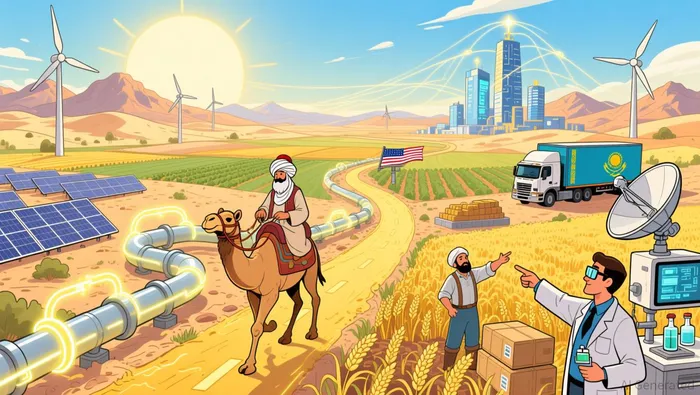
Kazakhstan's vast reserves of oil, natural gas, and position it as a strategic partner for Israel and the U.S. The country recently signed a memorandum of cooperation with the U.S. in critical minerals, according to a Times of Israel report, a sector critical for . For investors, this signals opportunities in , such as battery production and . Additionally, Israel's expertise in and energy efficiency could complement Kazakhstan's hydrocarbon resources, fostering joint ventures in .
Technology: Trade and Military Innovation
The Accords have historically driven , and Kazakhstan's entry is expected to amplify this trend. The U.S. and Israel's focus on cybersecurity, AI, and defense systems could align with Kazakhstan's growing . For instance, Israeli startups specializing in (AgTech) and logistics software may find new markets in Central Asia, while Kazakh firms could access Israel's advanced R&D infrastructure. Military cooperation, another cornerstone of the Accords, may also spur investments in .
Agriculture: Regenerative Practices and Food Security
With climate change intensifying water scarcity in the Middle East, agriculture remains a critical sector. Sustainea's recent project in Indiana, focused on and carbon sequestration, according to a PR Newswire release, exemplifies the kind of innovation that could be replicated in arid regions like Israel and Kazakhstan. Investors might explore partnerships between Israeli AgTech firms and Central Asian agribusinesses to develop and precision farming solutions.
Strategic Asset Allocation: Balancing Risk and Reward
While the Abraham Accords' expansion offers compelling opportunities, investors must navigate geopolitical risks. The Gaza conflict and regional tensions could disrupt trade flows, necessitating a . However, the Accords' emphasis on dialogue and may mitigate these risks over time. A strategic allocation could prioritize:
1. : Companies involved in critical minerals (e.g., , cobalt) and .
2. : Israeli and Central Asian firms specializing in cybersecurity, AI, and .
3. : Entities leveraging to address food security.
Conclusion: A New Era of Regional Integration
The Abraham Accords' 2025 expansion represents more than a diplomatic milestone-it is a catalyst for economic transformation. By integrating Central Asian markets into the Middle East's evolving landscape, the Accords create a unique confluence of energy, technology, and . For investors, this is a moment to recalibrate portfolios toward emerging markets where and innovation intersect.







Comentarios
Aún no hay comentarios