
Abpro and Celltrion's ABP-102/CT-P72: A High-Potential T-Cell Engager Entering Clinical Trials for HER2-Positive Cancers
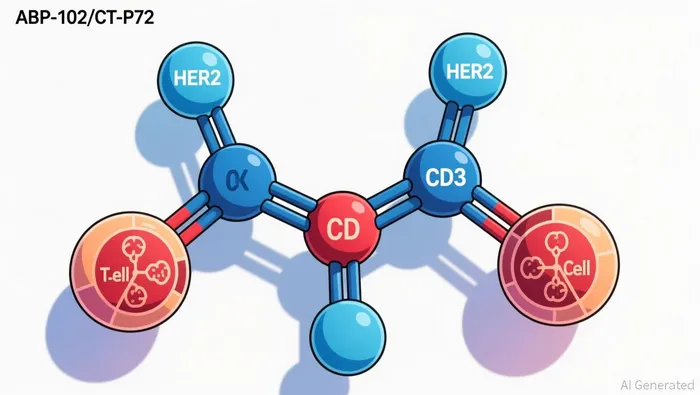
The recent FDA clearance of the Investigational New Drug (IND) application for AbproABP-- and Celltrion's ABP-102/CT-P72 marks a pivotal milestone in the development of HER2-targeted immuno-oncology therapies. This tetravalent HER2×CD3 bispecific T-cell engager (TCE) is now poised to enter Phase 1 clinical trials in 2026, following robust preclinical data that underscore its potential to address unmet needs in HER2-positive cancers. For investors, the strategic collaboration between Abpro and Celltrion, combined with the molecule's differentiated profile, presents a compelling case for long-term value creation in a rapidly expanding therapeutic market.
Preclinical Promise: A Differentiated Mechanism with Strong Efficacy and Safety
ABP-102/CT-P72's preclinical results highlight its ability to selectively target HER2-overexpressing tumors while minimizing off-tumor toxicity, a critical challenge in TCE development. According to a report by , the molecule demonstrated "robust antitumor activity in HER2-high tumor models, including dual xenograft models with both HER2-high and HER2-low tumors," while showing selective efficacy for HER2-high lesions. This selectivity is further supported by non-human primate toxicology studies, which confirmed tolerability at doses up to 80 mg/kg, with no significant adverse effects observed.
Notably, ABP-102/CT-P72 also exhibited activity in tumor models resistant to Enhertu, a leading HER2-targeted antibody-drug conjugate (ADC). This positions the candidate to potentially serve patients who have exhausted existing therapies, a demographic with significant unmet medical needs. The molecule's design, which incorporates dual-affinity tuning to enhance tumor selectivity, aligns with broader industry trends toward improving the safety profiles of bispecific antibodies in solid tumors.
Strategic Partnership: Leveraging Global Expertise for Development and Commercialization
The collaboration between Abpro and Celltrion spans global development and commercialization of ABP-102/CT-P72, a partnership structure that mitigates financial and operational risks while accelerating access to complementary expertise. As stated by Abpro in its investor release, the IND submission in December 2025 was a joint effort, with Celltrion leading the Phase 1 trial. This partnership model is particularly advantageous in immuno-oncology, where high R&D costs and regulatory complexity are common barriers.
Financially, the partnership appears mutually beneficial. Celltrion's established biologics manufacturing capabilities and Abpro's innovation in bispecific antibody design create a synergistic framework for advancing ABP-102/CT-P72. For investors, this collaboration reduces the likelihood of delays or resource constraints, which are frequent challenges in early-stage biotech ventures.
Market Potential: A Growing HER2-Targeted Therapeutics Landscape
The HER2-targeted ADC market is projected to grow at a compound annual growth rate (CAGR) of 18.2% from 2024 to 2032, reaching USD 18.12 billion by 2032, driven by increasing prevalence of HER2-positive cancers and advancements in bioconjugation technologies. ABP-102/CT-P72's potential to address both HER2-high and HER2-low cancers-particularly in Enhertu-resistant populations-positions it to capture a significant share of this expanding market.
Moreover, the HER2-low cancers segment alone is forecasted to grow at an 11% CAGR, reaching USD 8.997 billion by 2034. This growth is fueled by the approval of therapies like ENHERTU in 2022, which validated HER2-low as a viable target. ABP-102/CT-P72's preclinical data, including its activity in HER2-low models, suggest it could compete effectively in this emerging space.
Competitive Landscape: Navigating a Dynamic Field of Bispecifics and CAR-T Therapies
The competitive landscape for HER2-targeted TCEs and BsAbs is intensifying, with multiple players advancing therapies that aim to improve upon existing standards of care. For instance, HER2-CAR-T cell therapies have shown promise in preclinical models, particularly in enhancing T-cell persistence and reducing antigen escape. However, ABP-102/CT-P72's preclinical profile-marked by reduced cytokine release and enhanced tumor growth inhibition compared to runimotamab, a benchmark HER2×CD3 bispecific-suggests it could offer a more favorable therapeutic window.
Additionally, the broader BsAbs market, valued at USD 8.65 billion in 2023, is dominated by biotechnology firms innovating in solid tumors . ABP-102/CT-P72's tetravalent design and dual-affinity tuning represent a strategic differentiation in a field where safety and efficacy remain key hurdles.
Conclusion: A High-Potential Candidate with Clear Pathways to Value Creation
The IND clearance for ABP-102/CT-P72, coupled with its preclinical promise and strategic partnership, positions it as a high-potential candidate in the HER2-targeted immuno-oncology space. For investors, the molecule's potential to address resistant tumors, its favorable safety profile, and the growing HER2 ADC market present a compelling investment thesis. As the Phase 1 trial initiates in 2026, key metrics such as safety, pharmacokinetics, and early efficacy will be critical in assessing its trajectory. However, the foundational data and market dynamics already suggest that ABP-102/CT-P72 could emerge as a best-in-class therapy, offering substantial returns for stakeholders.





Comentarios
Aún no hay comentarios