
Abitibi Metals' Phase II Drill Program: Unveiling the Potential of the B26 Polymetallic Deposit
Generado por agente de IAEli Grant
martes, 19 de noviembre de 2024, 6:05 am ET2 min de lectura
FSEC--
Abitibi Metals Corp. (CSE:AMQ) (OTCQB:AMQFF) (FSE:FW0) has recently announced the results from its Phase II drill program at the B26 Polymetallic Deposit, highlighting significant mineralization intervals that could potentially expand the resource base and enhance the project's economic viability. This article delves into the key findings from the drill program and explores the implications for the company and the broader mining sector.
The Phase II drill program, comprising 16,500 metres, has focused on testing the Western Plunge and Mid-Level Resource targets at the B26 deposit. The program has yielded promising results, with drill hole 1274-24-338 intersecting an 81.0-metre-long interval of continuous chalcopyrite mineralization from 1,206 to 1,287 metres. This interval, which includes a high-grade zone within the Cu-Au Zone (1,262-1,272 m), demonstrates the deposit's potential for resource expansion and highlights the significance of structural controls and lithological variations in concentrating mineralization.
The presence of chalcopyrite stringers and semi-massive bands associated with quartz veining in the Cu-Au Zone suggests a favorable geological environment for polymetallic mineralization. The continuous mineralization observed in drill hole 1274-24-338 supports the western plunge thesis and indicates the potential for resource expansion along strike and at depth. The deepest intercept in the Project's history, coupled with the recently drilled wedge (1274-24-338-W1), which intercepted 71 metres of chalcopyrite stringer mineralization, further bolsters the Company's confidence in the deposit's potential.
The timing of mineralization at the B26 deposit, relative to regional tectonic events, is crucial for understanding its distribution and grade. The deposit formed during the Mid- to Late-Proterozoic, a period marked by significant tectonic activity in the Abitibi Greenstone Belt. This timing coincides with the waning stages of the Penokean Orogeny, which likely provided the heat and fluids necessary for mineralization. The regional tectonic setting facilitated the formation of large-scale hydrothermal systems that deposited polymetallic minerals, explaining the deposit's size and grade.
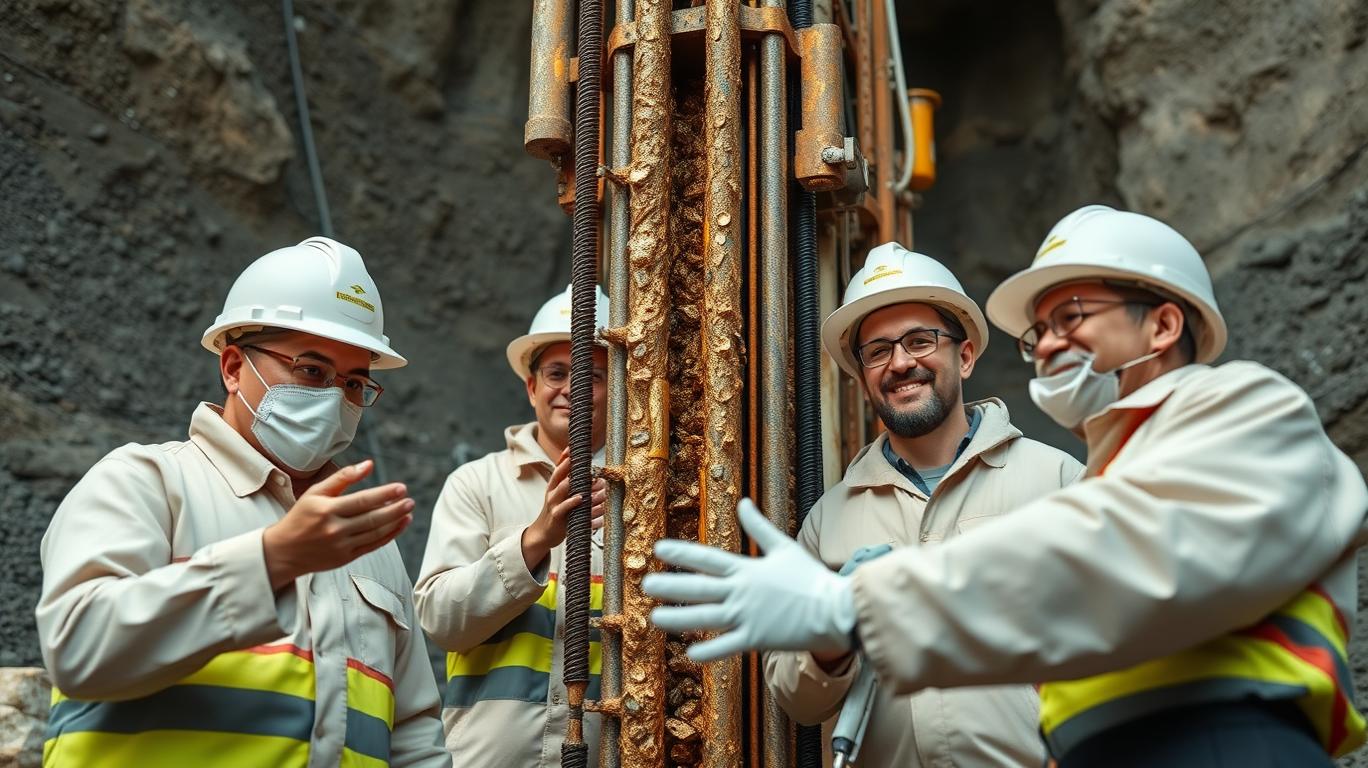
The results from the Phase II drill program have significant implications for Abitibi Metals and the broader mining sector. The continuous chalcopyrite mineralization observed in drill hole 1274-24-338 supports the Company's vision of defining a 30-50 million tonne resource at B26. The strong mineralization, composed of chalcopyrite stringers developed against late-tectonic quartz veining, further bolsters the deposit's potential grade and tonnage.
As Abitibi Metals continues to explore the B26 deposit, the growing understanding of its continuity and mineralization patterns will enable a more accurate assessment of the deposit's size and value. The Company's strategic approach to exploration, focusing on structural controls and lithological variations, has proven successful in expanding the resource base and enhancing the project's economic potential.
In conclusion, the results from Abitibi Metals' Phase II drill program at the B26 Polymetallic Deposit have highlighted the significance of structural controls and lithological variations in concentrating mineralization. The continuous chalcopyrite mineralization observed in drill hole 1274-24-338 supports the Company's vision of defining a 30-50 million tonne resource at B26 and underscores the potential for resource expansion along strike and at depth. As the Company continues to explore the deposit, the growing understanding of its continuity and mineralization patterns will enable a more accurate assessment of the deposit's size and value, further enhancing the project's economic viability.
The Phase II drill program, comprising 16,500 metres, has focused on testing the Western Plunge and Mid-Level Resource targets at the B26 deposit. The program has yielded promising results, with drill hole 1274-24-338 intersecting an 81.0-metre-long interval of continuous chalcopyrite mineralization from 1,206 to 1,287 metres. This interval, which includes a high-grade zone within the Cu-Au Zone (1,262-1,272 m), demonstrates the deposit's potential for resource expansion and highlights the significance of structural controls and lithological variations in concentrating mineralization.
The presence of chalcopyrite stringers and semi-massive bands associated with quartz veining in the Cu-Au Zone suggests a favorable geological environment for polymetallic mineralization. The continuous mineralization observed in drill hole 1274-24-338 supports the western plunge thesis and indicates the potential for resource expansion along strike and at depth. The deepest intercept in the Project's history, coupled with the recently drilled wedge (1274-24-338-W1), which intercepted 71 metres of chalcopyrite stringer mineralization, further bolsters the Company's confidence in the deposit's potential.
The timing of mineralization at the B26 deposit, relative to regional tectonic events, is crucial for understanding its distribution and grade. The deposit formed during the Mid- to Late-Proterozoic, a period marked by significant tectonic activity in the Abitibi Greenstone Belt. This timing coincides with the waning stages of the Penokean Orogeny, which likely provided the heat and fluids necessary for mineralization. The regional tectonic setting facilitated the formation of large-scale hydrothermal systems that deposited polymetallic minerals, explaining the deposit's size and grade.
The results from the Phase II drill program have significant implications for Abitibi Metals and the broader mining sector. The continuous chalcopyrite mineralization observed in drill hole 1274-24-338 supports the Company's vision of defining a 30-50 million tonne resource at B26. The strong mineralization, composed of chalcopyrite stringers developed against late-tectonic quartz veining, further bolsters the deposit's potential grade and tonnage.
As Abitibi Metals continues to explore the B26 deposit, the growing understanding of its continuity and mineralization patterns will enable a more accurate assessment of the deposit's size and value. The Company's strategic approach to exploration, focusing on structural controls and lithological variations, has proven successful in expanding the resource base and enhancing the project's economic potential.
In conclusion, the results from Abitibi Metals' Phase II drill program at the B26 Polymetallic Deposit have highlighted the significance of structural controls and lithological variations in concentrating mineralization. The continuous chalcopyrite mineralization observed in drill hole 1274-24-338 supports the Company's vision of defining a 30-50 million tonne resource at B26 and underscores the potential for resource expansion along strike and at depth. As the Company continues to explore the deposit, the growing understanding of its continuity and mineralization patterns will enable a more accurate assessment of the deposit's size and value, further enhancing the project's economic viability.

Divulgación editorial y transparencia de la IA: Ainvest News utiliza tecnología avanzada de Modelos de Lenguaje Largo (LLM) para sintetizar y analizar datos de mercado en tiempo real. Para garantizar los más altos estándares de integridad, cada artículo se somete a un riguroso proceso de verificación con participación humana.
Mientras la IA asiste en el procesamiento de datos y la redacción inicial, un miembro editorial profesional de Ainvest revisa, verifica y aprueba de forma independiente todo el contenido para garantizar su precisión y cumplimiento con los estándares editoriales de Ainvest Fintech Inc. Esta supervisión humana está diseñada para mitigar las alucinaciones de la IA y garantizar el contexto financiero.
Advertencia sobre inversiones: Este contenido se proporciona únicamente con fines informativos y no constituye asesoramiento profesional de inversión, legal o financiero. Los mercados conllevan riesgos inherentes. Se recomienda a los usuarios que realicen una investigación independiente o consulten a un asesor financiero certificado antes de tomar cualquier decisión. Ainvest Fintech Inc. se exime de toda responsabilidad por las acciones tomadas con base en esta información. ¿Encontró un error? Reportar un problema


SOBRE NOSOTROS
Nuestra historiaAutores de noticiasBase de conocimientosPolítica de privacidadTérmino de usoDescargo de responsabilidad de corretaje de tercerosTérminos de uso de AIMEDivulgaciones de riesgos de AInvest AICarrerasCONTÁCTENOS
Email: support@ainvest.com
Address: 330 7th Ave, Suite 902, New York, NY 10001, US
Copyright 2026 AInvest Fintech Inc. All rights reserved.


Comentarios
Aún no hay comentarios