
Aberforth's Buybacks Miss the Mark—Management Bets Remain Tentative Amid Sector Rotation
The trust's latest share buyback is a routine capital management move, not a bold signal of skin in the game. On March 23, Aberforth Smaller Companies Trust purchased 17,500 of its own ordinary shares at a price of 1,422.1429 pence. This brings the cumulative total of repurchased and cancelled shares under the authority granted at its March 5 AGM to 284,500 ordinary shares. The transaction is a standard execution of board-approved authority, not a major new commitment.
This activity must be viewed against a sector-wide slowdown. Last year saw record buybacks, but volumes have tumbled in 2026 as discounts to net asset value (NAV) have narrowed. The broader trend suggests management is less inclined to step in and support prices when the gap between market price and underlying value is closing. In that context, Aberforth's small, scheduled repurchases look like a maintenance chore rather than a strategic intervention.
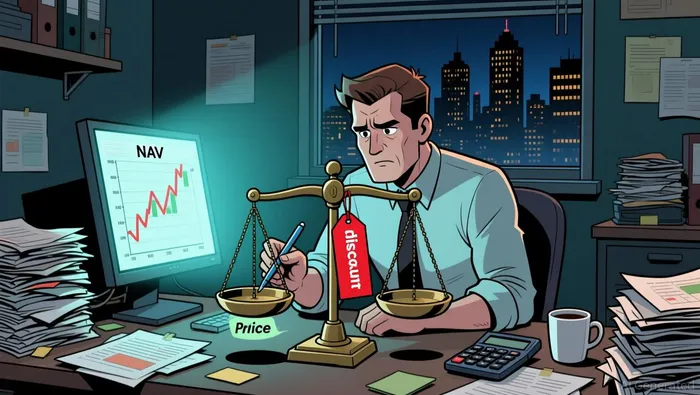
The trust's persistent discount to NAV remains the key metric. While not explicitly cited here, the entire rationale for buybacks in the investment trust world hinges on this discount. When shares trade below NAV, buying them back effectively enhances per-share value for remaining shareholders. The trust's continued activity, however small, suggests management sees some value in this mechanism. Yet, the scale is minimal-just a fraction of the total outstanding shares. This is capital management, not a bet on the stock's future. The smart money would watch for a sustained, larger-scale buyback program to signal genuine alignment of interest. For now, the pattern is noise.
The Insider's Stance: What Are the Managers Really Doing?
The smart money looks for skin in the game, and the latest insider move here is a small but telling signal. In early March, director Lesley Jackson bought 647 shares of the related Aberforth Geared Value & Income Trust (AGVI) at an average price of 89 pence. This is a purchase in a different trust, not the primary Aberforth Smaller Companies Trust (ASL) we've been analyzing. Yet, it indicates some alignment within the Aberforth family of funds. The transaction, worth just over £575, is a token gesture, but it shows at least one insider is putting personal capital behind a fund managed by the same team.
The absence of large-scale insider selling in the primary ASL trust is a neutral point, not a strong bullish signal. In a true alignment-of-interest scenario, we might expect to see more substantial buying from directors or the CEO, especially if they believe the stock is undervalued. The lack of such moves suggests the board's skin in the game remains light. The recent buyback program, while routine, is a board decision, not a personal investment by the managers.
So, is this insider buying genuine skin in the game? It's a start, but it's a very small stake in a related vehicle. It doesn't override the broader skepticism around the trust's discount to NAV or the minimal scale of its own buybacks. For the smart money, this kind of token purchase is more noise than a signal. It shows some confidence, but not enough to bet the house. The real test would be if insiders began buying significant stakes in ASL itself, not just its sibling fund. Until then, the alignment of interest remains tentative.
The Bigger Picture: Sector Rotation and Valuation Context
The trust's modest buybacks and small insider purchase must be weighed against a powerful, short-term market tailwind. In early 2026, a clear sector rotation is underway. Investors are rotating out of large US tech stocks, which had dominated for years, and into smaller companies. This shift has created a favorable backdrop for Aberforth's strategy. The MSCI World Small Cap Index returned 9.86% from the start of the year to the end of February, significantly outperforming the broader market. For a fund focused on UK small caps, this rotation provides a temporary boost, potentially inflating the apparent value of its holdings.
This is a classic case of a market trend providing a tailwind, not a guarantee of future success. The smart money knows that past performance isn't a guide to the future. The rotation may be driven by a few factors: falling interest rate expectations, attractive valuations, and the search for growth in a post-AI hype cycle. Yet, this setup is inherently volatile. The index has already shown some volatility more recently in March amid geopolitical concerns, reminding us that these moves can reverse quickly.
The ultimate test for Aberforth remains its long-term ability to generate alpha. The sector rotation offers a favorable context, but it does not replace the need for skillful stock selection and portfolio management. The trust's buybacks and insider activity are minor moves against this backdrop. They do not signal a deep conviction that the current rotation will persist or that the underlying portfolio will outperform over the long term. For the smart money, the focus should stay on the trust's fundamental performance and its capacity to deliver returns regardless of whether small caps are in or out of favor. The current market trend is a helpful context, but it is not a substitute for skin in the game.
Catalysts and Risks: What to Watch Next
The thesis here hinges on two fragile supports: management confidence, as hinted at by buybacks, and a favorable sector tailwind. The smart money will watch for specific catalysts to confirm or contradict these assumptions.
First, the next quarterly NAV report is critical. It will show whether the trust's underlying portfolio is generating returns that justify the buybacks and, more importantly, narrow the persistent discount to net asset value. If the NAV growth is strong, it validates the buyback rationale. If it stalls, the board's capital management move looks like a cosmetic fix for a deeper problem. The trust's ability to deliver alpha in a volatile market will be on full display.
Second, monitor the trend in investment trust buyback volumes. The sector-wide slowdown is a direct risk. As noted, buyback volumes have tumbled in 2026 as discounts narrow. This creates a vicious cycle: fewer buybacks mean less support for prices, which can widen discounts again. For Aberforth, a sustained sector-wide pause would make its own small buybacks less effective and could pressure its discount, undermining the entire value-enhancement story.
The key risk, however, is that the current sector rotation fades. The strong start to 2026 for small caps is a short-term phenomenon. As the evidence notes, the MSCI World Small Cap Index returned 9.86% from the start of the year to the end of February, but this is over a very short period. If the rotation reverses-driven by a change in interest rate expectations or a renewed tech rally-small-cap valuations could compress. This would likely widen Aberforth's discount, making its buybacks less effective and potentially turning them into a costly distraction. The trust's strategy is now riding a wave; the smart money watches for the tide to turn.
In short, the catalysts are clear. Watch the NAV for portfolio health, the sector buyback trend for market sentiment, and the broader small-cap index for the sustainability of the tailwind. Any stumble in these areas would confirm that the trust's buybacks and insider activity are merely noise in a changing market.







Comentarios
Aún no hay comentarios