
AB InBev's Strategic Repurchase of U.S. Metal Container Plants: A Deep Dive into Capital Efficiency and Supply Chain Resilience
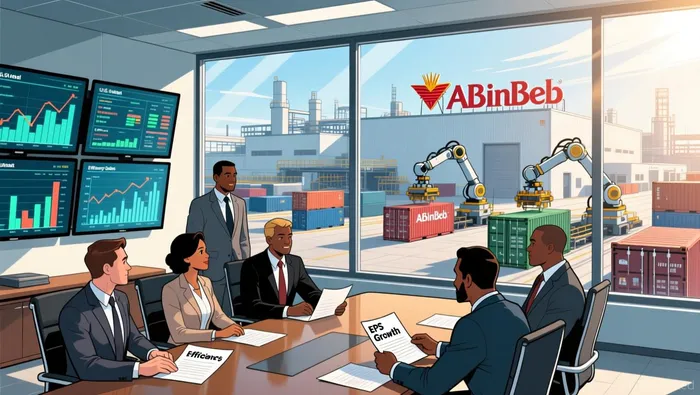
Anheuser-Busch InBevBUD-- (AB InBev) has made a bold move in reshaping its manufacturing footprint by repurchasing a 49.9% stake in its U.S. metal container plants for approximately $3 billion, a transaction expected to close in the first quarter of 2026. This reacquisition, funded entirely by cash on hand, marks a strategic pivot toward enhancing capital efficiency and fortifying supply chain resilience-a critical focus in an era of global economic volatility. By reclaiming control over seven key facilities across six U.S. states, AB InBevBUD-- aims to optimize operational performance while aligning with broader industry trends in vertical integration.
Strategic Rationale: Capital Allocation and Earnings Accretion
AB InBev's decision to repurchase the stake is rooted in its capital allocation framework, which prioritizes investments that drive long-term value creation. The company has emphasized that the transaction is expected to be earnings-per-share (EPS) accretive in the first year post-closing. This aligns with historical patterns in the beverage industry, where vertically integrated manufacturers often achieve cost efficiencies by eliminating intermediaries and streamlining production. For AB InBev, the reacquisition reduces exposure to external pricing fluctuations in metal container markets, a vulnerability that has historically impacted margins during periods of inflation or supply chain disruptions.
The financial terms of the deal-$3 billion for a 49.9% stake- mirror the original 2020 sale to a consortium led by Apollo Global Management. While specific metrics like return on invested capital (ROIC) or return on investment (ROI) remain undisclosed, analysts note that the move strengthens AB InBev's balance sheet by consolidating critical assets under its direct control. This is particularly significant given the company's broader strategy of balancing shareholder returns through buybacks with operational efficiency gains.
Supply Chain Resilience: A Necessity in a Volatile Era
The repurchase underscores AB InBev's commitment to supply chain resilience, a theme that has gained urgency amid rising tariffs, geopolitical tensions, and climate-related disruptions. The U.S. metal container plants, which produce cans for brands like Budweiser and Stella Artois, are now fully integrated into AB InBev's operations, ensuring tighter control over production timelines, quality standards, and inventory management. This mirrors strategies adopted by other vertically integrated beverage brands, such as Clio and Spot & Tango, which have invested heavily in in-house manufacturing to mitigate risks associated with global supply chains.
Industry benchmarks highlight the advantages of such integration. For instance, Clio's 80,000-square-foot facility enables the production of 120 million yogurt bars annually, while Spot & Tango's $20 million investment in Pennsylvania has allowed for agile scaling and demand forecasting. AB InBev's reacquisition similarly positions the company to respond swiftly to market shifts, whether through adjusting production volumes or accelerating innovation cycles for its beverage portfolio.
Broader Industry Trends and Future Implications
The beverage manufacturing sector is witnessing a paradigm shift toward vertical integration, driven by the need for flexibility and transparency in supply chains. According to a 2026 industry outlook, AI-driven automation and sustainability initiatives are further amplifying the value of in-house manufacturing. While AB InBev has not yet disclosed AI integration plans for its container plants, the company's emphasis on "supply security" suggests a readiness to adopt technologies that enhance efficiency and compliance.
Critically, the repurchase also aligns with AB InBev's long-term financial goals. By consolidating its manufacturing assets, the company can potentially reduce costs associated with third-party logistics and raw material procurement. This, in turn, supports its ability to reinvest in high-growth markets or accelerate shareholder returns through dividends and buybacks. However, analysts caution that the $3 billion outlay may modestly slow the pace of deleveraging in 2026, a trade-off that must be weighed against the strategic benefits of full operational control.
Conclusion
AB InBev's repurchase of its U.S. metal container plants represents a calculated investment in both capital efficiency and supply chain resilience. By reclaiming a stake sold in 2020, the company not only strengthens its control over critical manufacturing operations but also positions itself to navigate the uncertainties of a globalized economy. While specific financial metrics like ROIC remain unquantified, the transaction's EPS accretion and alignment with industry trends in vertical integration make it a compelling case study in strategic asset management. As the beverage sector continues to evolve, AB InBev's move signals a broader shift toward self-sufficiency-a strategy that could redefine competitive advantages in manufacturing for years to come.





Comentarios
Aún no hay comentarios