
AB Foods: Profit Warning, Strategic Uncertainty, and the Case for Cautious Reassessment
The recent profit warning from Associated British Foods (ABF) has sent shockwaves through the market, with its share price plummeting 11% following the announcement. The company's struggles reflect broader challenges in the retail and food sectors, where weak consumer demand, aggressive discounting, and macroeconomic headwinds have converged to erode profitability. As AB Foods contemplates a potential strategic overhaul, investors must weigh the risks of its current trajectory against the uncertain rewards of restructuring.
Operational Challenges: A Mixed Bag of Performance
AB Foods' core businesses-Primark and its food divisions-have faced divergent pressures. While UK sales at Primark rose 3% in 2024, driven by improved womenswear and Click & Collect initiatives, continental Europe and the US saw sharper declines. Like-for-like sales in continental Europe fell 5.7%, and the US market, already volatile, saw heavy markdowns to clear inventory, squeezing margins. The food segment fared no better, with weakened demand for cooking oils and bakery ingredients in the US leading to a projected drop in adjusted operating profit.
These challenges are not isolated to AB Foods. The European food retail industry is grappling with a "perfect storm" of rising costs, labor shortages, and shifting consumer preferences. Specialist retailers, in particular, face intensified competition from supermarkets expanding into premium and organic product lines, while 70% of UK bakery businesses plan to reduce staff hours between 2025 and 2026. For AB Foods, the combination of these sector-wide issues and internal operational complexity-particularly in its sugar division, which is expected to post a £40 million loss in FY2025-has created a precarious outlook.
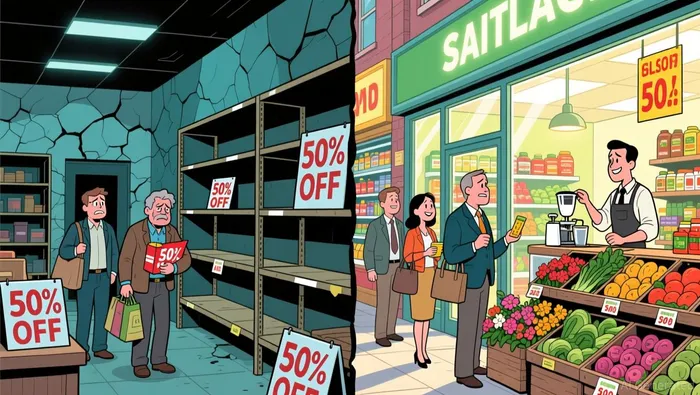
Strategic Restructuring: A Path Forward or a Distraction?
In response to these pressures, AB Foods has initiated a strategic review that could culminate in the separation of its Primark and food businesses. Proponents argue that a demerger would allow each division to operate independently, potentially unlocking value by addressing distinct market dynamics. Kepler Cheuvreux has highlighted the share price upside if Primark is spun off, while analysts at Just-Food note that the food business could gain clarity under a separate structure.
However, the restructuring carries risks. Deutsche Bank has raised concerns about near-term consumer demand in the UK and the potential overvaluation of Primark in a weak retail environment. Moreover, the company's plans to expand Primark's global footprint- opening new stores in the US, Europe, and the UK-risk exacerbating inventory challenges if consumer spending remains subdued. The sugar division's restructuring, meanwhile, hinges on reducing carbon emissions by 30% by 2030, a goal that may strain resources at a time when profitability is already under pressure.
Sector-Specific Risks: A Weak Consumer Environment
The broader retail and food sectors remain vulnerable to macroeconomic trends. In Europe, the food retailing industry is projected to decline at a compound annual growth rate of 1.5% through 2030, driven by stagnant volume growth and sustained cost pressures. Consumers are increasingly favoring private-label products, with market share in Europe reaching 39.1% in 2024 and expected to climb to 40–42% by 2030. For AB Foods, which relies on premium positioning in its food brands, this shift could further erode margins unless it adapts its product offerings.
Meanwhile, the retail segment faces a dual challenge: managing inventory in a weak demand environment and addressing labor shortages. Primark's heavy discounting to clear stock has already impacted profitability, and the company's expansion plans may strain its ability to balance inventory with consumer demand. In the US, where cost-of-living pressures remain acute, AB Foods' food businesses must contend with a market that is increasingly price-sensitive and skeptical of premium pricing.
The Case for Cautious Reassessment
AB Foods' strategic review and restructuring efforts present both opportunities and risks. A demerger could provide clarity and operational focus, particularly for the food division, which has historically been undervalued relative to Primark. However, the timing of such a move is critical. With consumer demand in key markets like the US and continental Europe still fragile, and with the European food retail industry projected to contract, any restructuring must be accompanied by a clear plan to address underlying profitability issues.
Investors should also consider the broader macroeconomic context. The shift toward online and discounter formats in Europe, coupled with rising wage pressures and supply chain volatility, suggests that the retail and food sectors will remain under pressure for the foreseeable future. AB Foods' sustainability initiatives-such as its goal to source 100% sustainable sugar by 2025-are commendable but may not offset near-term earnings declines.
Conclusion
AB Foods stands at a crossroads. Its profit warning underscores the fragility of its current business model, while its strategic review hints at a potential rebalancing of priorities. However, the path forward is fraught with uncertainty. For investors, the key question is whether the company can execute its restructuring plans effectively in a sector defined by weak demand and intense competition. Until there is greater clarity on how AB Foods will navigate these challenges, a cautious approach seems prudent.







Comentarios
Aún no hay comentarios