
7-Year Auto Loans Reshape Automotive Sector Valuations and Risk Profiles in 2025
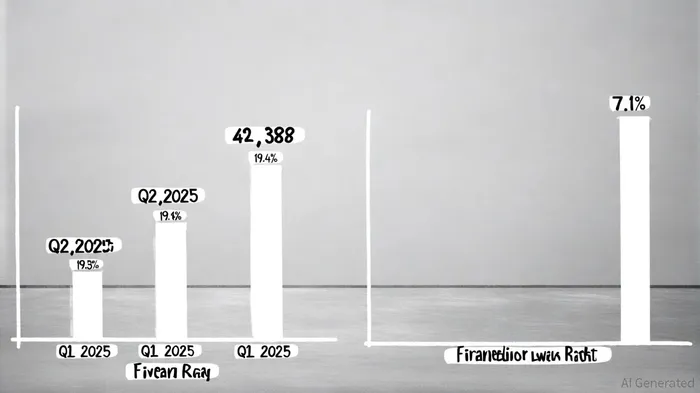
The automotive sector is undergoing a seismic shift as 7-year auto loans surge in popularity, driven by soaring vehicle prices and elevated interest rates. By Q2 2025, these extended loan terms accounted for 22.4% of new-car financing, up from 19.8% in Q1 2025[1]. This trend, while offering short-term relief to borrowers, is reshaping industry valuations, lender profitability, and risk profiles in ways that demand closer scrutiny for investors.
Borrower Behavior and Financial Implications
The average new-car buyer now finances $42,388 at an interest rate of 7.1%, resulting in monthly payments of $741 and total interest costs exceeding $10,000 over seven years[2]. While these terms make monthly obligations more manageable, they amplify the risk of borrowers becoming “underwater,” where the loan balance exceeds the vehicle's depreciated value. For example, a $40,000 loan at 7% interest over seven years incurs $10,711 in interest—nearly double the $5,977 paid on a four-year loan[1]. This dynamic is exacerbated by declining down payments, which have shrunk to an average of $6,433, further stretching borrowers' financial exposure[2].
Sector-Wide Valuation Pressures
The automotive finance sector faces a dual challenge: higher interest income from extended loan terms and increased risk of defaults. Auto loan balances now total $1.7 trillion, with 82% of buyers paying above MSRP during the pandemic peak, locking them into high-interest loans[3]. Lenders are grappling with repossession losses, as auction values for repossessed vehicles have plummeted, and operational costs like storage fees erode recovery margins[3]. Meanwhile, delinquency rates hit 7.9% in Q1 2025—the highest since 2009—with subprime borrowers accounting for 6.56% of defaults[4].
For automakers, the rise in 7-year loans has created a paradox. While longer terms boost sales by improving affordability, they also delay revenue recognition and increase residual value risk. Captive lenders, which dominate new-vehicle financing, are tightening underwriting standards to mitigate exposure, particularly for used vehicles, which face steeper depreciation curves[5].
Investor Implications: Risk and Opportunity
The stock performance of automotive lenders and OEMs is increasingly tied to their ability to navigate these challenges. Captive lenders like Ford Credit and GMGM-- Financial are leveraging AI-driven tools to monitor borrower hardship and adjust credit policies dynamically[4]. However, non-captive lenders, which serve subprime borrowers and finance used vehicles, face steeper headwinds. Their delinquency rates remain significantly above pre-pandemic levels, raising concerns about portfolio quality[1].
Digital transformation is a key differentiator. Lenders adopting digitized underwriting and alternative data (e.g., utility payment histories) are better positioned to expand credit access while managing risk[5]. Conversely, firms reliant on traditional models risk margin compression as delinquency rates climb. For investors, this underscores the importance of evaluating a lender's technological adaptability and risk management frameworks.
Conclusion: Balancing Affordability and Stability
The 7-year loan boom reflects a broader shift in consumer behavior, but its long-term sustainability hinges on macroeconomic stability. With the Federal Reserve's rate hikes pushing borrowing costs higher, borrowers and lenders alike face a precarious balancing act. For investors, the key will be monitoring how lenders adapt to rising delinquency rates, the efficacy of AI-driven risk tools, and the sector's ability to innovate in financing models—such as leasing and EV-specific products—to mitigate exposure[5].
As the automotive sector navigates this new normal, the interplay between borrower affordability and lender resilience will remain a critical determinant of valuation trends and risk-adjusted returns.







Comentarios
Aún no hay comentarios