
60 Degrees Pharmaceuticals' Earnings Woes: A Microcosm of Small-Cap Biotech's Struggles and Hopes
The recent earnings report from 60 Degrees PharmaceuticalsSXTP-- (NASDAQ: SXTP) has sparked renewed scrutiny of the small-cap biotech sector, which is navigating a delicate balance between innovation and financial sustainability. While the company's Q2 2025 results—marked by a 19% year-over-year revenue decline and a net loss of $1.84 million—highlight operational fragility, they also reflect broader challenges facing small-cap biotechs in a market that, on the surface, appears to be rebounding.
The 60 DegreesSXTP-- Case: A Tale of Supply Chains and Strategic Shifts
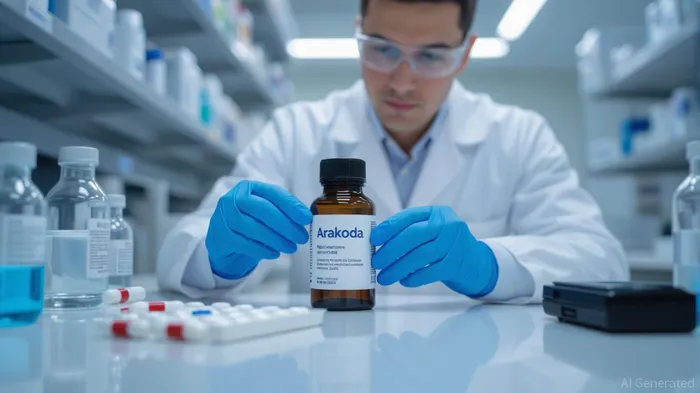
60 Degrees' struggles stem from a temporary supply chain disruption of its flagship product, ARAKODA (tafenoquine), a 16-count blister pack used for malaria prevention. The company mitigated this by introducing an 8-count bottle format and importing KODATEF (a related product) with FDA approval. While these steps stabilized gross profit (up to $51,000 in Q2 2025), they couldn't offset the broader revenue decline. The company's cash runway, though extended by a $4.46 million public offering in July 2025, remains precarious, with liquidity expected to last until March 2026.
This scenario underscores a recurring theme in small-cap biotech: the tension between product development and operational execution. 60 Degrees is betting on expanding ARAKODA's indications to include babesiosis, a parasitic disease with a potential $1.1 billion U.S. market over the next decade. However, success hinges on clinical trial enrollment and regulatory approval, both of which are high-risk, high-reward propositions.
Broader Industry Trends: OptimismOP-- Amid Volatility
Despite 60 Degrees' struggles, the small-cap biotech sector is showing signs of resilience. The NASDAQ Biotechnology Index (INDEXNASDAQ:NBI) has surged to three-year highs, driven by breakthroughs in oncology, rare diseases, and AI-driven drug discovery. Companies like Bright MindsDRUG-- Biosciences (NASDAQ:DRUG) and Monopar TherapeuticsMNPR-- (NASDAQ:MNPR) have seen year-over-year gains exceeding 900%, fueled by clinical progress and strategic partnerships.
This optimism is rooted in several factors:
1. Clinical Pipeline Momentum: Over 40% of small-cap biotechs now have at least one drug in Phase II or III trials, attracting investor attention.
2. M&A Activity: Large pharma firms are increasingly acquiring smaller innovators to replenish their pipelines, a trend accelerated by low interest rates.
3. Favorable Valuations: Many small-cap biotechs trade at discounts to their intrinsic value, offering asymmetric risk-reward profiles.
Yet, the sector remains vulnerable. High R&D costs, regulatory hurdles, and cash flow constraints continue to pressure companies like 60 Degrees, which must balance short-term survival with long-term growth.
Investment Implications: Navigating the Biotech Maze
For investors, 60 Degrees' story serves as a cautionary tale and a case study in sector-specific risks. Here's how to approach the current environment:
- Differentiate Between the Sector and the Stock: While the biotech industry is on an upward trajectory, individual companies vary widely in execution quality and financial health. 60 Degrees' reliance on a single product and its cash burn rate make it a high-risk bet, even in a favorable sector.
- Focus on Clinical Catalysts: Small-cap biotechs with near-term data readouts (e.g., Phase II/III trials) or regulatory milestones often see outsized returns. 60 Degrees' babesiosis trial, if successful, could unlock significant value, but investors must weigh the probability of enrollment and interim results.
- Diversify and Hedge: Given the sector's volatility, spreading investments across multiple biotechs with diverse pipelines and funding structures can mitigate downside risk.
- Monitor Capital Access: The recent $4.46 million raise by 60 Degrees highlights the importance of liquidity. Investors should track follow-on offerings, partnerships, and debt financing as key indicators of a company's survival odds.
Conclusion: A Sector on the Brink of Transformation
60 Degrees Pharmaceuticals' earnings report is a microcosm of the small-cap biotech sector's duality: innovation and instability. While the company's near-term challenges are clear, the broader industry's momentum—driven by clinical progress, M&A, and AI-driven R&D—suggests that the sector is far from a dead end. For investors, the key lies in discerning which companies can navigate these challenges and emerge as leaders.
In the end, biotech investing is a high-stakes game of patience and precision. 60 Degrees may yet prove its mettle, but its journey underscores the need for rigorous due diligence in a sector where hope and hype often walk hand in hand.





Comentarios
Aún no hay comentarios